
Şubat Ayı
Main Theme: Continued Pruning & Winter Pest Spraying
February is a critical period in the hazelnut orchard for continued pruning and winter pest treatments. While pruning operations that started in January continue, winter pest control against comma scale and bud mite should be carried out this month. Pollination also begins, requiring careful observation in the orchard.
✓ February Tasks
- ✓ Continue pruning and sucker removal
- ✓ Apply winter spray for comma scale
- ✓ Complete mechanical control of bud mite
- ✓ Apply farm manure (once every 3-4 years)
- ✓ Monitor pollination status
- ✓ Dig planting holes for new saplings (in suitable weather)
Pruning Operations
Pruning operations that began in January continue in February. Pruning can be done on days when the temperature is above 0°C.
Pruning Tasks
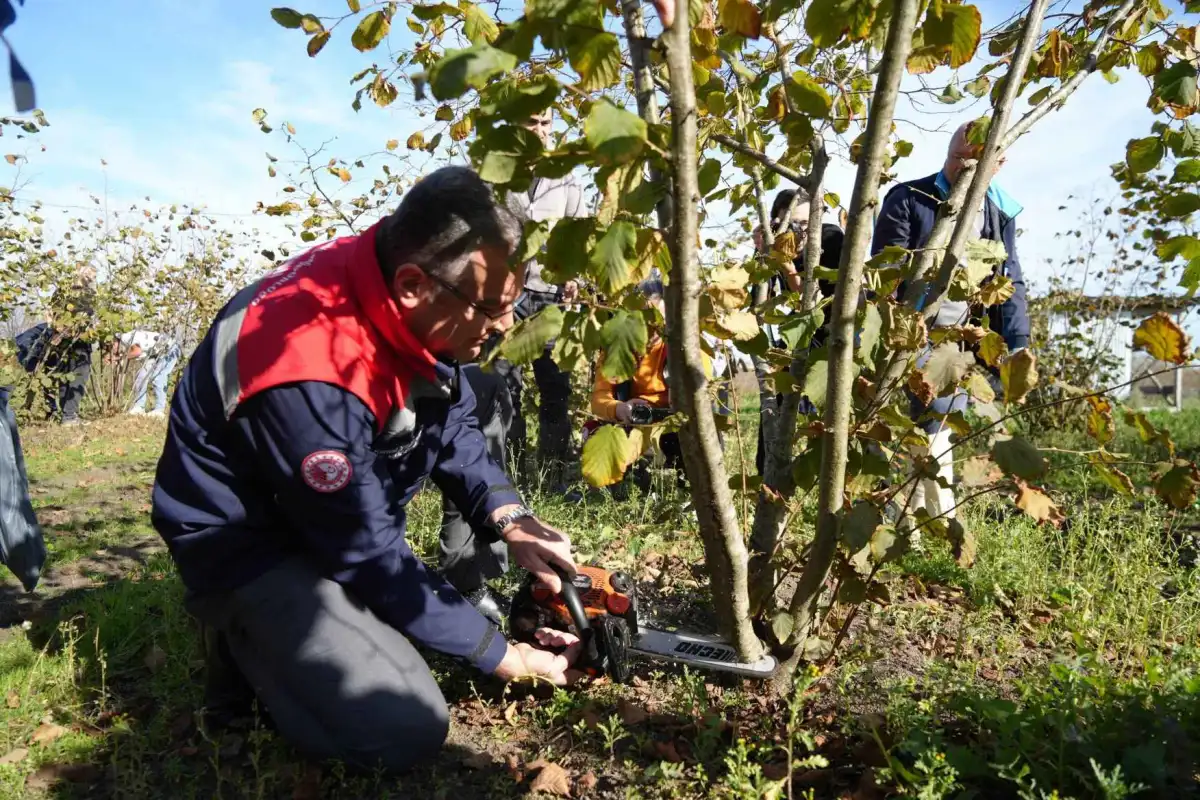
- Continue removing dry and diseased branches
- Cut root suckers at the base
- Remove root shoots
- Thin inner branches to improve air circulation
- Remember to apply wound sealant to cut surfaces
Frost Warning
Sudden temperature changes may occur toward the end of February. Avoid pruning during periods when night frosts continue while daytime temperatures rise. Pruning wounds do not heal in frosty weather, increasing infection risk.
Pest Control
February is the ideal time for winter spraying against certain pests.
Comma Scale
Winter spraying can be done in February. After leaf fall, dormant oil is applied against scale insects on trunks and branches. This treatment is essential in orchards with heavy infestation.
Hazelnut Bud Mite
Mechanical control against bud mite should be carried out during this period. Swollen and abnormally shaped buds should be hand-picked and destroyed.
Mechanical Control
Hand-picking and burning affected buds is a highly effective method. Always perform mechanical cleanup before chemical treatment.
Hazelnut Shoot Moth
Spraying against shoot moth can be done in the first half of the month. The application window arrives when buds begin to swell.
Fertilization
Farm Manure
Farm manure application can be done in February. Applied once every 3-4 years, farm manure should be spread around the tree base beneath the branch drip line.
- Amount: 25-30 kg of composted farm manure per tree
- Application: Should be incorporated into the soil
- Position: Under the branch drip line, away from the trunk
Nitrogen Fertilizer
The first half of nitrogen fertilizer can be applied at the end of February. Fertilizer can be applied if the soil is not frozen and no heavy rainfall is expected.
Soil Analysis Reminder
It is recommended to have a soil analysis done before fertilizer application. You can obtain free soil analysis services from provincial/district agricultural directorates. Adjust fertilizer amounts based on soil analysis results.
Pollination Monitoring
Hazelnut flowers begin to open in February. Male catkins hang down and release pollen in the wind. The reddish tips of female flowers become visible.
- Observe the orchard during the pollination period
- Check for yellow pollen release from male catkins
- Verify that fertilization has occurred
Why Is Pollination Important?
Hazelnut is a wind-pollinated plant. If pollination is insufficient, the rate of empty nuts increases. Make sure your orchard has adequate pollinator varieties.
Sapling Planting
Sapling planting can be done in suitable weather conditions (frost-free days). Planting is done in previously prepared holes.
- Hole size: 50x50x50 cm
- Planting depth: The soil level of the sapling should be maintained
- Water generously after planting
Important Considerations
Common Mistakes
- Pruning on frosty days weakens the tree
- Applying farm manure every year causes unnecessary salt accumulation (once every 3-4 years is sufficient)
- Missing comma scale spraying leads to severe infestation in summer
- Neglecting bud mite mechanical control reduces yield
📚Sources
Related Guides
View all Care Calendar guides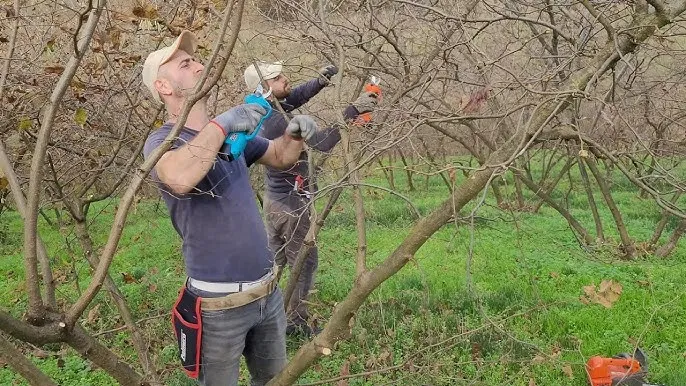
January Hazelnut Care Guide
Winter pruning, sucker removal, dormant-season spraying, soil sampling, snow damage checks and infrastructure repair in the hazelnut orchard in January. Guide supported by official sources.

March Hazelnut Care Guide
First nitrogen fertilization, final pruning, shoot moth and gall midge monitoring, sapling planting in the hazelnut orchard in March. Guide supported by official sources.
More Care Calendar Guides
March Hazelnut Care Guide
First nitrogen fertilization, final pruning, shoot moth and gall midge monitoring, sapling planting in the hazelnut orchard in March. Guide supported by official sources.
January Hazelnut Care Guide
Winter pruning, sucker removal, dormant-season spraying, soil sampling, snow damage checks and infrastructure repair in the hazelnut orchard in January. Guide supported by official sources.