

Mart Ayı
Main Theme: First Nitrogen Fertilizer & Final Pruning
March is a critical month in the hazelnut orchard as spring begins and the intensive care period opens. Buds start to swell, the soil awakens, and many tasks overlap. This month, first nitrogen fertilization, the last pruning opportunity, pest monitoring, and sapling planting must all be carried out together.
✓ March Tasks
- ✓ Apply first nitrogen fertilizer
- ✓ Complete final pruning and sucker removal
- ✓ Spray against shoot moth
- ✓ Monitor gall midge emergence
- ✓ Begin leaf roller monitoring
- ✓ Complete sapling planting (last chance)
Final Pruning Opportunity
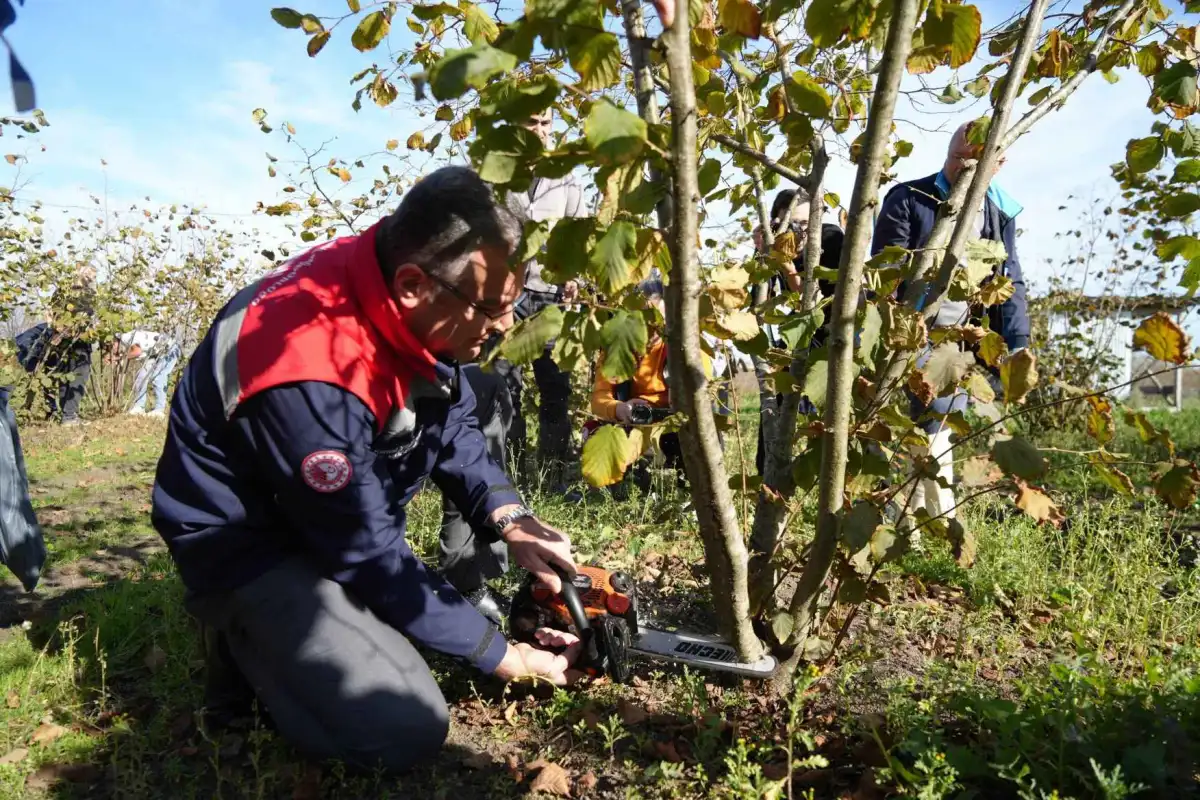
The first half of March is the last period for pruning hazelnut trees. Once buds burst and shoot growth begins, pruning should no longer be performed. Therefore, completing pruning work by early March is of great importance.
Pruning Checklist
- Finish any pruning work left incomplete from January-February
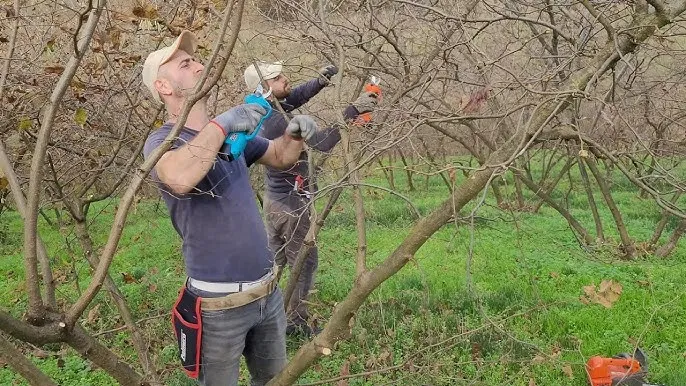
- Cut dry, broken, and diseased branches
- Remove root suckers at the base
- Apply wound sealant to cut surfaces
- Stop pruning entirely after mid-March
Pruning Deadline
The pruning season ends when buds swell and green tips appear. Late pruning causes energy loss and yield reduction. Consider the first 10-15 days of March as the deadline for your region.
First Nitrogen Fertilizer Application
March is the time to apply the first nitrogen fertilizer to hazelnut trees. Nitrogen is needed to support bud swelling and shoot growth. Nitrogen fertilizer is generally divided into two equal portions: the first half in March, the second half in May.
When and How Much?
- Timing: Mid-March (around March 15, when the soil thaws)
- Amount: 20-24 kg pure nitrogen per dekar (annual total)
- First application: Half of the annual amount in March, the other half in late May
- Application area: Spread in a 30-40 cm wide ring under the branch drip line, 50-60 cm away from the trunk
- Incorporation: Mix into the soil at 5-10 cm depth by hoeing
Fertilizer Type Selection
| Fertilizer | N Content | First Application (March) | Characteristics |
|---|---|---|---|
| Calcium ammonium nitrate (CAN) (26% N) | ~650 g per bush | Best suited for Black Sea acidic soils | |
| Urea (46% N) | ~375 g per bush | Less quantity needed, suitable for neutral soils |
Do Not Use Ammonium Sulfate!
Black Sea region soils are generally acidic in nature. Ammonium sulfate (21% N) further acidifies the soil and should never be used in this region. Use calcium ammonium nitrate (CAN) or urea instead.
Fertilize According to Soil Analysis
Adjust fertilizer amounts based on soil analysis results. Excess nitrogen reduces yield and causes environmental pollution. You can obtain free soil analysis from provincial/district agricultural directorates.
Application Tip
Apply fertilizer before rainfall or irrigation. Fertilizer spread on dry soil may evaporate and be lost. Mix fertilizer into the soil at 5-10 cm depth by hoeing.
Pest Monitoring
As temperatures begin to rise in March, pests also become active. Early monitoring and intervention greatly reduce summer damage.
Shoot Moth
The hazelnut shoot moth is one of the most active pests during the bud swelling period. Larvae enter the buds and cause damage, preventing shoot development.
- Monitoring: Check buds for drilling and drying symptoms
- Spray timing: When buds swell but before they burst
- Control: Apply licensed insecticide
Timing Is Critical
Timing is crucial for shoot moth spraying. Spraying after buds have burst is ineffective. Contact your local agricultural directorate for region-specific spraying dates.
Gall Midge (Hazelnut Gall Midge)
The hazelnut gall midge emerges from the soil in late March to early April and lays eggs on leaves. It causes damage by forming galls (swellings) on the leaves.
- Monitoring: Track emergence from soil in late March
- Symptoms: Small blister-like swellings on leaves
- Control: Apply licensed pesticide during adult emergence period
Leaf Roller
Leaf roller pests begin activity on spring shoots. They should be monitored from late March onward.
- Watch for leaf curling and perforation symptoms
- Spraying may be needed in cases of heavy infestation
- Consult the agricultural directorate at first signs
Sapling Planting
March is the last suitable time for planting hazelnut saplings. Planting can be done when the soil has thawed and frost risk has decreased. Planting after mid-March is not recommended, as saplings must establish roots before beginning to produce shoots.
- Hole size: 50×50×50 cm (should have been prepared in autumn)
- Spacing: 5-6 m between rows, 3-4 m within rows
- Sapling selection: Choose healthy, 1-2 year old, certified saplings
- After planting: Water generously and apply protective mulch
- Wind protection: Use support stakes in wind-exposed areas
Variety Selection
Choose saplings that are suited to your region and compatible with pollinator varieties. Having at least 2-3 different varieties in the orchard increases pollination success. Learn recommended varieties for your region from the agricultural directorate.
Important Considerations
Common Mistakes
- Pruning after mid-March causes yield loss
- Applying all nitrogen fertilizer at once can cause root burn (split into two)
- Missing shoot moth spray timing affects the entire season
- Delaying sapling planting too long reduces survival rate
- Fertilizing without soil analysis is both wasteful and environmentally harmful
📚Sources
Related Guides
View all Care Calendar guidesMore Care Calendar Guides
February Hazelnut Care Guide
Pruning, fertilization, pest spraying and pollination monitoring in the hazelnut garden in February. Guide supported by official sources.
January Hazelnut Care Guide
Winter pruning, sucker removal, dormant-season spraying, soil sampling, snow damage checks and infrastructure repair in the hazelnut orchard in January. Guide supported by official sources.