What Is Potassium Sulfate?
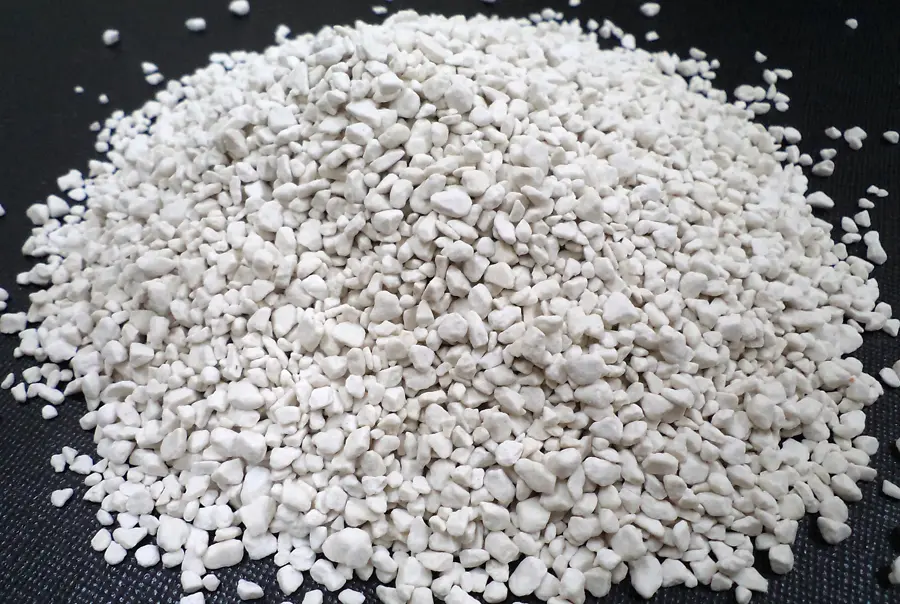
Potassium sulfate (K₂SO₄) is a white, fine-crystalline fertilizer containing 51% potassium oxide (K₂O) and 18% sulfur (S). It is produced by reacting potassium compounds with sulfuric acid. Its fertilizer grade is written as 0-0-51: it contains no nitrogen or phosphorus — it is a pure source of potassium and sulfur.
Its most important characteristic is that it is chlorine-free. This makes it safe for chlorine-sensitive crops, including hazelnuts. Because it dissolves completely in water, it can be applied not only through conventional soil application but also via drip irrigation, overhead irrigation, and foliar spraying.
| Property | Value |
|---|---|
| Formula | K₂SO₄ (0-0-51) |
| Potassium (K₂O) | 51% |
| Sulfur (S) | 18% |
| Chlorine | None |
| Solubility | Fully water-soluble |
| pH effect | Mildly acidic |
| Physical form | White crystals / granules |
What Does Potassium Do in the Plant?
Potassium is the third most essential macronutrient after nitrogen and phosphorus. In hazelnuts, potassium plays the following roles:
- Improves nut quality — raises kernel yield, oil content, and flavor
- Boosts disease resistance — strengthens the plant against fungal diseases in particular
- Enhances drought tolerance — regulates stomata opening, improving water-use efficiency
- Increases cold hardiness — raises cell sap concentration, providing protection against frost
- Drives translocation — speeds the movement of photosynthates from leaves to developing nuts
Potassium Chloride or Potassium Sulfate?
Two common potassium sources are available on the market: Potassium Chloride (KCl, 0-0-60) and Potassium Sulfate (K₂SO₄, 0-0-51). Because hazelnuts are sensitive to chlorine and Black Sea soils are typically acidic, potassium sulfate is the preferred choice. It carries no chloride risk, and its 18% sulfur content addresses sulfur deficiency at the same time. Potassium chloride is cheaper, but it poses a real risk in hazelnut orchards.
Why Sulfur Content Matters
What sets potassium sulfate apart from other potassium fertilizers is its 18% sulfur content. The sulfur is present in sulfate form (SO₄²⁻), which plants can absorb directly. In hazelnuts, sulfur serves the following purposes:
- Building block for amino acids in protein synthesis
- Promotes fat synthesis — directly affects kernel quality
- Involved in chlorophyll production — supports green tissue development
- Mildly lowers soil pH — beneficial on alkaline soils
When Should It Be Applied to Hazelnuts?
Potassium sulfate has two primary application windows in hazelnut orchards:
1. Winter Application (November – February)
This is the main application period. Broadcast evenly under the canopy drip line while the soil is moist. Winter rains dissolve the granules and carry potassium down into the root zone. Timing the application after pruning is ideal.
2. Kernel-Filling Period (June – July)
Potassium demand rises as the hazelnut kernel fills out. A supplemental application via drip irrigation or foliar spraying can be made during this window. In orchards where a soil test has shown low potassium, this second application has a measurable positive effect on yield.
Soil Testing Is Essential!
Hazelnut soils in the Black Sea region are generally adequate in potassium. Applying potassium fertilizer without a soil test wastes money and risks acidifying already-acidic soils even further. Always base your decision on soil test results.
Dosage and Application
Soil Application
| Soil Test Result | Rate (per stool) | Notes |
|---|---|---|
| Very low potassium | 300–400 g | Urgent fertilization needed |
| Low potassium | 200–300 g | Apply annually |
| Medium potassium | 100–200 g | Every two years is sufficient |
| Adequate potassium | Do not apply | Excess fertilization is harmful |
Application method: Broadcast evenly around the canopy drip line (the outer edge of the branch spread). Do not apply close to the trunk — fine feeder roots are concentrated at the drip line.
Drip Irrigation Application
Potassium sulfate is fully water-soluble and therefore suitable for fertigation:
- Concentration: 2–3% solution (20–30 g/L water)
- Period: June–July (kernel filling)
- Frequency: Every 2–3 weeks, for a total of 3–4 applications
- Rate per stool: 150–250 g in total
Foliar Application
In cases of acute potassium deficiency, foliar application can provide a quick response:
- Concentration: 1–2% (10–20 g/L water)
- Timing: Early morning or late afternoon (avoid spraying in heat)
- Frequency: 2–3 applications, 10–15 days apart
Symptoms of Potassium Deficiency
Signs of potassium deficiency in hazelnuts:
- Yellowing and scorching of leaf margins — the first symptom, starting on older leaves
- Leaf cupping — margins curl upward
- Premature nut drop — increases during the kernel-filling period
- Low kernel yield — nuts remain small and poorly filled
- Drought sensitivity — excessive wilting during hot, dry periods
Diagnosing Deficiency with Leaf Analysis
A soil test shows the potassium level in the soil, but leaf analysis is more reliable for determining how much potassium the plant is actually taking up. Collect mid-shoot leaves from the current season’s growth in July and send them for analysis. If the potassium concentration in the leaves is below 0.8%, a deficiency is confirmed.
Can It Be Mixed with Other Fertilizers?
Potassium sulfate is compatible with most fertilizers and can be blended for combined application:
| Fertilizer | Compatible? |
|---|---|
| Urea (46-0-0) | Yes |
| Ammonium Sulfate (21-0-0) | Yes |
| DAP (18-46-0) | Yes |
| Urea Phosphate (18-44-0) | Yes |
| Calcium Nitrate | No — causes precipitation |
| Magnesium Sulfate | Yes |
Potassium sulfate is also commonly used as the potassium source in custom blended compound fertilizers. If you want to make your own blend, a DAP + potassium sulfate combination is widely used in practice.
Storage and Pricing
- Storage: Keep in a cool, dry place away from moisture. It may cake if it absorbs humidity, but does not lose its effectiveness — simply break up the lumps before use.
- Shelf life: Stores indefinitely in dry conditions without degradation.
- Packaging: Typically sold in 25 kg and 50 kg bags.
Price Comparison (2026)
Potassium sulfate costs roughly twice as much as potassium chloride. However, using potassium chloride on chlorine-sensitive crops like hazelnuts is risky. Furthermore, the 18% sulfur in potassium sulfate eliminates the need to purchase a separate sulfur fertilizer — when you factor in the total cost, the price gap narrows considerably.
Summary: Potassium Sulfate Checklist
- Get a soil test to know your potassium level
- If potassium is low, apply to the soil between November and February
- Support with drip fertigation during the kernel-filling period
- Chlorine-free — safe for use on hazelnuts
- 18% sulfur bonus — no separate sulfur fertilizer needed
- Particularly effective on calcareous, high-pH soils
- Use with caution on already acidic soils — it can lower pH further
For a complete fertilization plan, see our Hazelnut Fertilization Guide. For detailed information on soil testing, visit our Soil Analysis Guide.
📚Sources
Related Guides
View all Fertilization guides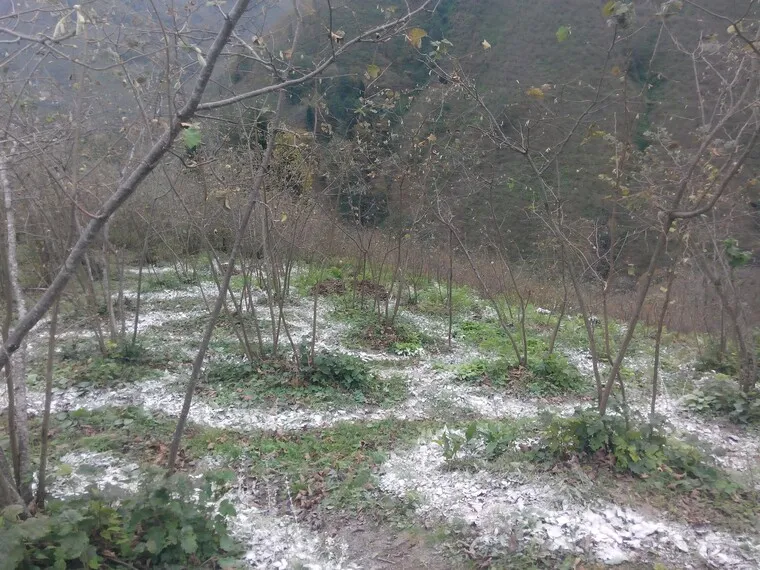
Hazelnut Fertilization Program: Annual Schedule and Application Rates
When to fertilize hazelnuts, which fertilizer types to use, and how much per decare. A practical guide to nitrogen, phosphorus, potassium and organic fertilizer applications.
Soil and Leaf Analysis Guide for Hazelnut Orchards
When to have a soil analysis done in a hazelnut orchard, how to take the sample, and how to read the results. Leaf analysis timing and method explained.
Urea Phosphate 18-44-0 Fertilizer: Usage and Benefits in Hazelnut
What is urea phosphate 18-44-0 fertilizer and how is it used in hazelnut orchards? Application timing, dosage calculation, differences from DAP, and key considerations.
Hazelnut Growing Guide: From Planting to Harvest, Step by Step
A complete guide to growing hazelnuts. Pruning, fertilization, pest control, harvest and market knowledge — everything a hazelnut grower needs on a single page.
More Fertilization Guides
Ammonium Nitrate (33-0-0): Use, Dosage and Leaching Risk in Hazelnuts
What is ammonium nitrate fertilizer and how is it used in hazelnuts? The 16.5% ammonium + 16.5% nitrate balance, how it differs from CAN, behaviour on acid soils, nitrate leaching and dose calculation.
Ammonium Sulfate (21-0-0) Fertilizer: Use in Hazelnuts and the Acidity Risk
What is ammonium sulfate fertilizer, and when and how should it be used in hazelnut orchards? 21% nitrogen + 24% sulfur, dosage logic, soil acidification risk and a comparison with CAN.
Boron Fertilization in Hazelnuts: Blank Nuts, Dosage and Toxicity Risk
What does boron do in hazelnuts, and does a deficiency cause blank nuts? Critical boron values in soil and leaf analysis, soil and foliar application rates, and the risk of boron toxicity.
Farmyard Manure and Organic Matter in Hazelnut Orchards: Building the Foundation
What does farmyard (barn) manure do in a hazelnut orchard, what is well-rotted manure, when and how is it applied? The role of organic matter in holding water and nutrients, husk compost and common mistakes.