
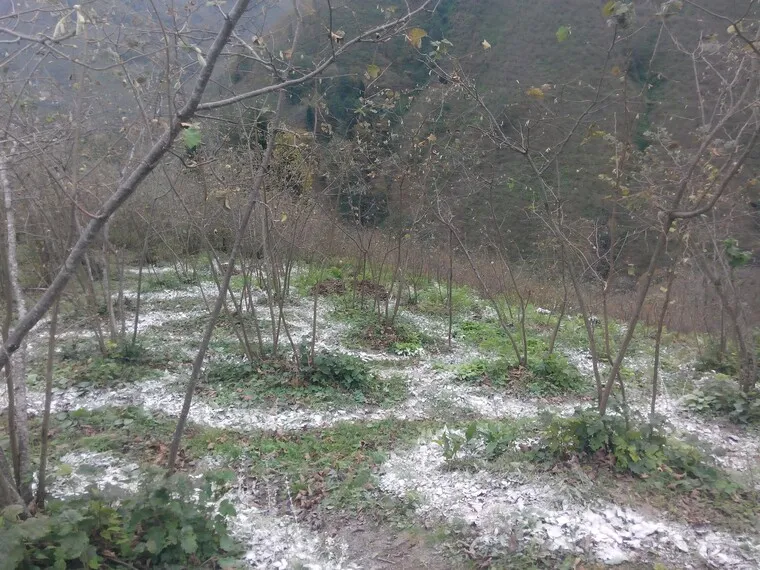
Why Does Hazelnut Fertilization Matter?
The hazelnut bush draws large quantities of nutrients out of the soil. Every harvest carries nitrogen, phosphorus, potassium and micronutrients off the orchard along with the nuts. If those losses are not replaced with fertilizer, the soil is gradually depleted, yields fall year after year, and nut quality deteriorates.
With a sound fertilization program:
- Yield per decare can rise by 30-50%
- Nut quality (kernel ratio, plumpness) improves
- Tree health strengthens and disease resistance increases
- Soil fertility is preserved over the long term
Save Money With a Soil Analysis
Always have a soil analysis done before you start applying fertilizer. Building the fertilizer plan around the analysis results prevents both wasted fertilizer spend and damage to the soil. Read our soil analysis guide.
Annual Fertilization Program
Hazelnut fertilization is spread across the year, with different fertilizer types applied in different periods. The schedule below is organised by season.
Winter Fertilization (November-February)
During winter, the base fertilizers are applied according to the soil analysis.
Farmyard manure:
- Applied once every 3-4 years (annual application leads to salt accumulation)
- Rate: 25-30 kg of well-rotted farmyard manure per bush (2-3 tonnes per decare)
- Application: Under the drip line, away from the trunk, worked into the soil
- Purpose: Raising the soil’s organic matter content and improving soil structure
Phosphorus and potassium:
- The rate is determined according to the soil analysis
- Applied in autumn or early winter
- Must be incorporated into the soil (never left on the surface)
First Nitrogen Application (March)
The most critical nutrient for hazelnut is nitrogen. The first nitrogen application is made in March.
- Fertilizer: Ammonium sulfate (21% N) or ammonium nitrate (33% N)
- Rate (ammonium sulfate): 20-25 kg per decare
- Rate (ammonium nitrate): 13-15 kg per decare
- Timing: Mid-March, when the buds begin to swell
- Application: Broadcast under the drip line and, where possible, incorporated into the soil
Note: As explained in the January care calendar, if winter fertilization has already been carried out, the March nitrogen rate should be adjusted accordingly.
Second Nitrogen Application (May-June)
A second nitrogen application is made during nut development.
- Fertilizer: Urea (46% N)
- Rate: 10-15 kg per decare
- Timing: Mid-May to early June
- Application: Broadcast under the drip line
- Important: No nitrogen should be applied after July (it prolongs shoot growth and delays hardening off for winter)
The Danger of Excess Nitrogen
Over-application of nitrogen causes serious problems: leaf tissue softens and susceptibility to powdery mildew increases, shoot growth continues too long and the tree cannot prepare for winter, and the kernel turns watery and poor in quality. Set your rates according to the soil analysis results.
Foliar Fertilizer (May-July)
Foliar fertilizer is used to correct micronutrient deficiencies quickly.
- Content: Micronutrients such as boron, zinc, iron and manganese
- Application: Sprayed onto the leaf surface (early morning or evening)
- Frequency: 2-3 applications at 15-20 day intervals
- Caution: Can be tank-mixed with pesticide sprays (compatibility must be checked first)
Autumn Fertilization (October-November)
Post-harvest soil renewal and preparation for the coming season.
- Phosphorus-potassium: According to the soil analysis
- Liming: If soil pH is below 5.5, apply lime (100-200 kg per decare)
- Timing: Late September to November
- Important: Lime and nitrogen fertilizer must not be applied at the same time (it causes nitrogen loss)
Fertilizer Types
Nitrogen Fertilizers
Nitrogen is the nutrient hazelnut needs most. It is essential for leaf and shoot growth and for nut formation.
| Fertilizer | N Content | Characteristics | Period |
|---|---|---|---|
| Ammonium sulfate | 21% N + 24% S | Not suitable for acidic soils, contains sulfur | March |
| Ammonium nitrate | 33% N | Fast acting, use with care in high-rainfall areas (leaching) | March |
| Urea | 46% N | High N content, economical, must be incorporated into the soil | May-June |
| Calcium ammonium nitrate | 26% N | Preferable on acidic soils | March |
Phosphorus Fertilizers
Important for root development, flowering and nut set.
- Triple superphosphate (TSP): 42-46% P₂O₅ — the most widely used phosphorus fertilizer
- Diammonium phosphate (DAP): 18% N + 46% P₂O₅ — supplies both nitrogen and phosphorus
- Application: Autumn or early winter, incorporated into the soil
- Rate: According to soil analysis results, generally 15-25 kg of TSP per decare
Potassium Fertilizers
Needed for nut quality, disease resistance and drought tolerance.
- Potassium sulfate: 50% K₂O — the most suitable potassium fertilizer for hazelnut
- Do not use potassium chloride: Hazelnut is sensitive to chloride
- Application: Autumn or winter, incorporated into the soil
- Rate: According to soil analysis results, generally 15-20 kg per decare
Organic Fertilizers
They improve the soil’s physical structure, water-holding capacity and biological activity.
- Farmyard manure: The most common, applied once every 3-4 years
- Compost: Orchard residues, leaf mould
- Green manure: Legume crops sown and then worked into the soil
- Worm castings: High in nutrients, expensive but effective
The Value of Organic Fertilizer
Organic fertilizer does more than supply nutrients — it improves soil structure. In heavy clay soils it increases aeration; in sandy soils it raises water-holding capacity. It should be used alongside mineral fertilizers, not instead of them.
Working Out the Rates
The table below gives average rate recommendations for orchards where no soil analysis has been carried out. These amounts may change once analysis results are available.
| Period | Fertilizer Type | Rate (per decare) | Purpose |
|---|---|---|---|
| November-February | Farmyard manure | 2-3 tonnes (every 3-4 years) | Organic matter |
| November-February | TSP (phosphorus) | 15-25 kg | Root development |
| November-February | Potassium sulfate | 15-20 kg | Nut quality |
| March | Ammonium sulfate | 20-25 kg | First nitrogen |
| May-June | Urea | 10-15 kg | Second nitrogen |
| May-July | Foliar fertilizer | Label rate | Micronutrients |
| November | Lime | 100-200 kg (according to pH) | pH correction |
Important: These are general recommendations. Rates set on the basis of a soil analysis will always be more accurate and more economical.
The Cost of Poor Timing
Fertilizer applied at the wrong time is not merely ineffective — it can do real harm. Nitrogen applied after July, for example, prolongs shoot growth, the tree cannot harden off for winter, and the risk of frost damage rises. Stick to the calendar.
Common Mistakes
The mistakes most frequently seen in hazelnut fertilization:
- Fertilizing without a soil analysis: The most widespread error. Applying fertilizer without knowing what the soil actually needs is both wasteful and harmful
- Applying too much nitrogen: Leaf tissue softens, susceptibility to powdery mildew rises, kernel quality falls
- Applying farmyard manure every year: Once every 3-4 years is enough. Annual application leads to salt accumulation
- Placing fertilizer against the trunk: Fertilizer belongs under the drip line. Applied at the base of the trunk it can cause root burn
- Applying lime and nitrogen fertilizer together: Lime increases gaseous nitrogen loss. Leave at least one month between them
- Leaving fertilizer on the soil surface: Phosphorus and potassium fertilizers must be incorporated; on the surface they remain ineffective
- Poor timing: Applying nitrogen after July, or skipping liming before winter
Conclusion
Hazelnut fertilization should be built on soil analysis results, applied at the right time and kept to measured rates. The “more fertilizer equals more yield” mindset is damaging both economically and environmentally.
In summary:
- Fertilization must always follow soil analysis results
- The March and May-June nitrogen applications are the most critical
- Apply farmyard manure once every 3-4 years
- Place fertilizer under the drip line, away from the trunk
- Do not apply nitrogen after July
- Never apply lime and nitrogen fertilizer at the same time
For detailed information on the soil analysis that underpins your fertilization program, see our soil analysis guide. For every aspect of hazelnut husbandry, review our hazelnut guide.
📚 Hektas 📚 Hazelnut Research Institute📚Sources
Related Guides
View all Fertilization guides
Soil and Leaf Analysis Guide for Hazelnut Orchards
When to have a soil analysis done in a hazelnut orchard, how to take the sample, and how to read the results. Leaf analysis timing and method explained.
Hazelnut Growing Guide: From Planting to Harvest, Step by Step
A complete guide to growing hazelnuts. Pruning, fertilization, pest control, harvest and market knowledge — everything a hazelnut grower needs on a single page.
More Fertilization Guides
Ammonium Nitrate (33-0-0): Use, Dosage and Leaching Risk in Hazelnuts
What is ammonium nitrate fertilizer and how is it used in hazelnuts? The 16.5% ammonium + 16.5% nitrate balance, how it differs from CAN, behaviour on acid soils, nitrate leaching and dose calculation.
Ammonium Sulfate (21-0-0) Fertilizer: Use in Hazelnuts and the Acidity Risk
What is ammonium sulfate fertilizer, and when and how should it be used in hazelnut orchards? 21% nitrogen + 24% sulfur, dosage logic, soil acidification risk and a comparison with CAN.
Boron Fertilization in Hazelnuts: Blank Nuts, Dosage and Toxicity Risk
What does boron do in hazelnuts, and does a deficiency cause blank nuts? Critical boron values in soil and leaf analysis, soil and foliar application rates, and the risk of boron toxicity.
Farmyard Manure and Organic Matter in Hazelnut Orchards: Building the Foundation
What does farmyard (barn) manure do in a hazelnut orchard, what is well-rotted manure, when and how is it applied? The role of organic matter in holding water and nutrients, husk compost and common mistakes.