
What Is the Fall Webworm?
The fall webworm (Hyphantria cunea) is, as the Turkish name “American white butterfly” suggests, a white moth — 11 mm long in males and 15 mm in females. The damage is done not by the moth but by its larva: a long-haired caterpillar 25-35 mm long when mature, dark in colour with orange spots along the sides.
This pest is not tied to hazelnut alone — it has a very wide host range and moves into hazelnut orchards from mulberry, walnut, poplar and similar trees growing nearby.
Two to Three Generations a Year — One Spray Is Not Enough
Most hazelnut pests have a single generation per year; the fall webworm has two to three. That means the orchard has to be monitored right through the season. An orchard cleaned up in spring can be reinfested in August by the second or third generation.
Damage Symptoms: Web Nests
This pest is among the easiest to diagnose in hazelnut, because the symptom is visible from a distance and resembles nothing else:
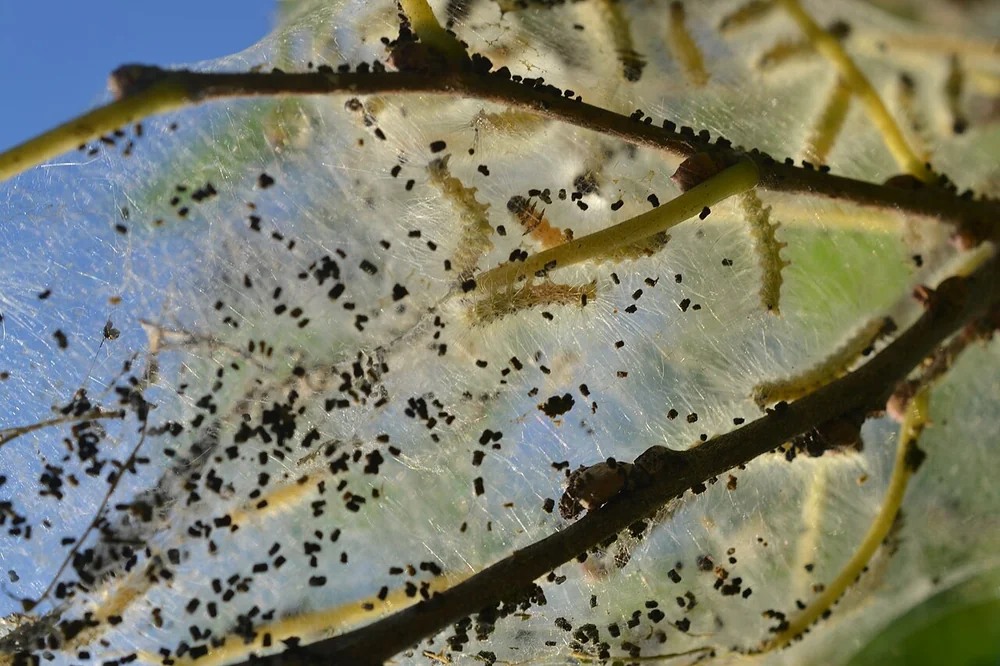
- Silken web nests: larvae hatching from the egg masses spin silken webs on the underside of the leaf. As the web grows it wraps several leaves, then the whole shoot tip
- Communal feeding: the larvae live and feed together inside the web
- Leaves eaten to the midrib: the larvae consume the leaf blade, leaving only the midrib — the leaves inside the web take on a skeletal look
- Bare shoots: under heavy infestation the shoot tips are left entirely without leaves
Spotting the Web Early Makes Everything Easier
While the larvae are still gathered inside the web they are easy to destroy, by hand or with a spray. Once the web has grown and the larvae have dispersed, control becomes far harder. Scanning the orchard weekly and catching the newly spun small webs is therefore the cheapest control method there is.
Life Cycle
| Stage | What happens |
|---|---|
| Overwintering | As pupae — under bark, in plant debris and other sheltered places |
| Spring | The moths emerge and lay egg masses on the undersides of leaves |
| Larvae | The eggs hatch; the larvae spin silken webs and feed communally |
| Summer – Autumn | Two to three generations follow one another, each producing new web nests |
Control Methods
1. Mechanical Control (The Most Effective and the Cheapest)
Mechanical control is genuinely decisive against this pest, because the larvae are grouped together and visible.
- Collecting leaves with egg masses: when egg packets are spotted on the underside of a leaf, those leaves are picked off and destroyed
- Cutting out web nests: shoot tips carrying webs with larvae inside are cut off, removed from the orchard and burned
- Timing: while the web is small and the larvae are still inside. Once they have dispersed this method no longer works
Do Not Leave Cut Webs in the Orchard
Cutting off a webbed shoot and dropping it on the ground is not enough — the larvae inside will complete their development, pupate and become the source of the next generation. Cut webs must be taken out of the orchard and burned.
2. Chemical Control
Timing depends on the age of the larvae; small larvae are far more susceptible.
- The right moment: when all the eggs in the egg mass have hatched, or when the larvae are just starting to spin a new web
- Why exactly then: if the eggs have not yet hatched the spray achieves nothing; once the larvae have grown and thickened the web, the spray cannot penetrate it
- Season-long monitoring: with two to three generations, one application does not close the season; the decision is made afresh with each new wave of webs
Always Consult Before Choosing a Product or Dose
No trade name or dosage is given on this page, deliberately. Registered preparations and their dosages vary by region, pest and year. Do not apply any pesticide without consulting your provincial/district directorate of agriculture and forestry or an agricultural engineer. Always notify local beekeepers before spraying.
3. The Orchard Surroundings
The fall webworm has many hosts. Mulberry, walnut, poplar and ornamental trees along the orchard boundary can all be sources of infestation. When you clean up your own orchard, check the web nests on those surrounding trees as well — otherwise you will be reinfested with every generation.
Frequently Asked Questions
When should the spray be applied? There is no fixed calendar date; the decision is made from the state of the larvae. The right moment is when all the eggs in the mass have hatched or the larvae are just beginning to spin a new web. Because there are two to three generations, the orchard must be monitored all season.
There are webs on my shoot tips — what are they? Silken webbing that starts on the underside of a leaf and wraps the shoot tip, with hairy caterpillars marked with orange spots along the sides inside it, is the fall webworm. No other hazelnut pest produces this picture.
Can I avoid spraying altogether? Often yes. If the webs are cut out and burned while still small, the population can be suppressed without any pesticide. This is both the cheapest method and the safest one for bees. In a large orchard with widespread infestation, however, hand control cannot keep up.
Does the leaf feeding affect the crop? It does not eat the nut directly, but the loss of leaf area reduces photosynthesis; the bush weakens and both this year’s kernel fill and next year’s bud formation suffer. In heavy years, shoot tips left completely bare represent a serious loss of vigour.
This guide is based on data from the Hazelnut Research Institute of the Turkish Ministry of Agriculture and Forestry. Always make spraying decisions in consultation with an agricultural engineer.
📚Sources
Related Guides
View all Pest Control guides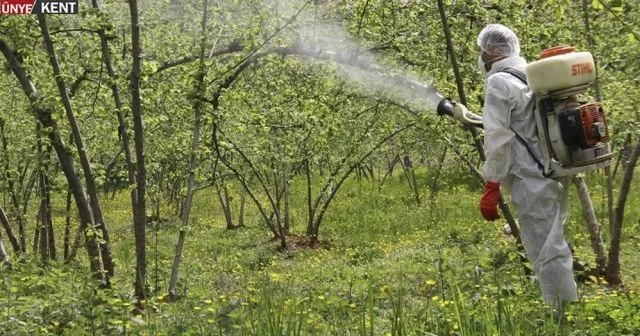
Hazelnut Spraying Calendar: Annual Program for All Pests
Hazelnut orchard spraying calendar: spray timings, dosages and rules against all pests and diseases from February to October.
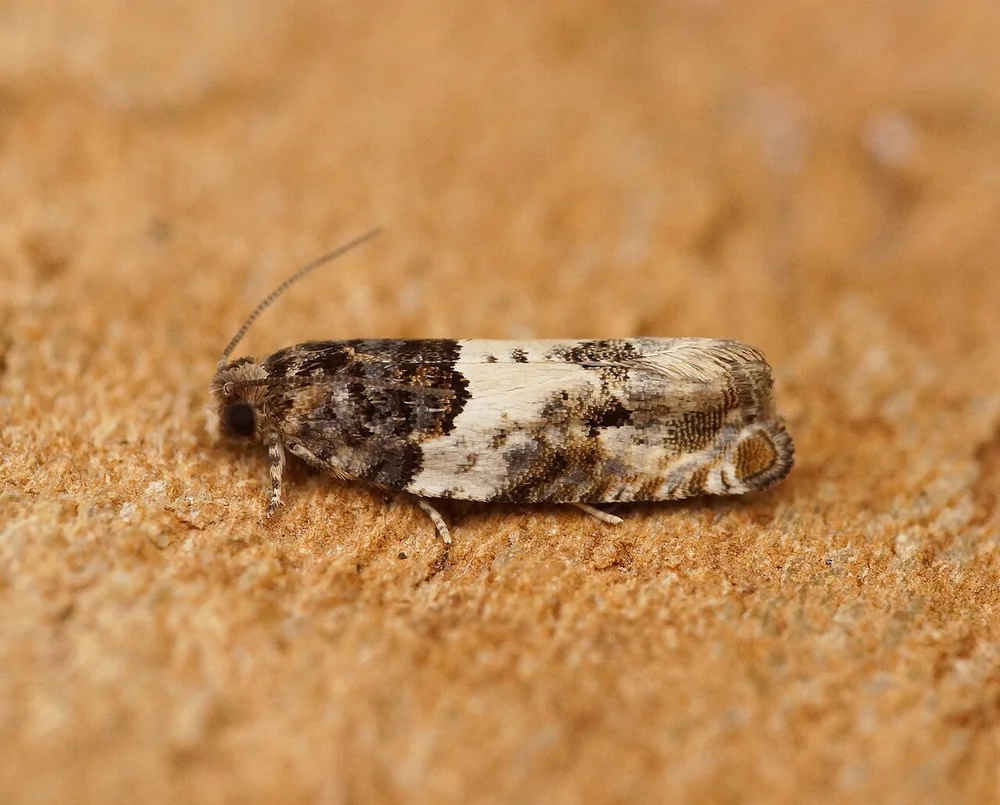
Hazelnut Shoot Moth (Gypsonoma dealbana): Symptoms and Spray Timing
Hazelnut shoot moth: triangular brown patches on the leaf and dying shoots. Spraying is done after harvest, finishing by the end of September. Threshold: 15 feeding marks per 100 leaves.
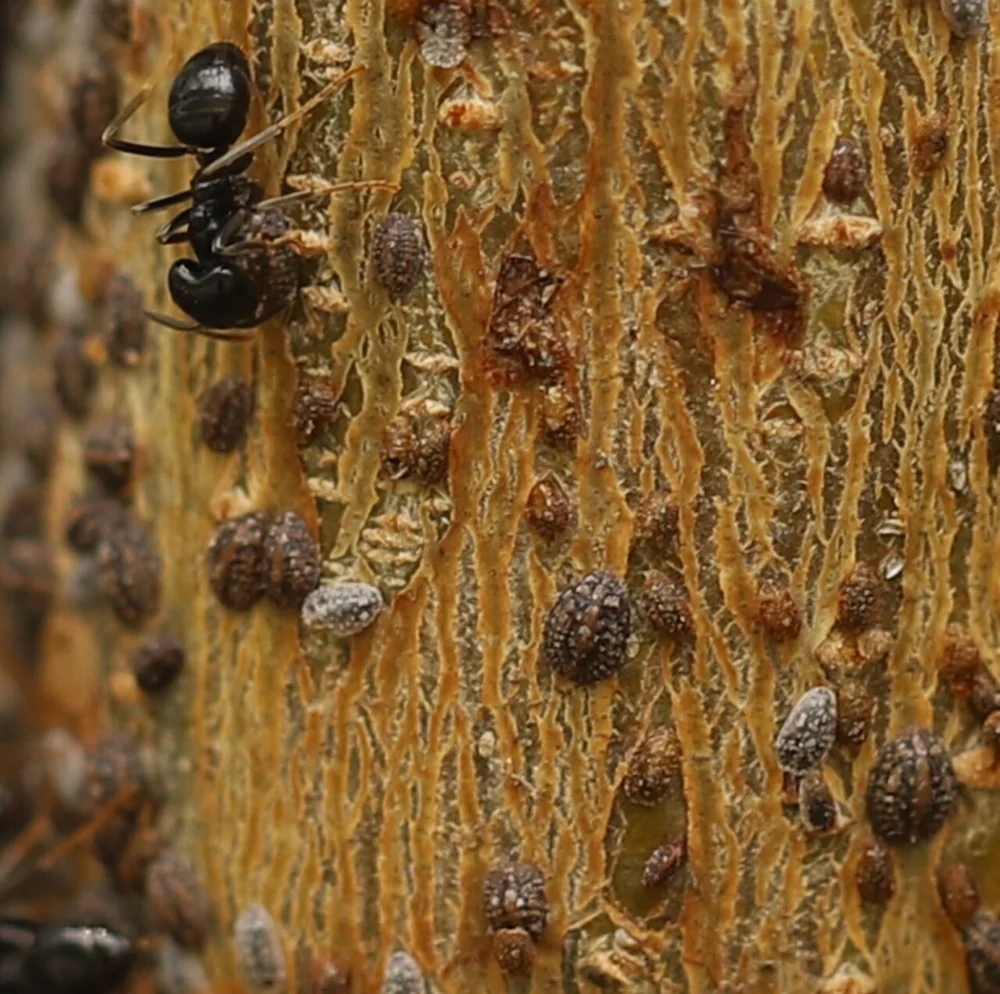
Brown Scale on Hazelnut (Parthenolecanium corni): Symptoms, Sooty Mould and Control
Hazelnut brown scale: brown hemispherical shells on branches and shoots, sticky honeydew and sooty mould blackening. Spray at the end of June; threshold is 5 live scales on each of 30 shoots.
Hazelnut Growing Guide: From Planting to Harvest, Step by Step
A complete guide to growing hazelnuts. Pruning, fertilization, pest control, harvest and market knowledge — everything a hazelnut grower needs on a single page.
More Pest Control Guides
Hazelnut Shoot Moth (Gypsonoma dealbana): Symptoms and Spray Timing
Hazelnut shoot moth: triangular brown patches on the leaf and dying shoots. Spraying is done after harvest, finishing by the end of September. Threshold: 15 feeding marks per 100 leaves.
Hazelnut Gall Midge (Mikomyia coryli): Symptoms and Spray Timing
Hazelnut gall midge: galls along the leaf veins, on the husk cluster and at shoot tips. Spray when shoots carry two leaflets, late March to early April, repeated 20 days later. Threshold 50% infestation.
Hazelnut Shot-Hole Borer (Xyleborus dispar): Symptoms, Traps and Spray Timing
Hazelnut shot-hole borer / dalkıran (Xyleborus dispar): 2 mm holes in the branch and seeping sap. When to hang red sticky traps, why the spray goes on in early July, and why whole bushes die.
Green Stink Bug on Hazelnut (Palomena prasina): Symptoms, Spray Timing and Threshold
Green stink bug (Palomena prasina) and brown marmorated stink bug on hazelnut: blank, blackened and spotted kernels. Spraying starts mid-April; threshold is 1 overwintered adult per 10 bushes.