
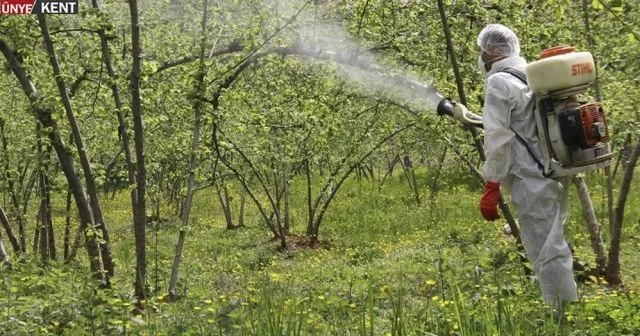
Why Is a Hazelnut Spraying Calendar Important?
Dozens of insect pests and disease agents are found in hazelnut orchards. The active period of each pest is different, and if control is not carried out at the right time it remains ineffective. The spraying calendar is a guide showing which pest should be dealt with and when.
The benefits of following an annual spraying calendar:
- Timely intervention: Spraying each pest during the period when it is most vulnerable
- Cost saving: Avoiding unnecessary sprays
- Environmental protection: Maximum effect with minimum product
- Yield security: Preventing crop losses
The Threshold Principle
There is an economic damage threshold for every pest. The decision to spray should be based on whether the pest population has exceeded this threshold. Do not spray for every insect you see — your provincial agricultural directorate provides information on threshold values.
February-March Period
Late winter and early spring are the ideal period for winter control of some pests.
Hazelnut Big Bud Mite
Pest: Hazelnut big bud mite (Phytoptus avellanae) Period: February-March (bud swelling stage)
The big bud mite lives in hazelnut buds and causes them to swell abnormally. Infested buds produce no fruit.
Control:
- Mechanical: Pick the swollen buds by hand and destroy them (most effective method)
- Chemical: Application of a sulfur product (during the bud break period)
- Timing: Late February - early March, before the buds break
Oystershell Scale
Pest: Oystershell scale (Lepidosaphes ulmi) Period: February (winter spray)
It forms brown, comma-shaped scales on branches and the trunk. In heavy infestations the tree weakens and branches dry out.
Control:
- Winter oil: Application of 3% winter oil (mineral oil)
- Timing: After leaf fall, before bud break
- Application: The trunk and branches must be thoroughly wetted
April Period
As spring advances, fungal diseases and some pests become active.
Powdery Mildew Disease
Disease: Powdery mildew (Phyllactinia guttata / Erysiphe corylacearum) Period: Late April - early May (first spray)
A fungal disease that forms a white powdery coating on the leaves. For detailed information, see our powdery mildew control guide.
Control:
- 1st spray: Late April, at the first symptoms or as a preventative
- Product: Wettable sulfur or liquid sulfur (first choice), triazole group (in severe cases)
- Repeat: A 2nd application after 15-20 days if necessary
Green Shield Bug
Pest: Green shield bug (Palomena prasina) Period: April-July
When it feeds by sucking on the hazelnut fruit, it causes rotten spots in the kernel (“stink bug nut”). In heavy infestations the yield loss is serious.
Control:
- Monitoring: Population tracking with pheromone traps
- Chemical: Pyrethroid group products (when the threshold is exceeded)
- Timing: In June, during the fruit development period
May-June Period
This is the busiest spraying period of the year. Simultaneous control against more than one pest may be required.
Hazelnut Weevil
Pest: Hazelnut weevil (Curculio nucum) Period: Late May - early June (critical)
The most important pest of hazelnuts. The adult beetle lays its egg inside the nut and the larva develops by eating the kernel. For detailed information, see our hazelnut weevil control guide.
Control:
- 1st spray: Late May, when the adults emerge from the soil
- 2nd spray: 15-20 days later (if necessary)
- Product: Lambda-cyhalothrin, alpha-cypermethrin, deltamethrin
- Caution: Spraying must be done before the eggs are laid
Hazelnut Weevil Timing
In hazelnut weevil spraying, even a delay of 1-2 weeks causes major yield loss. Once the adult beetles have laid their eggs, spraying remains ineffective. Follow the warnings issued by your provincial agricultural directorate.
Hazel Longhorn Beetle
Pest: Hazel longhorn beetle (Oberea linearis) Period: May-June
It makes ring-shaped cuts at the tips of shoots, causing the branches to dry out.
Control:
- Mechanical: Collect the drying shoot tips and destroy them
- Chemical: Can be applied at the same time as the hazelnut weevil spray
- Timing: May-June, during the adult flight period
July-August Period
This is the last control period before harvest. Particular attention must be paid to pre-harvest intervals.
Brown Marmorated Stink Bug
Pest: Brown marmorated stink bug (Halyomorpha halys) Period: July-September
An invasive species that sucks on the hazelnut fruit and causes rot in the kernel. It has been creating serious problems in recent years.
Control:
- Monitoring: Regular tracking with pheromone traps
- Chemical: Pyrethroid group products (when the threshold is exceeded)
- Caution: Strictly observe the pre-harvest intervals
- Biological: Work with the egg parasitoid Trissolcus japonicus is ongoing
Fall Webworm
Pest: Fall webworm (Hyphantria cunea) Period: 1st generation: June-July / 2nd generation: August-September
The caterpillars build webbed nests on the leaves and feed together in groups. In heavy infestations the tree can lose its foliage completely.
Control:
- Mechanical: Tear the web nests off the branches and destroy them (most effective)
- Chemical: Prefer Bacillus thuringiensis (Bt) — selective and environmentally friendly
- Timing: While the caterpillars are still small (as soon as a nest is seen)
Honey Bee Protection
Protecting honey bees while spraying is of vital importance. Never spray during the flowering period. Carry out spraying in the evening hours (after bee flight has ended) or early in the morning (before the bees come out).
General Spraying Rules
Basic rules to be followed in all spray applications:
Protective Equipment Is Mandatory
At every spray application it is mandatory to wear a mask (half-face or full-face), protective goggles, gloves, long-sleeved clothing and boots. After spraying, wash your hands and face with soap and water and change your clothes.
Application rules:
- Wind: Do not spray if the wind speed is above 5 km/h. Spray drift causes both loss of effectiveness and environmental pollution
- Rainfall: Finish spraying at least 2 hours before rain. Rain washes the product off
- Temperature: Do not spray above 35°C (the product evaporates)
- Time of day: Spray early in the morning (06-09) or in the evening (17-20)
Dosage rules:
- Strictly follow the label dosage — more product is not more effective
- Mix the products with clean water
- Mixing order: First fill the tank halfway with water, add the product, then add the remaining water
- Use the prepared mixture on the same day, do not let it stand
Mixing Order
If more than one product is to be mixed, the order matters: First the powder formulations (WP, WG), then the liquids (SC, EC) should be added. Check the compatibility table or consult your provincial agricultural directorate.
Pre-harvest intervals:
- Always observe the pre-harvest interval (in days) stated on each product’s label
- As harvest approaches, prefer products with a short pre-harvest interval
- Do not harvest before the interval has elapsed — product residue creates a health risk
Annual Spraying Calendar Table
| Period | Pest / Disease | Product Group | Application |
|---|---|---|---|
| February | Oystershell scale | Winter oil (3%) | Trunk and branches |
| February-March | Big bud mite | Sulfur / hand picking | Bud stage |
| March | Shoot moth | Pyrethroid | Bud swelling |
| Late April | Powdery mildew (1st spray) | Sulfur / triazole | Leaf surfaces |
| Early May | Powdery mildew (2nd spray) | Triazole / strobilurin | 15-20 days later |
| Late May | Hazelnut weevil (1st spray) | Lambda-cyhalothrin / deltamethrin | Entire canopy |
| Early June | Green shield bug | Pyrethroid | When the threshold is exceeded |
| Mid-June | Hazelnut weevil (2nd spray) | Alpha-cypermethrin | Repeat if necessary |
| June | Hazel longhorn beetle | Pyrethroid | Together with the weevil spray |
| June-July | Fall webworm (1st generation) | Bt / pyrethroid | When web nests are seen |
| July | Brown marmorated stink bug | Pyrethroid | When the threshold is exceeded |
| August | Fall webworm (2nd generation) | Bt | Watch the pre-harvest interval |
Note: This table is a general guide. Product choice, dosage and timing should be updated according to the recommendations of the provincial agricultural directorate. The list of licensed products may change every year.
Conclusion
Successful pest and disease control in the hazelnut orchard depends on the trio of correct timing, correct product and correct dosage. Hang the spraying calendar up in your orchard and follow the seasonal warnings of your provincial agricultural directorate.
In summary:
- Base your spraying decision on the threshold value and avoid unnecessary sprays
- Intervene during the active period of each pest
- Always use protective equipment
- Protect honey bees; do not spray during the flowering period
- Rotate different product groups
- Observe the pre-harvest intervals
For detailed pest-specific guides, see our hazelnut weevil and powdery mildew disease articles. For general care information, review our hazelnut guide.
📚 FİSKOBİRLİK 📚 Hazelnut Research Institute📚Sources
Related Guides
View all Pest Control guides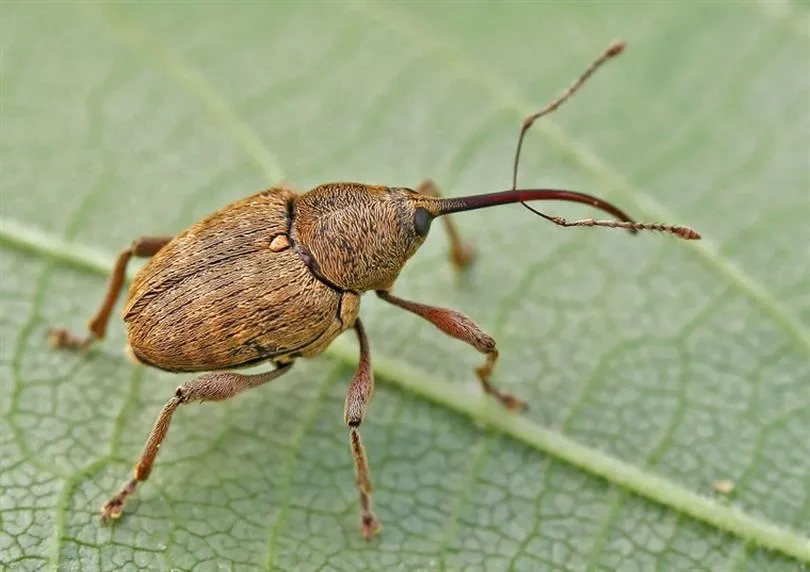
Hazelnut Weevil Control Guide: Identification, Spraying and Prevention
What is the hazelnut weevil (Curculio nucum, formerly Balaninus nucum), its damage symptoms, life cycle and control methods. Spray timing and dosages.
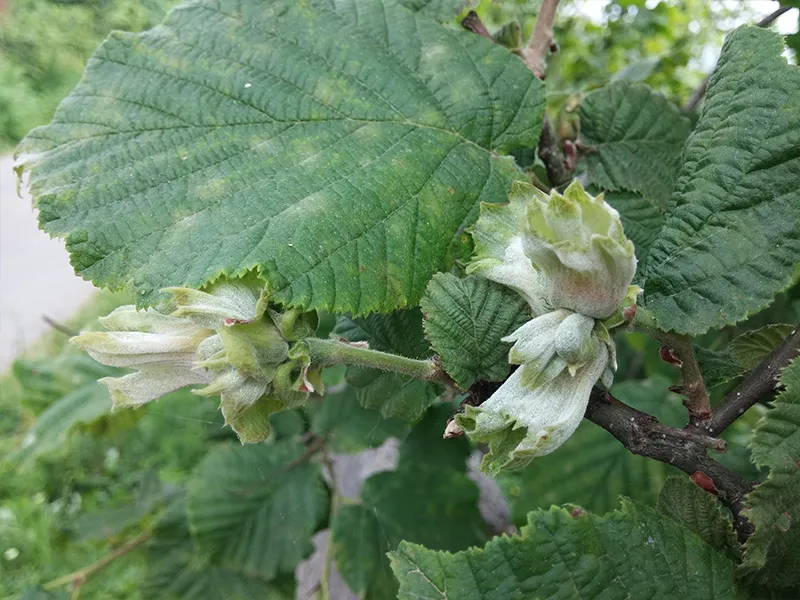
Powdery Mildew in Hazelnuts: Symptoms, Control and Spraying
What is powdery mildew in hazelnuts, what are its symptoms, when should you spray and how is it controlled? Includes an overview of the new powdery mildew (Erysiphe corylacearum).
More Pest Control Guides
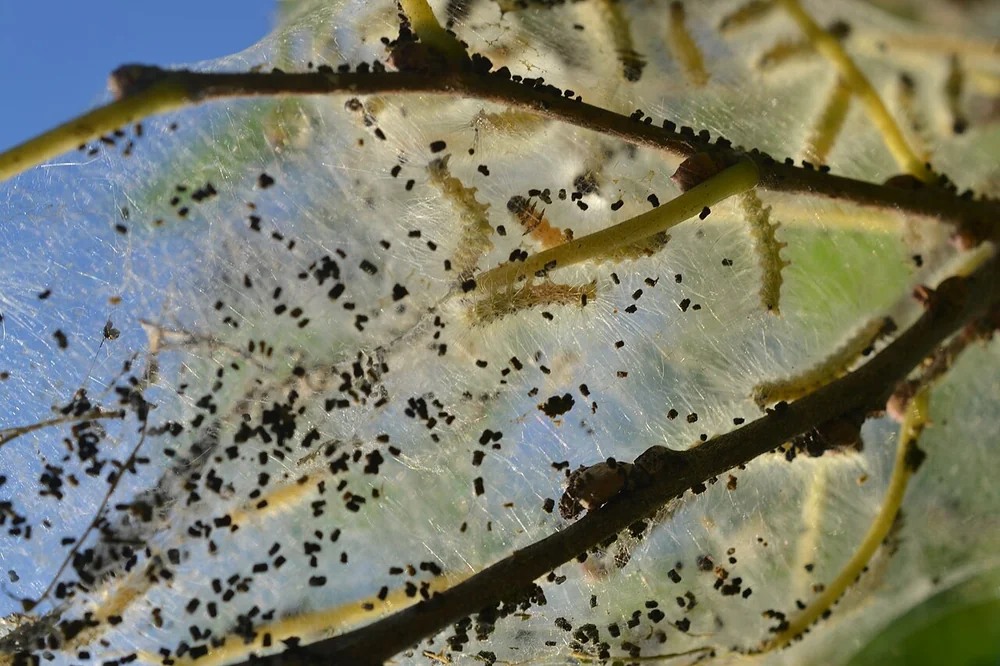
Fall Webworm on Hazelnut (Hyphantria cunea): Web Nests and Control
Fall webworm: silken web nests under the leaves, foliage eaten down to the midrib. Two to three generations a year; spray while the webs are new. Cutting and burning the nests is the most effective method.
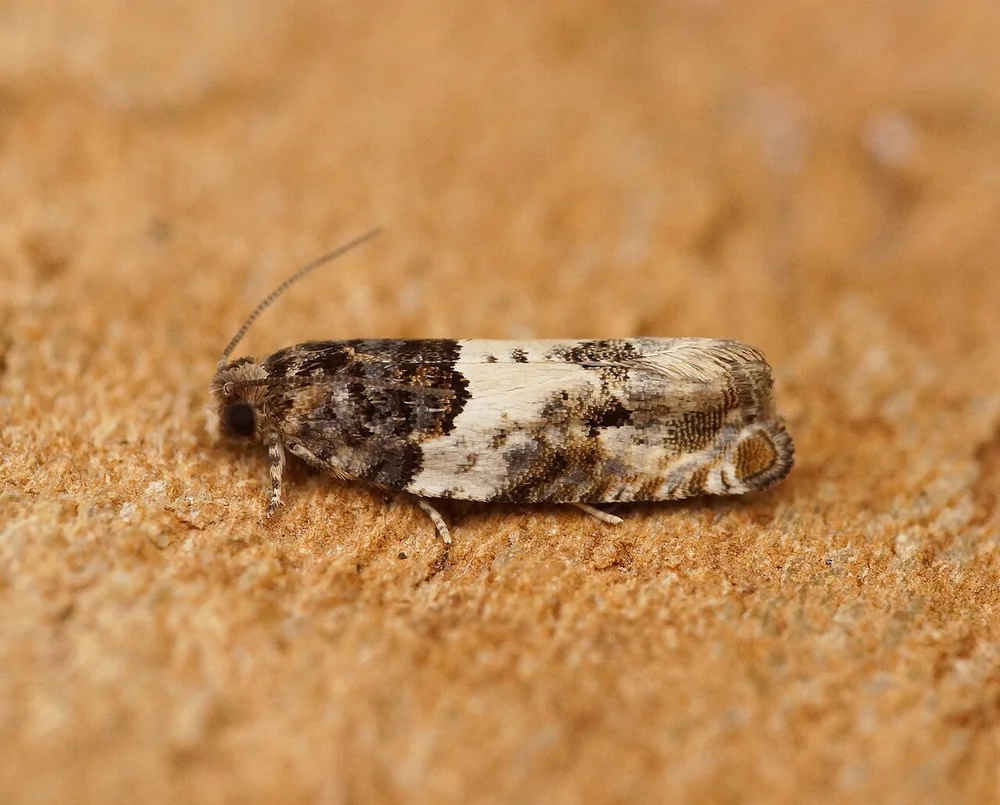
Hazelnut Shoot Moth (Gypsonoma dealbana): Symptoms and Spray Timing
Hazelnut shoot moth: triangular brown patches on the leaf and dying shoots. Spraying is done after harvest, finishing by the end of September. Threshold: 15 feeding marks per 100 leaves.
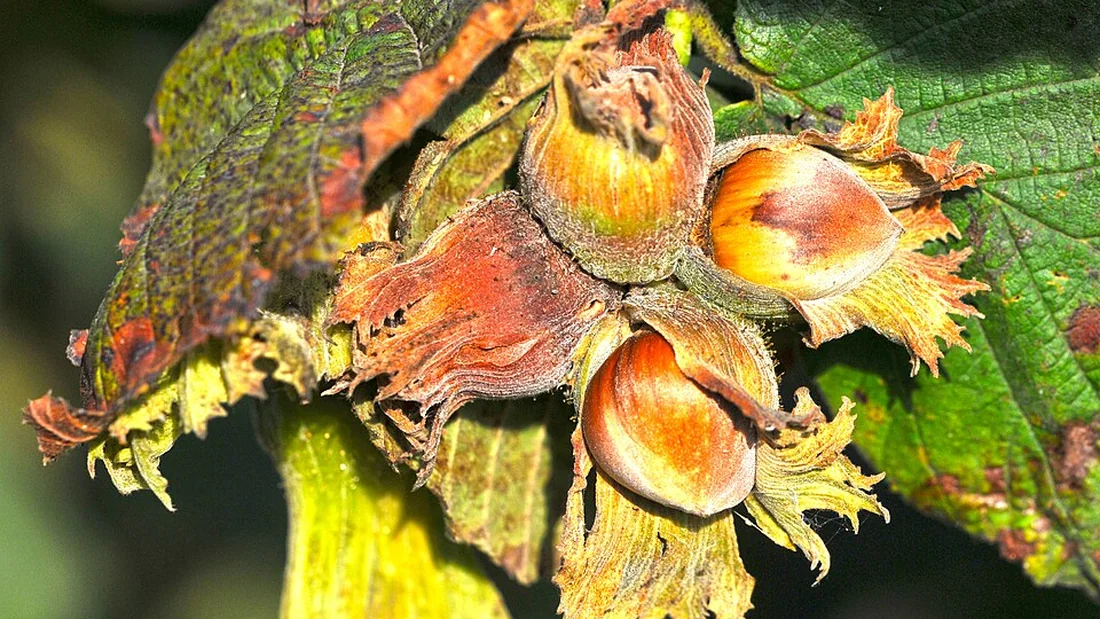
Hazelnut Gall Midge (Mikomyia coryli): Symptoms and Spray Timing
Hazelnut gall midge: galls along the leaf veins, on the husk cluster and at shoot tips. Spray when shoots carry two leaflets, late March to early April, repeated 20 days later. Threshold 50% infestation.
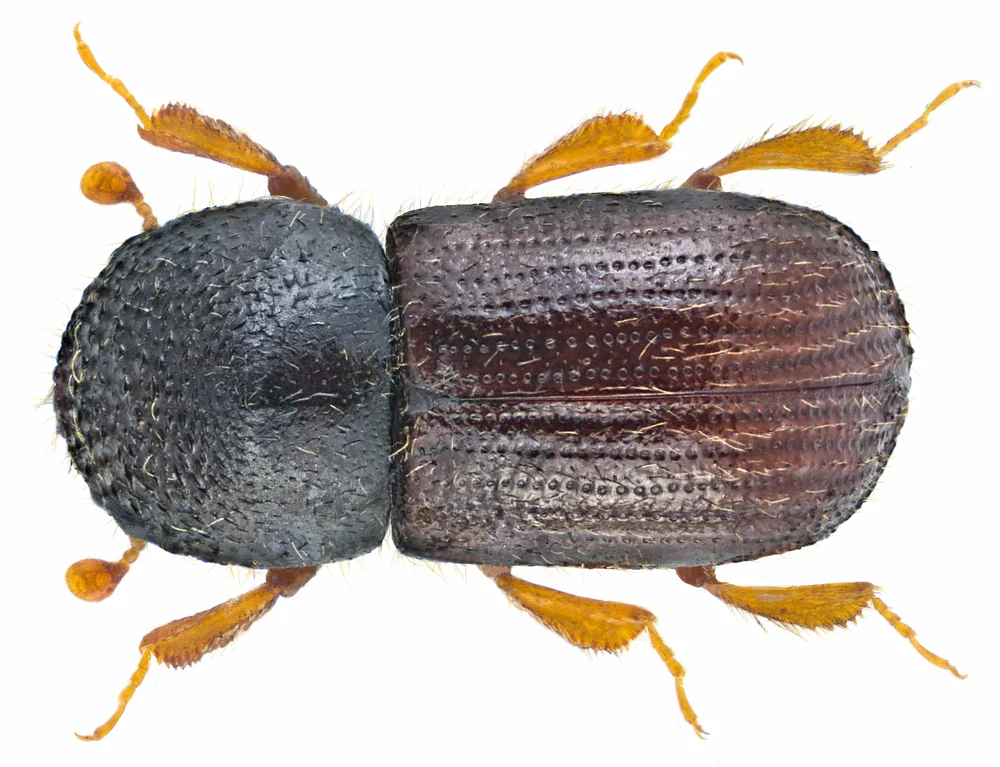
Hazelnut Shot-Hole Borer (Xyleborus dispar): Symptoms, Traps and Spray Timing
Hazelnut shot-hole borer / dalkıran (Xyleborus dispar): 2 mm holes in the branch and seeping sap. When to hang red sticky traps, why the spray goes on in early July, and why whole bushes die.