
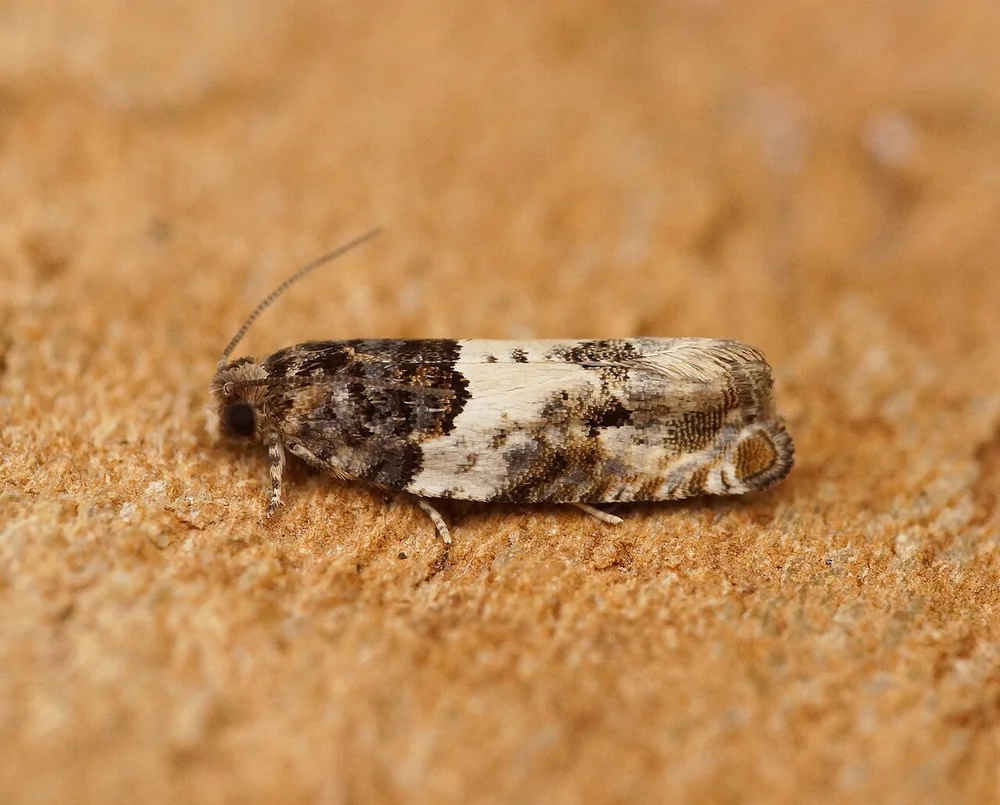
What Is the Hazelnut Shoot Moth?
The hazelnut shoot moth (Gypsonoma dealbana) is a small brown moth 5-7 mm long. Its forewings are milky brown with white lines and a broad yellow-brown band across the middle. The damage is not done by the moth but by its cream-coloured larva, which reaches 7-8 mm when mature.
The most troublesome feature of this pest is its efficiency: a single larva can damage 4-5 shoots. Even a modest number of larvae produces visible shoot loss across the orchard.
Directly Linked to the Big Bud Mite
Shoot moth larvae overwinter at the base of hazelnut buds, in the catkins, and inside the galls formed by the hazelnut big bud mite. In other words, if you have a big bud mite problem, you are also providing ready-made shelter for the shoot moth. Collecting galls in winter hits both pests at once.
Damage Symptoms
The damage appears in two separate periods of the year, in two different forms. To diagnose it you need to know which one you are looking at.
Spring: Dying Shoots
The larva begins feeding in March and tunnels into buds and shoots. With the conducting tissue cut, the shoot dries out. Because one larva moves through 4-5 shoots in turn, the damage multiplies quickly.
Summer: Triangular Patches on the Leaf
This is the shoot moth’s signature symptom and it is not confused with any other hazelnut pest:
Brown patches made of webbing and feeding debris, inside the triangle formed by the midrib and the side veins of the leaf.
The Count Is Made From These Patches
At the end of summer, turn the leaves over and look at the triangles formed by the veins. Brown patches mixed with fine webbing are shoot moth feeding marks, and the threshold count is made directly from them.
Life Cycle
The shoot moth has one generation per year.
| Stage | Month | What happens |
|---|---|---|
| Overwintering | November – February | Larvae overwinter at bud bases, in catkins and in big bud mite galls |
| Waking | March | The larvae start feeding |
| Shoot damage | March – May | Tunnels in buds and shoots; shoots dry out, one larva moving through 4-5 of them |
| Leaf phase | Summer | Webbing and brown feeding patches inside the vein triangle |
| Control window | End of harvest – end of September | Larvae are on the leaves, not yet moved to their overwintering sites |
| Migration | End of September | Larvae withdraw into catkins and galls — the window closes |
Economic Threshold
If at least 15 feeding marks are found per 100 leaves, spraying is warranted.
Make the count after harvest, once the triangular patches on the leaves have become clearly visible.
Control Methods
1. Cultural Measures
- Winter gall collection: the galls formed by the big bud mite are also the shoot moth’s overwintering shelter. Collecting and burning galls in the leafless period reduces both pests
- Removing dying shoots: pruning out the shoots that die in spring lowers the larval population in the orchard
2. Chemical Control
Timing here runs opposite to every other hazelnut pest: control is carried out after harvest.
- Start: at the end of harvest, once the triangular feeding marks on the leaves are clearly defined
- Finish: spraying must be completed by the start of leaf fall, i.e. the end of September
- Why that date matters: at the end of September the larvae migrate into the catkins and galls. Once inside, they cannot be reached and the season is lost
Do Not Skip the Post-Harvest Spray
In hazelnut, “spraying” is associated with spring, and the orchard is usually closed up once harvest ends. The shoot moth’s only control window falls exactly in that period. This is why the Giresun Provincial Directorate announces the shoot moth together with the brown marmorated stink bug for the post-harvest period — both can be targeted in the same September application.
Always Consult Before Choosing a Product or Dose
No trade name or dosage is given on this page, deliberately. Registered preparations and their dosages vary by region, pest and year. Do not apply any pesticide without consulting your provincial/district directorate of agriculture and forestry or an agricultural engineer. Always notify local beekeepers before spraying.
Frequently Asked Questions
When should the spray be applied? After harvest, starting once the triangular feeding marks on the leaves are clearly defined, and completed by the end of September. After that the larvae migrate into the galls and catkins and the spray has no effect.
Are the brown patches on my leaves the shoot moth or a disease? Look at where the patch sits. The shoot moth’s patch lies inside the triangle formed by the midrib and the side veins and contains fine webbing. Leaf spot diseases spread without regard to vein boundaries and contain no webbing.
My shoots have dried out — is this the shoot moth? It may be, but several hazelnut pests kill shoots. With the shoot moth the dieback happens in spring and there is a tunnel in the bud or shoot. If the tip of the shoot dries and stays hanging on the branch, consider the longhorn beetle; if there are 2 mm holes in the branch with sap seeping out, consider the shot-hole borer.
Can I combine it with the brown stink bug spray? In the September application, yes — provincial directorates announce both pests together for the post-harvest period. Make the product choice with an agricultural engineer.
This guide is based on data from the Hazelnut Research Institute of the Turkish Ministry of Agriculture and Forestry and on control announcements issued by provincial directorates of agriculture. Always make spraying decisions in consultation with an agricultural engineer.
📚Sources
- Turkish Ministry of Agriculture and Forestry - Hazelnut Research Institute, Hazelnut Pests
- Turkish Ministry of Agriculture and Forestry - Hazelnut Research Institute, Hazelnut Shoot Moth (Grower Training Publication)
- Sakarya Provincial Directorate of Agriculture - Hazelnut Shoot Moth
- Image: Gypsonoma dealbana — Ben Sale from Stevenage, UK, CC BY 2.0 (resized, converted to WebP)
Related Guides
View all Pest Control guides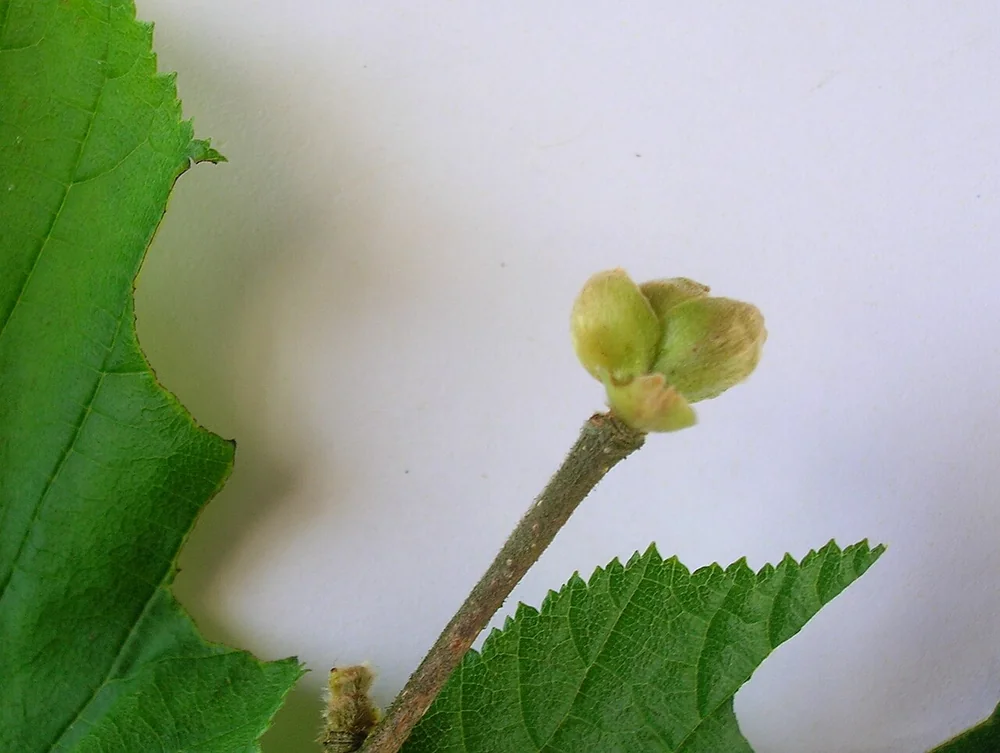
Hazelnut Big Bud Mite (Phytoptus avellanae): Symptoms and Spray Timing
Hazelnut big bud mite: buds swelling into galls, catkin drop and up to 70% yield loss. Spray in the one-week window at the end of April; threshold is 5 big buds per branch. Tombul is most susceptible.
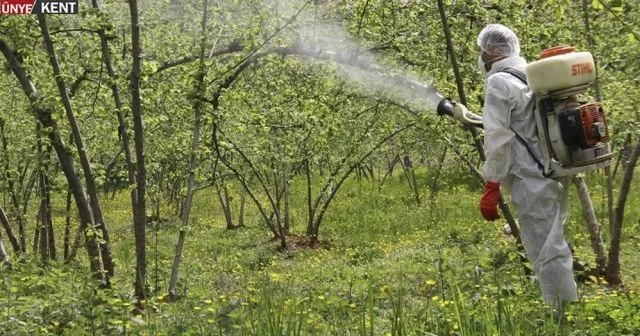
Hazelnut Spraying Calendar: Annual Program for All Pests
Hazelnut orchard spraying calendar: spray timings, dosages and rules against all pests and diseases from February to October.
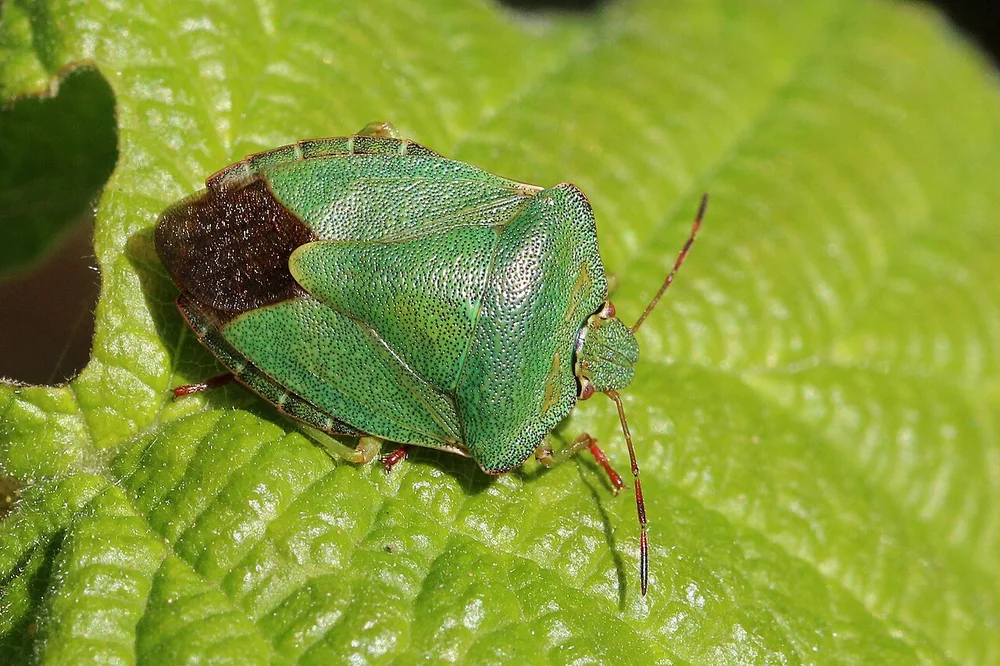
Green Stink Bug on Hazelnut (Palomena prasina): Symptoms, Spray Timing and Threshold
Green stink bug (Palomena prasina) and brown marmorated stink bug on hazelnut: blank, blackened and spotted kernels. Spraying starts mid-April; threshold is 1 overwintered adult per 10 bushes.
Hazelnut Harvest Guide: Picking, Husking and Drying
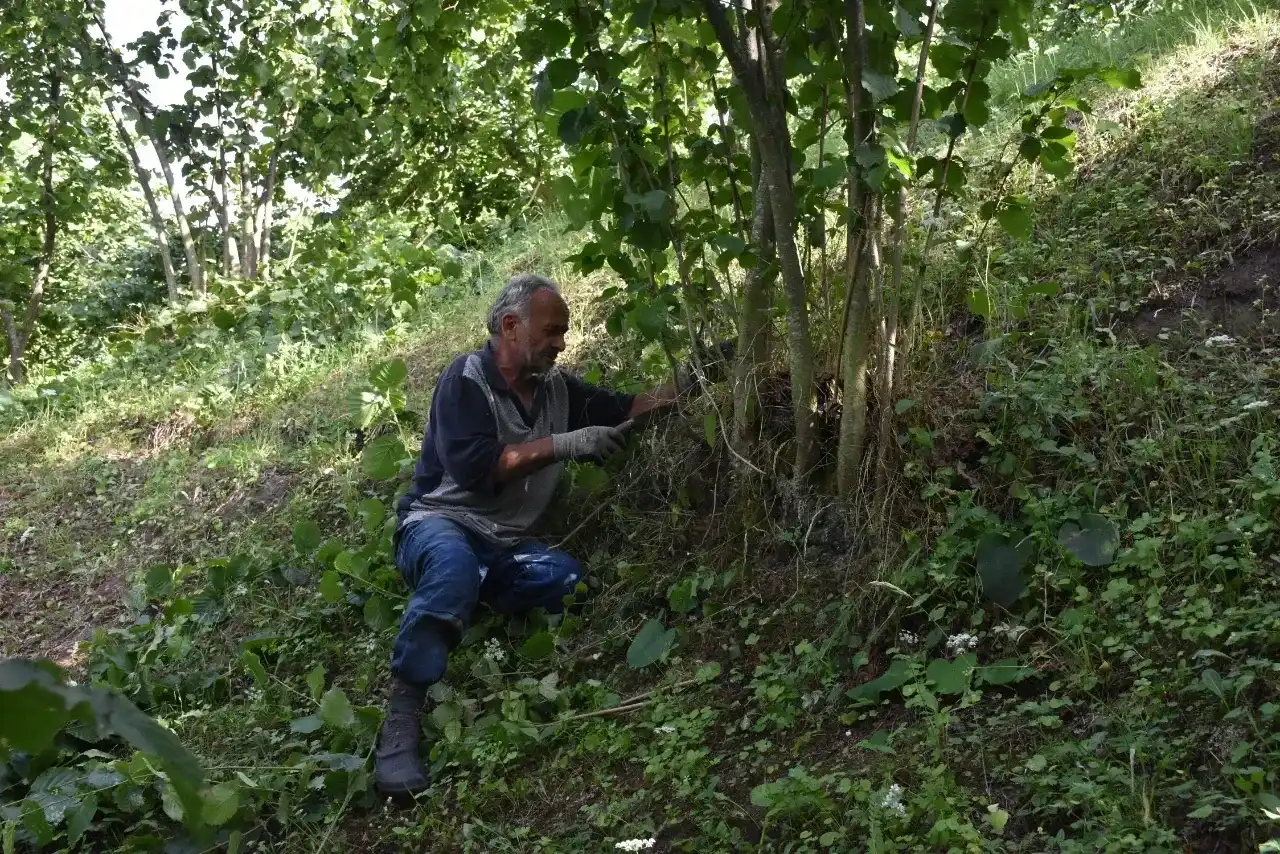
When hazelnuts are ready to pick, harvesting methods, husking and drying technique, plus harvest dates by region and correct storage.
More Pest Control Guides
Fall Webworm on Hazelnut (Hyphantria cunea): Web Nests and Control
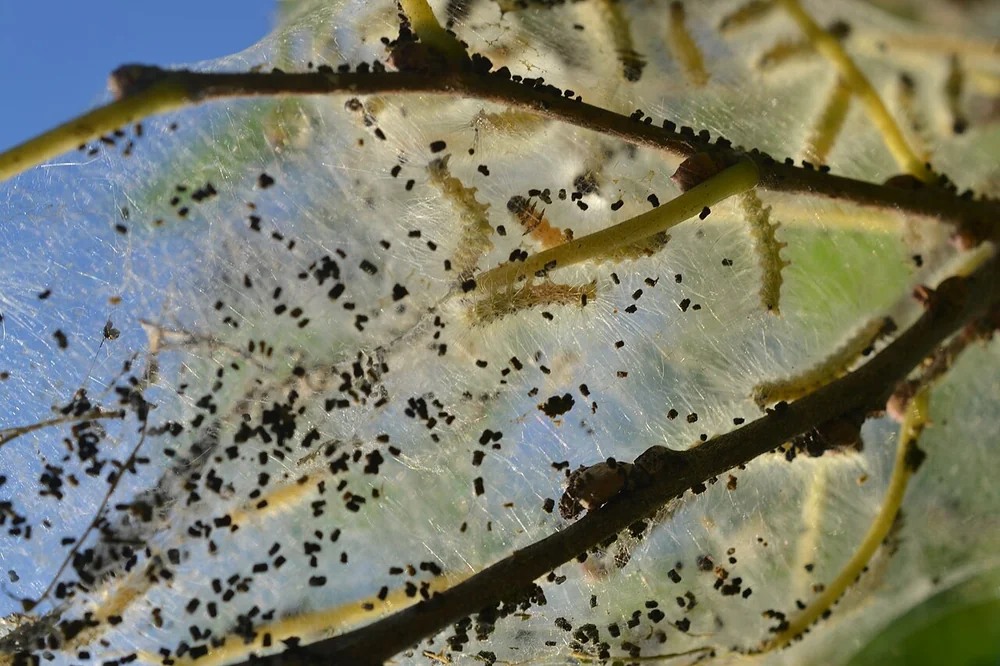
Fall webworm: silken web nests under the leaves, foliage eaten down to the midrib. Two to three generations a year; spray while the webs are new. Cutting and burning the nests is the most effective method.
Hazelnut Gall Midge (Mikomyia coryli): Symptoms and Spray Timing
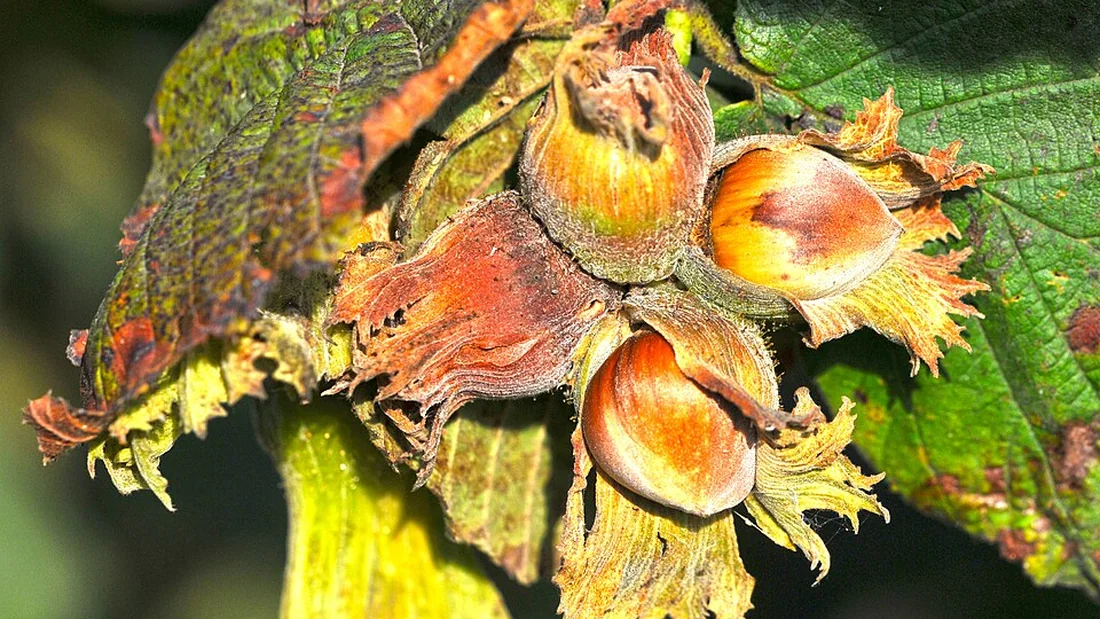
Hazelnut gall midge: galls along the leaf veins, on the husk cluster and at shoot tips. Spray when shoots carry two leaflets, late March to early April, repeated 20 days later. Threshold 50% infestation.
Hazelnut Shot-Hole Borer (Xyleborus dispar): Symptoms, Traps and Spray Timing
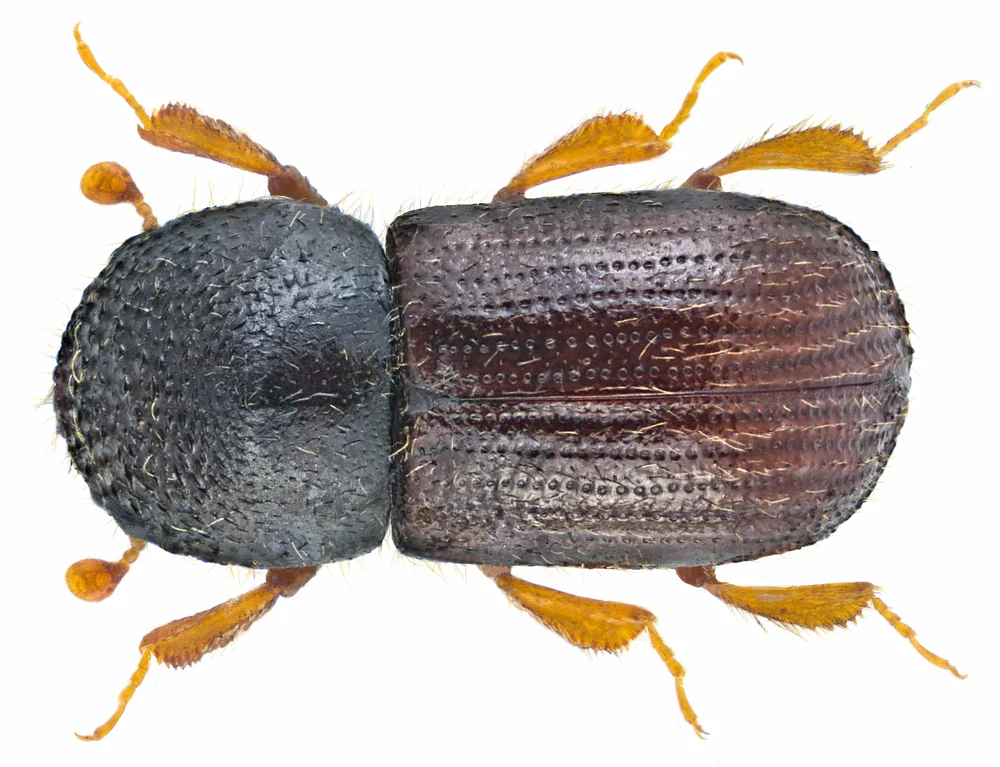
Hazelnut shot-hole borer / dalkıran (Xyleborus dispar): 2 mm holes in the branch and seeping sap. When to hang red sticky traps, why the spray goes on in early July, and why whole bushes die.
Green Stink Bug on Hazelnut (Palomena prasina): Symptoms, Spray Timing and Threshold
Green stink bug (Palomena prasina) and brown marmorated stink bug on hazelnut: blank, blackened and spotted kernels. Spraying starts mid-April; threshold is 1 overwintered adult per 10 bushes.