
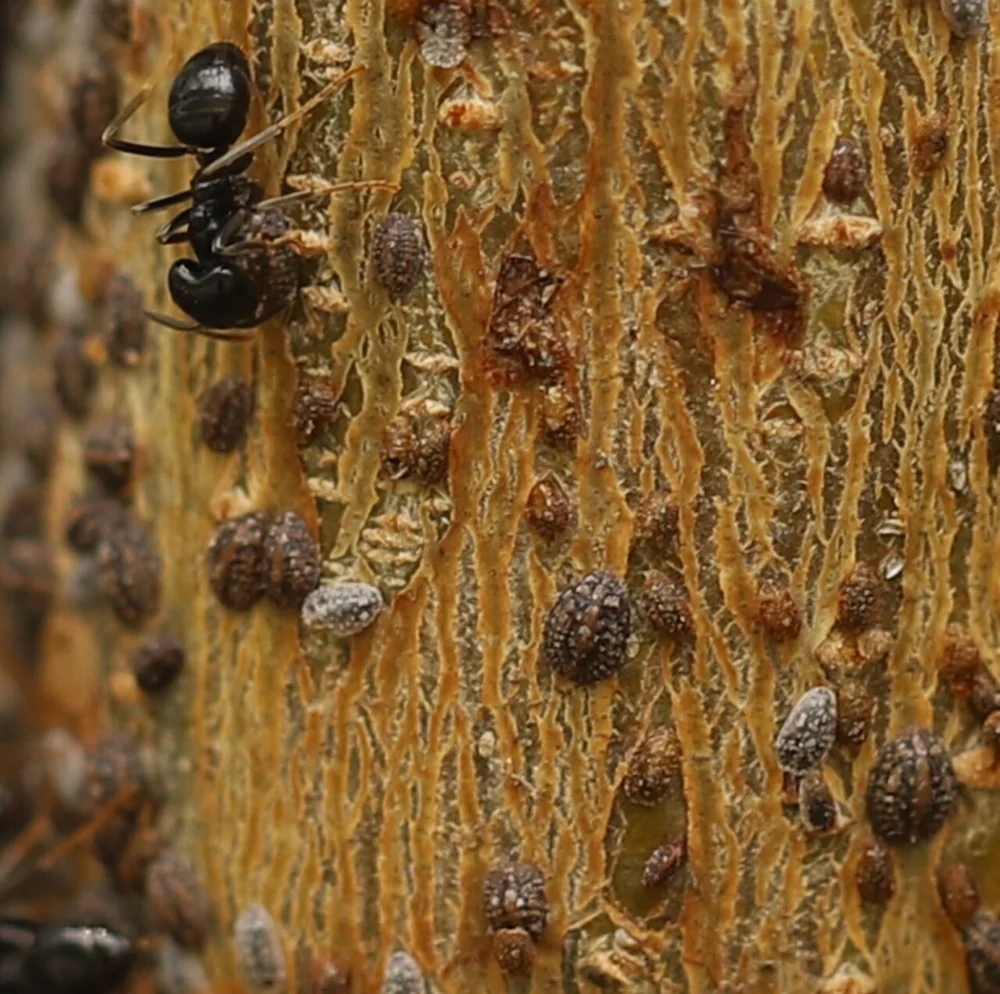
What Is Hazelnut Brown Scale?
Hazelnut brown scales — Parthenolecanium corni and P. rufulum — are hemispherical scale insects attached to branches and shoots. The female’s shell is dark brown at first and lighter brown later on.
Those brown bumps you see in the orchard do not move, and most growers take them for bark swellings or a disease. In fact each one is a living female drawing sap out of the branch.
Check With a Fingernail
Lift a brown bump with your fingernail. If moist, living tissue comes out from underneath, it is a scale insect. If it comes away dry and empty, it is a dead shell left over from a previous season and does not count towards the control decision.
Damage Symptoms
The damage comes in two stages, and the second is often more conspicuous than the first.
1. Direct Damage: Sap Feeding
Larvae and adults feed by sucking sap from leaves and shoots. The result: the bush weakens, shoot growth falls back and yield drops.
2. Indirect Damage: Sooty Mould
While feeding, the scale secretes a sugary substance (honeydew). This sticky layer coats leaves and shoots, sooty mould develops on it, and the tissue blackens as if covered in soot.
The sooty mould does not kill the plant directly, but by sealing the leaf surface it blocks photosynthesis. So the scale weakens the bush on two fronts: it takes the sap, and on top of that it stops the leaf from getting light.
If You See Blackening, the Cause Is Above It
If a black, sooty layer covers the leaves, that is sooty mould — and sooty mould never appears on its own. There is always a sap-sucking pest secreting honeydew behind it, and in hazelnut the most common cause is brown scale. Rather than trying to wash the mould off, target the source.
Life Cycle
In the Black Sea region it has one generation per year.
| Stage | Month | What happens |
|---|---|---|
| Overwintering | November – March | Overwinters as larvae on branches and shoots |
| Adult stage | Early April | The overwintered larvae become adults |
| Egg laying | May – June | The female lays eggs beneath her shell |
| Egg hatch | End of June | The eggs hatch and mobile crawlers disperse — the control window |
| Settlement | July – October | The crawlers settle on shoots, feed and secrete honeydew |
Economic Threshold
If a sample of 30 shoots in the orchard shows an average of 5 live scales on each shoot, spraying is warranted.
Base the count on live scales — empty shells left from previous seasons do not count.
Control Methods
1. Cultural Measures
- Pruning for airflow: scale populations build faster in dense, closed bushes. See our pruning guide
- Avoiding excess nitrogen: heavy nitrogen fertilization produces soft, sappy shoots — ideal conditions for sap-sucking pests
- Removing infested branches: heavily encrusted branches can be pruned out
2. Chemical Control
The timing rests on a single fact: the shell is armour.
While the adult female sits under her thick shell, no spray reaches her. She is vulnerable only during the short period when newly hatched crawlers are moving on the branch, before they form shells of their own.
- Timing: end of June — close to the completion of egg hatch
- Why not earlier or later: spray too early and the eggs are still under the shell, unaffected; too late and the crawlers have formed their own shells
- Coverage: because the pest sits on branches and shoots, the spray must reach the wood well
Always Consult Before Choosing a Product or Dose
No trade name or dosage is given on this page, deliberately. Registered preparations and their dosages vary by region, pest and year. Do not apply any pesticide without consulting your provincial/district directorate of agriculture and forestry or an agricultural engineer. Always notify local beekeepers before spraying.
Frequently Asked Questions
When should the spray be applied? At the end of June, close to the completion of egg hatch. Outside that window spraying is largely wasted: the adults are protected under their shells.
What are the brown bumps on my branches? Hemispherical bumps attached to the branch, dark to light brown, are scale insects. If moist living tissue appears when you lift one with a fingernail, the infestation is active.
My leaves have turned black like soot — what causes it? That is sooty mould, a fungus growing on the honeydew secreted by the scale. The mould is a symptom, not the cause. To get rid of the blackening you have to control the scale.
Can I combine it with the hazelnut weevil spray? The windows do not match: the hazelnut weevil is late May to early June, the scale is end of June. Scales are also armoured pests and not every insecticide is effective against them. Evaluate any combination with an agricultural engineer. For the full season see our spraying calendar.
What should I do if I am below the threshold? Pruning for airflow, balanced nitrogen fertilization and removing infested branches are usually sufficient. Scale populations vary from year to year, so repeat the 30-shoot count every season.
This guide is based on data from the Hazelnut Research Institute of the Turkish Ministry of Agriculture and Forestry. Always make spraying decisions in consultation with an agricultural engineer.
📚Sources
Related Guides
View all Pest Control guides
Hazelnut Spraying Calendar: Annual Program for All Pests
Hazelnut orchard spraying calendar: spray timings, dosages and rules against all pests and diseases from February to October.
Hazelnut Pruning Guide: Prune Correctly, Harvest More
When to prune hazelnuts, the three pruning types — formative, maintenance and rejuvenation — plus cutting technique, tools, disinfection and the mistakes that cost yield.
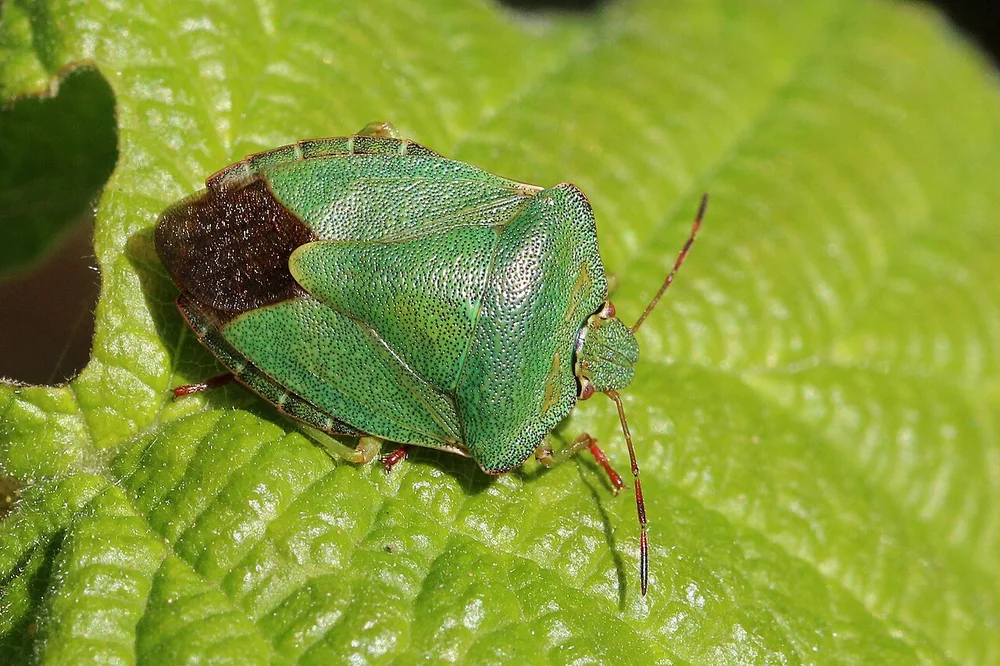
Green Stink Bug on Hazelnut (Palomena prasina): Symptoms, Spray Timing and Threshold
Green stink bug (Palomena prasina) and brown marmorated stink bug on hazelnut: blank, blackened and spotted kernels. Spraying starts mid-April; threshold is 1 overwintered adult per 10 bushes.
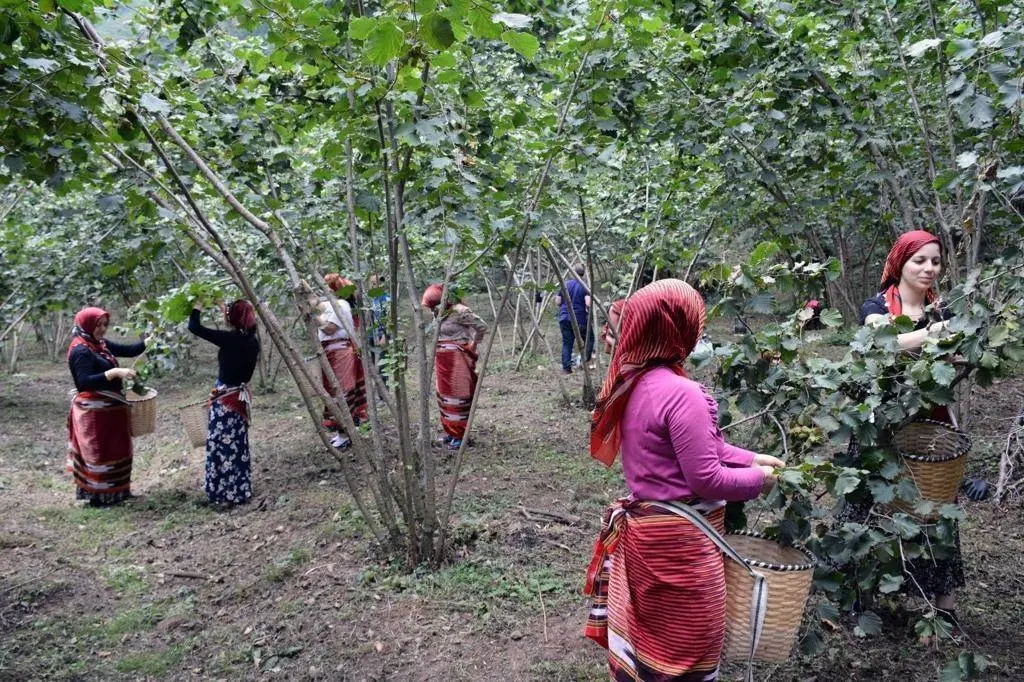
Hazelnut Growing Guide: From Planting to Harvest, Step by Step
A complete guide to growing hazelnuts. Pruning, fertilization, pest control, harvest and market knowledge — everything a hazelnut grower needs on a single page.
More Pest Control Guides
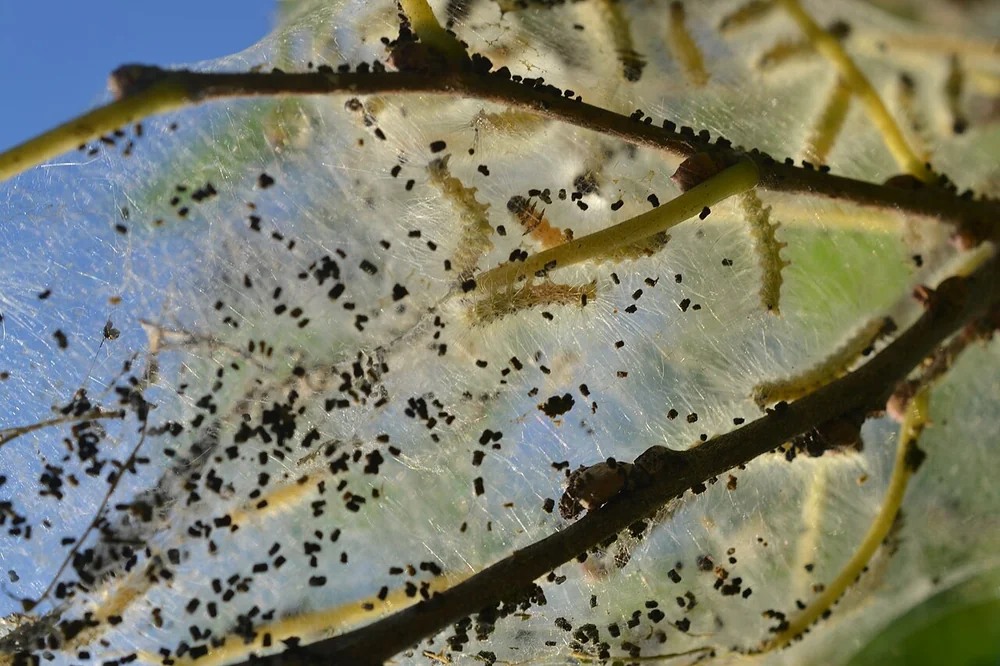
Fall Webworm on Hazelnut (Hyphantria cunea): Web Nests and Control
Fall webworm: silken web nests under the leaves, foliage eaten down to the midrib. Two to three generations a year; spray while the webs are new. Cutting and burning the nests is the most effective method.
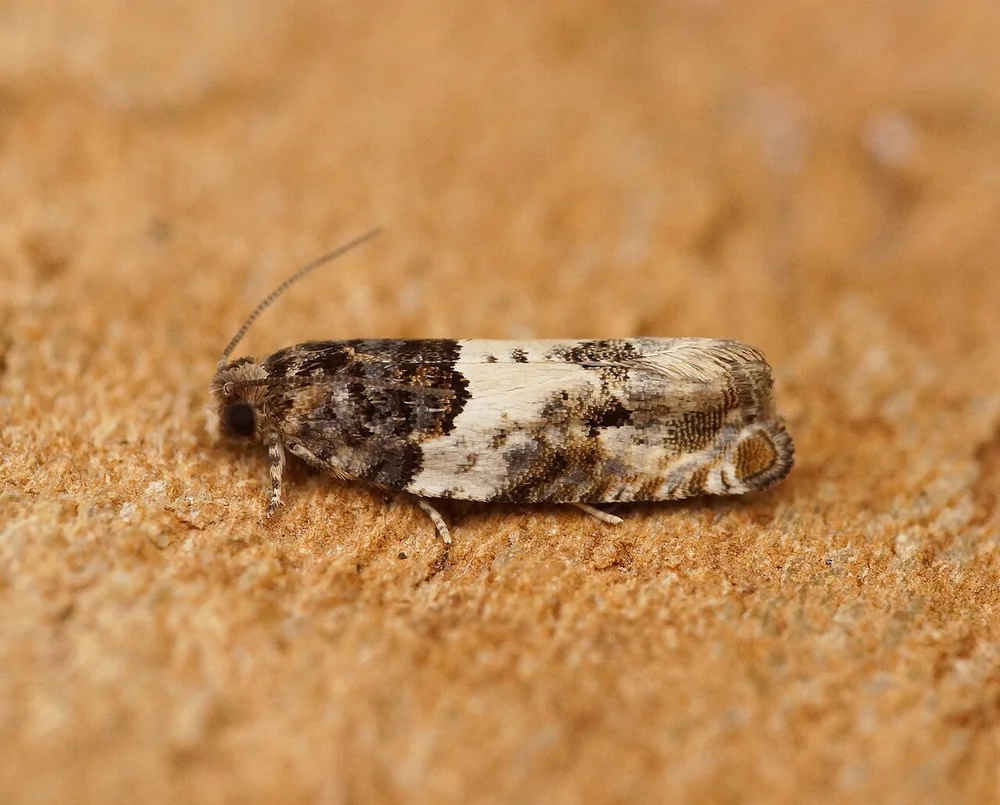
Hazelnut Shoot Moth (Gypsonoma dealbana): Symptoms and Spray Timing
Hazelnut shoot moth: triangular brown patches on the leaf and dying shoots. Spraying is done after harvest, finishing by the end of September. Threshold: 15 feeding marks per 100 leaves.
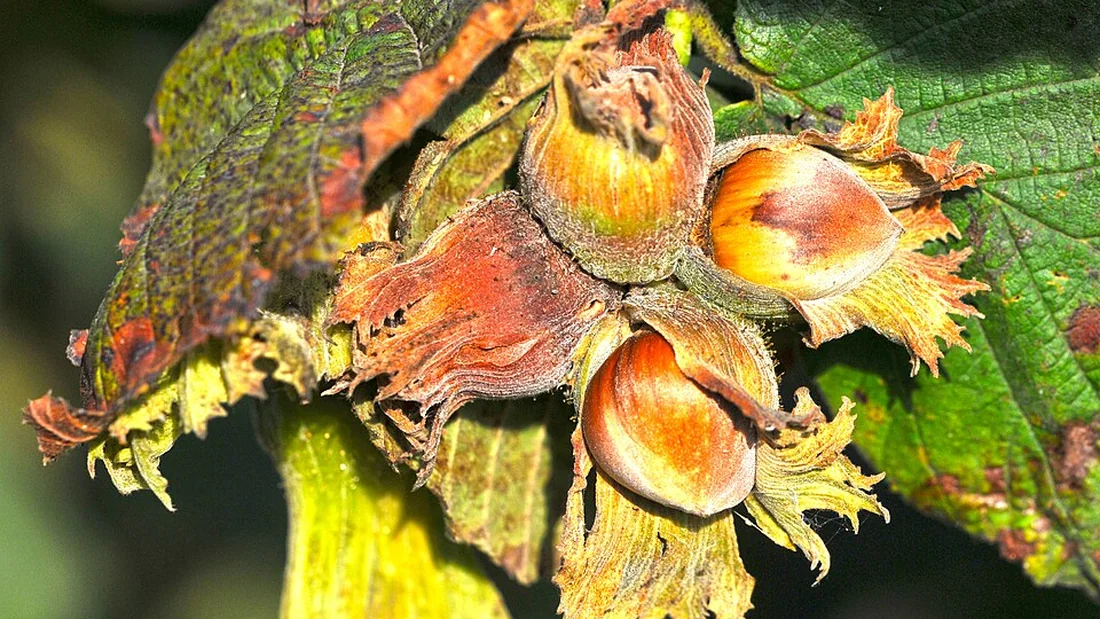
Hazelnut Gall Midge (Mikomyia coryli): Symptoms and Spray Timing
Hazelnut gall midge: galls along the leaf veins, on the husk cluster and at shoot tips. Spray when shoots carry two leaflets, late March to early April, repeated 20 days later. Threshold 50% infestation.
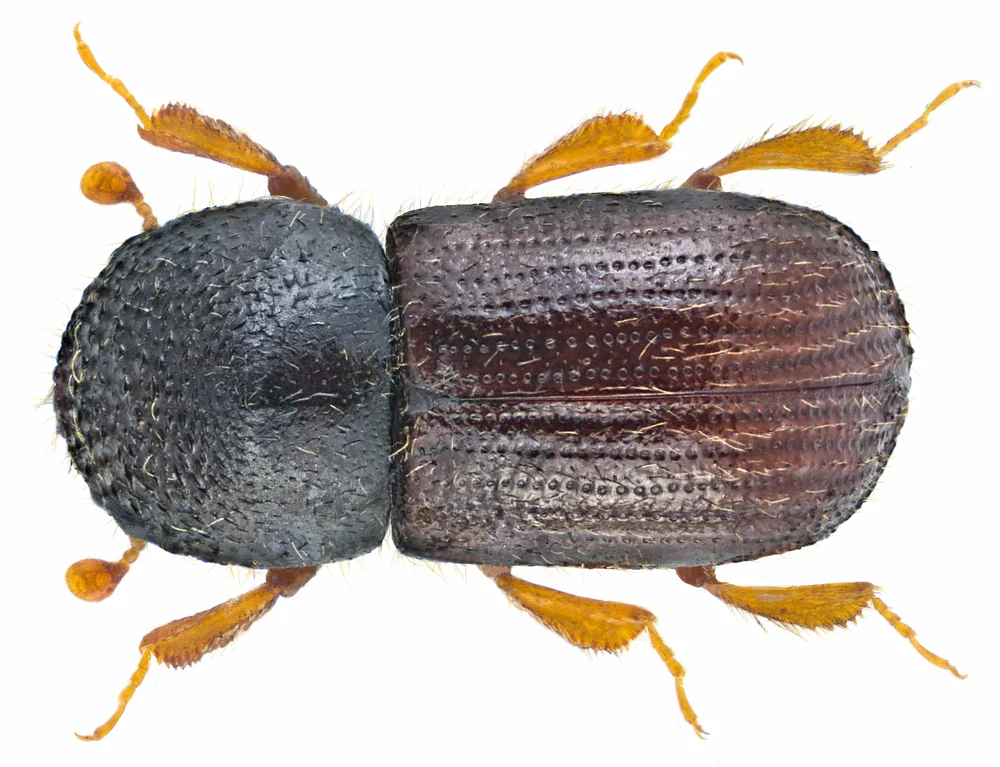
Hazelnut Shot-Hole Borer (Xyleborus dispar): Symptoms, Traps and Spray Timing
Hazelnut shot-hole borer / dalkıran (Xyleborus dispar): 2 mm holes in the branch and seeping sap. When to hang red sticky traps, why the spray goes on in early July, and why whole bushes die.