Hazelnut Pests
Identification, monitoring and control methods for pest insects and mites in hazelnut orchards.
14 guidesPest pressure in a hazelnut orchard is not one problem but a sequence of them. Scale insects sit on the bark through winter; bud mite, shoot moth and gall midge become active as the buds swell in late winter and early spring; the hazelnut weevil emerges from the soil at the end of May; stink bugs and defoliating caterpillars arrive as the nuts fill in high summer. Each has a short window in which control is worth doing, and each is invisible outside that window unless you go looking.
This category is anchored by the guide to the citrus long-horned beetle, a wood-boring quarantine pest first found in Turkey in 2014 and detected in Trabzon hazelnut orchards in 2018. Detailed guides to the hazelnut weevil and to the full annual spray schedule are currently published only in the Turkish edition of the site. In the meantime, the month-by-month care guides carry the pest work in sequence: dormant-season treatment in January, comma scale and bud mite in February, shoot moth and gall midge in March.
The sections below deal with the part most growers skip: deciding whether to treat at all, and if so, when. Spraying on a fixed date because that is what you did last year is how money, beneficial insects and the useful life of an active ingredient all get wasted at once.
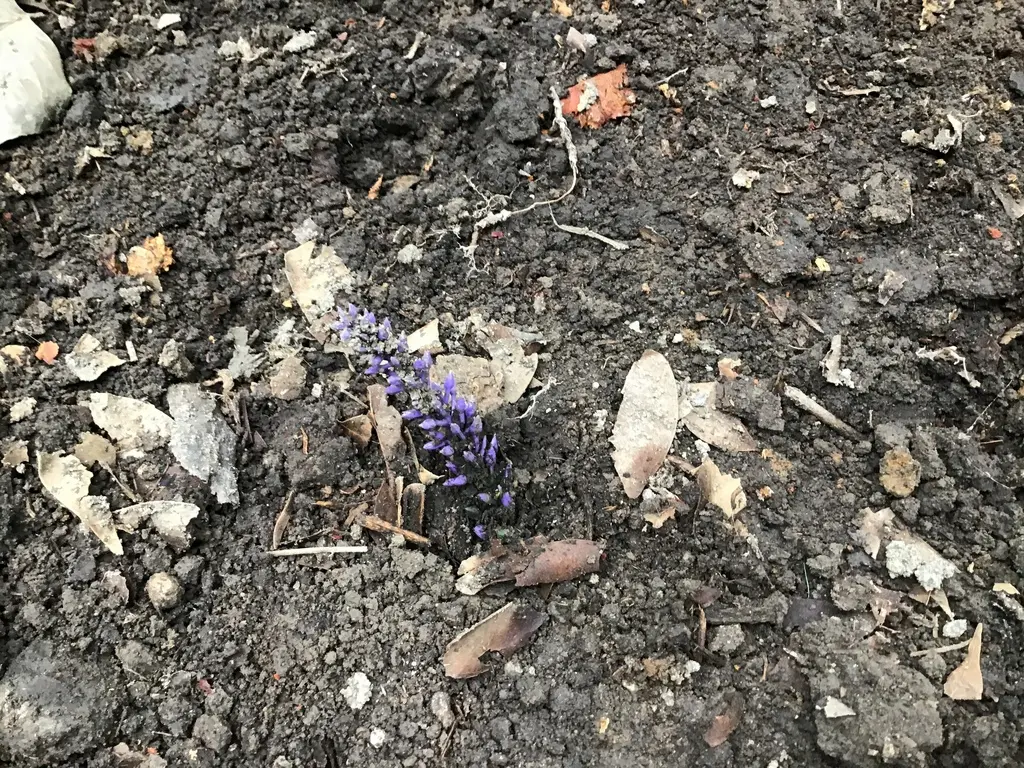
Citrus Long-Horned Beetle: An Emerging Threat to Hazelnut Orchards
What is the citrus long-horned beetle (Anoplophora chinensis), its damage to hazelnut orchards, symptoms and control methods.
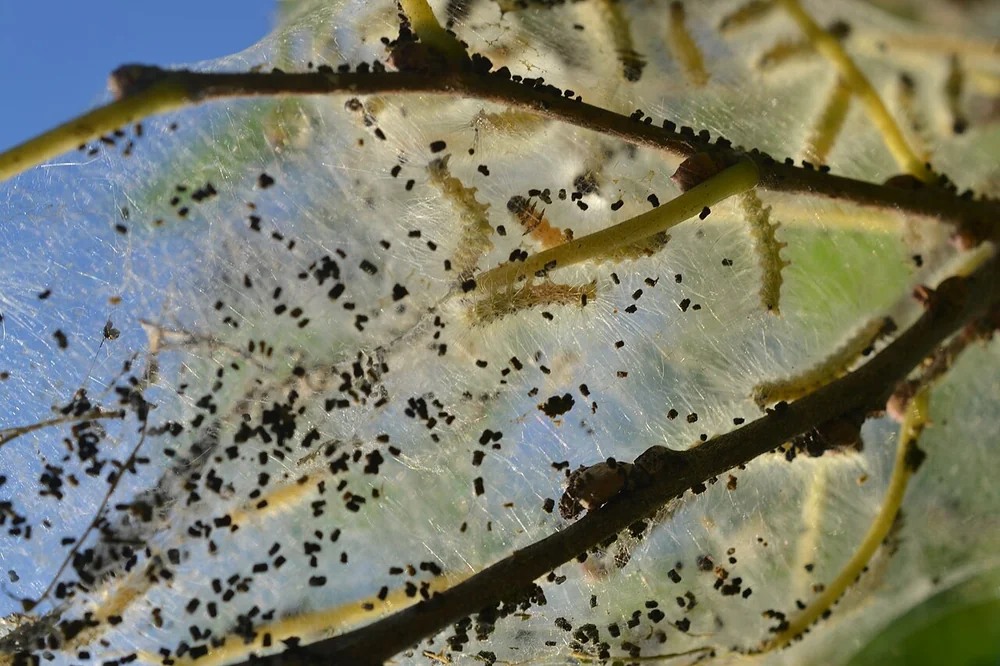
Fall Webworm on Hazelnut (Hyphantria cunea): Web Nests and Control
Fall webworm: silken web nests under the leaves, foliage eaten down to the midrib. Two to three generations a year; spray while the webs are new. Cutting and burning the nests is the most effective method.
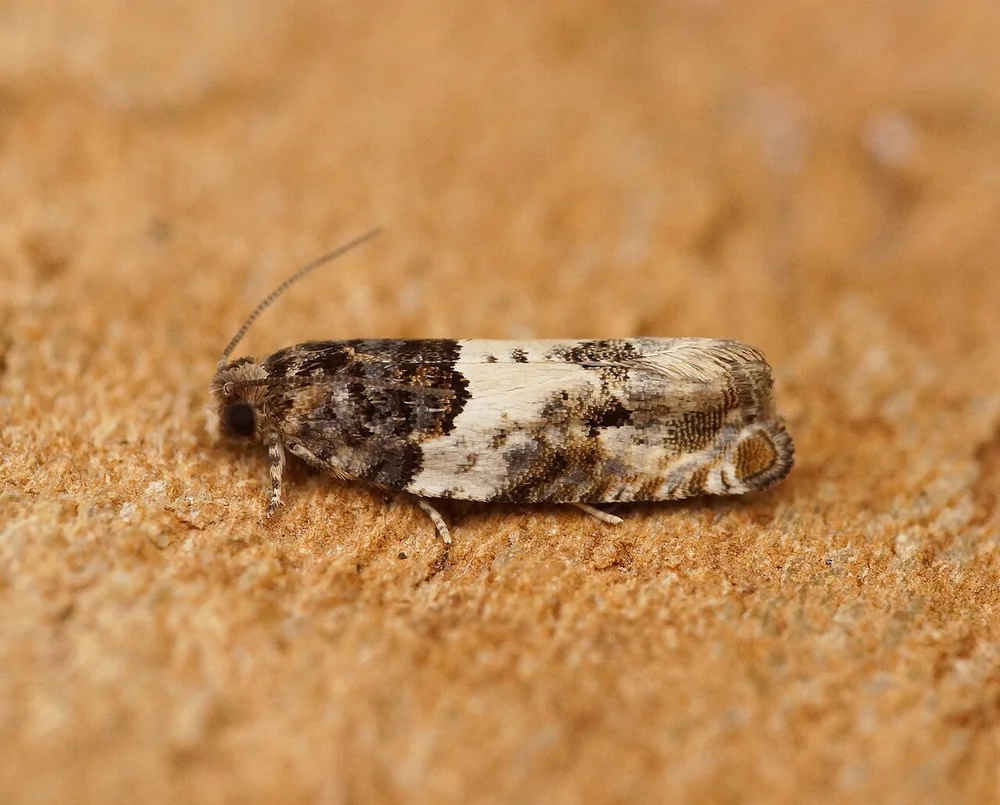
Hazelnut Shoot Moth (Gypsonoma dealbana): Symptoms and Spray Timing
Hazelnut shoot moth: triangular brown patches on the leaf and dying shoots. Spraying is done after harvest, finishing by the end of September. Threshold: 15 feeding marks per 100 leaves.
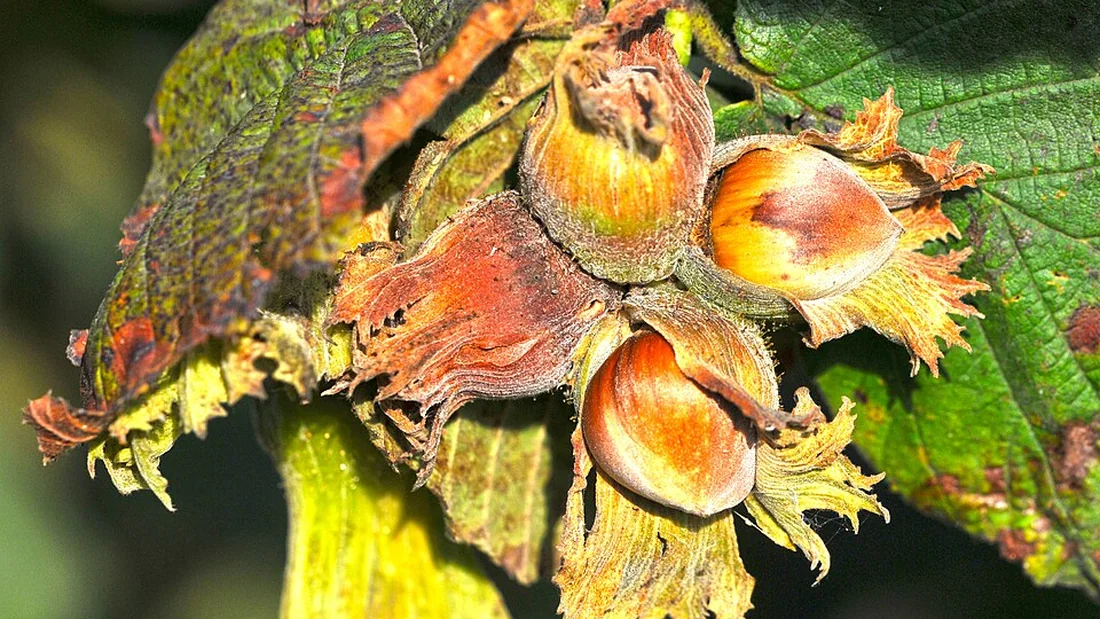
Hazelnut Gall Midge (Mikomyia coryli): Symptoms and Spray Timing
Hazelnut gall midge: galls along the leaf veins, on the husk cluster and at shoot tips. Spray when shoots carry two leaflets, late March to early April, repeated 20 days later. Threshold 50% infestation.
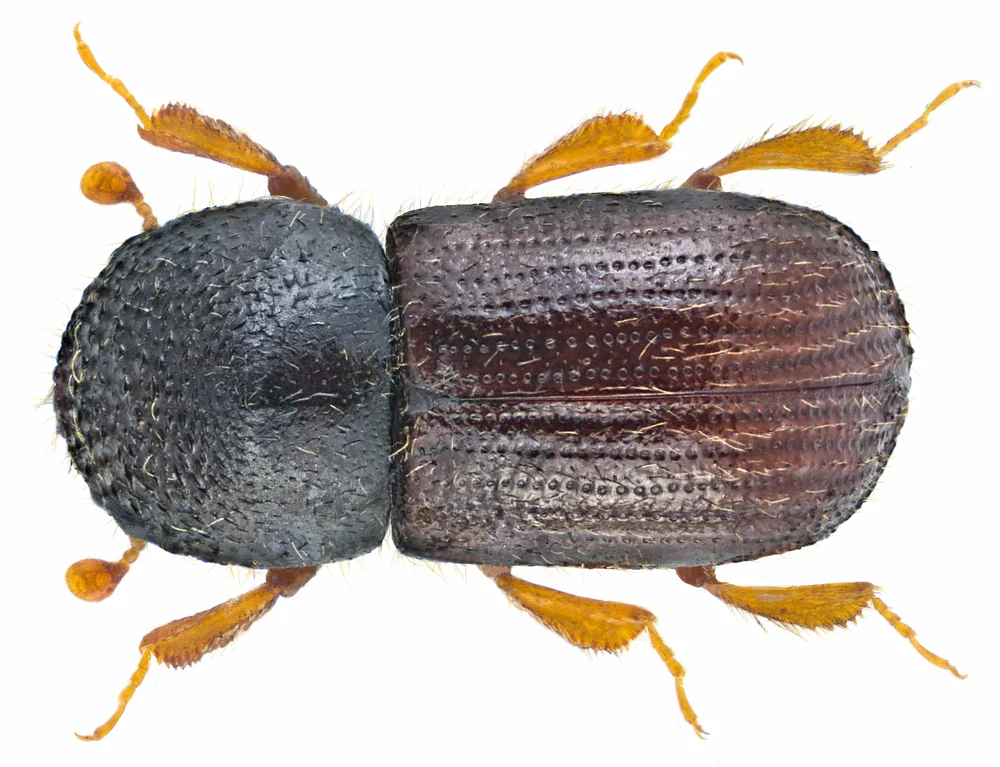
Hazelnut Shot-Hole Borer (Xyleborus dispar): Symptoms, Traps and Spray Timing
Hazelnut shot-hole borer / dalkıran (Xyleborus dispar): 2 mm holes in the branch and seeping sap. When to hang red sticky traps, why the spray goes on in early July, and why whole bushes die.
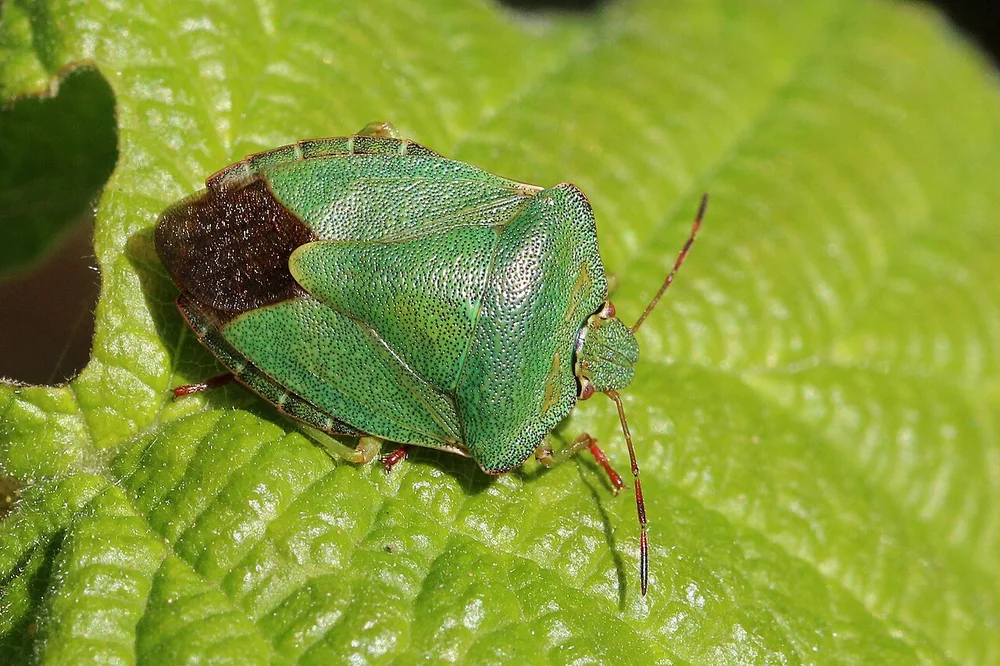
Green Stink Bug on Hazelnut (Palomena prasina): Symptoms, Spray Timing and Threshold
Green stink bug (Palomena prasina) and brown marmorated stink bug on hazelnut: blank, blackened and spotted kernels. Spraying starts mid-April; threshold is 1 overwintered adult per 10 bushes.
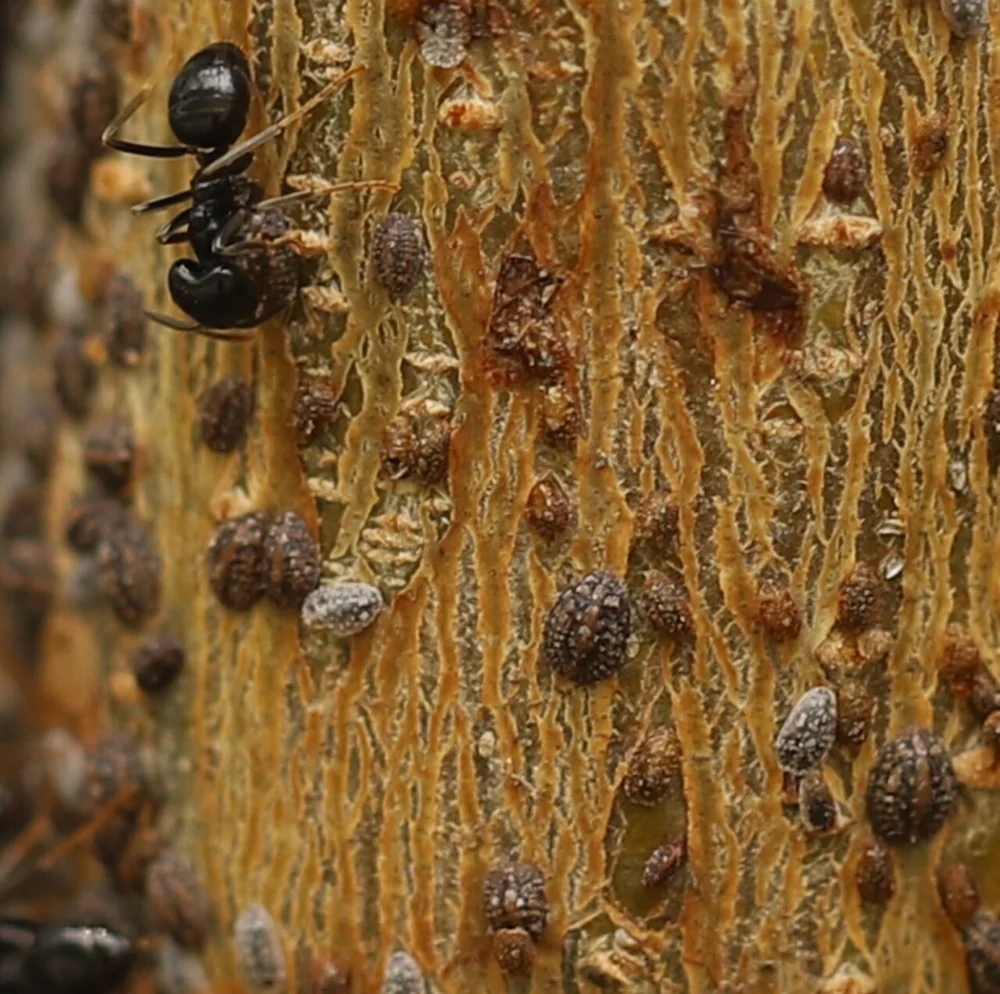
Brown Scale on Hazelnut (Parthenolecanium corni): Symptoms, Sooty Mould and Control
Hazelnut brown scale: brown hemispherical shells on branches and shoots, sticky honeydew and sooty mould blackening. Spray at the end of June; threshold is 5 live scales on each of 30 shoots.
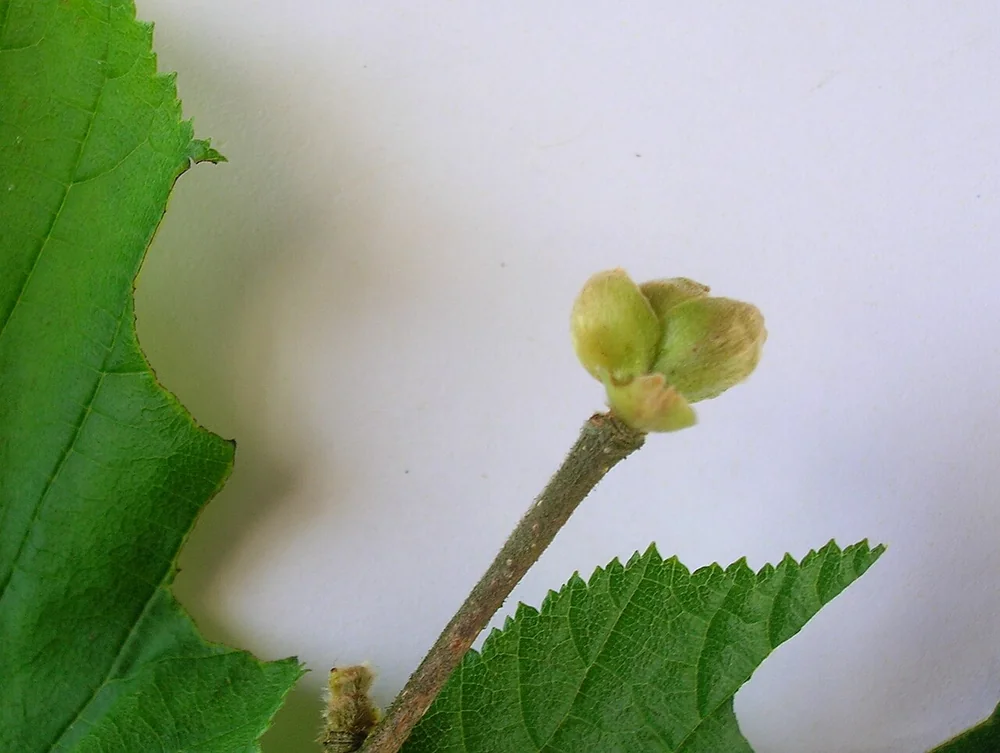
Hazelnut Big Bud Mite (Phytoptus avellanae): Symptoms and Spray Timing
Hazelnut big bud mite: buds swelling into galls, catkin drop and up to 70% yield loss. Spray in the one-week window at the end of April; threshold is 5 big buds per branch. Tombul is most susceptible.
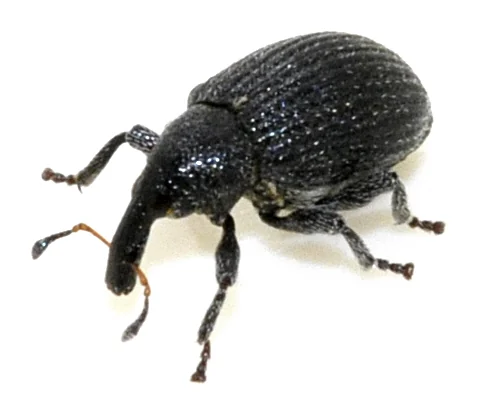
Hazelnut Leaf Weevil (Anoplus roboris): Symptoms and Spray Timing
Hazelnut leaf weevil: many small holes in the leaf and tears caused by larval mines inside the tissue. Spray at the end of March; threshold is 5 adults per bush. The season's first control operation.
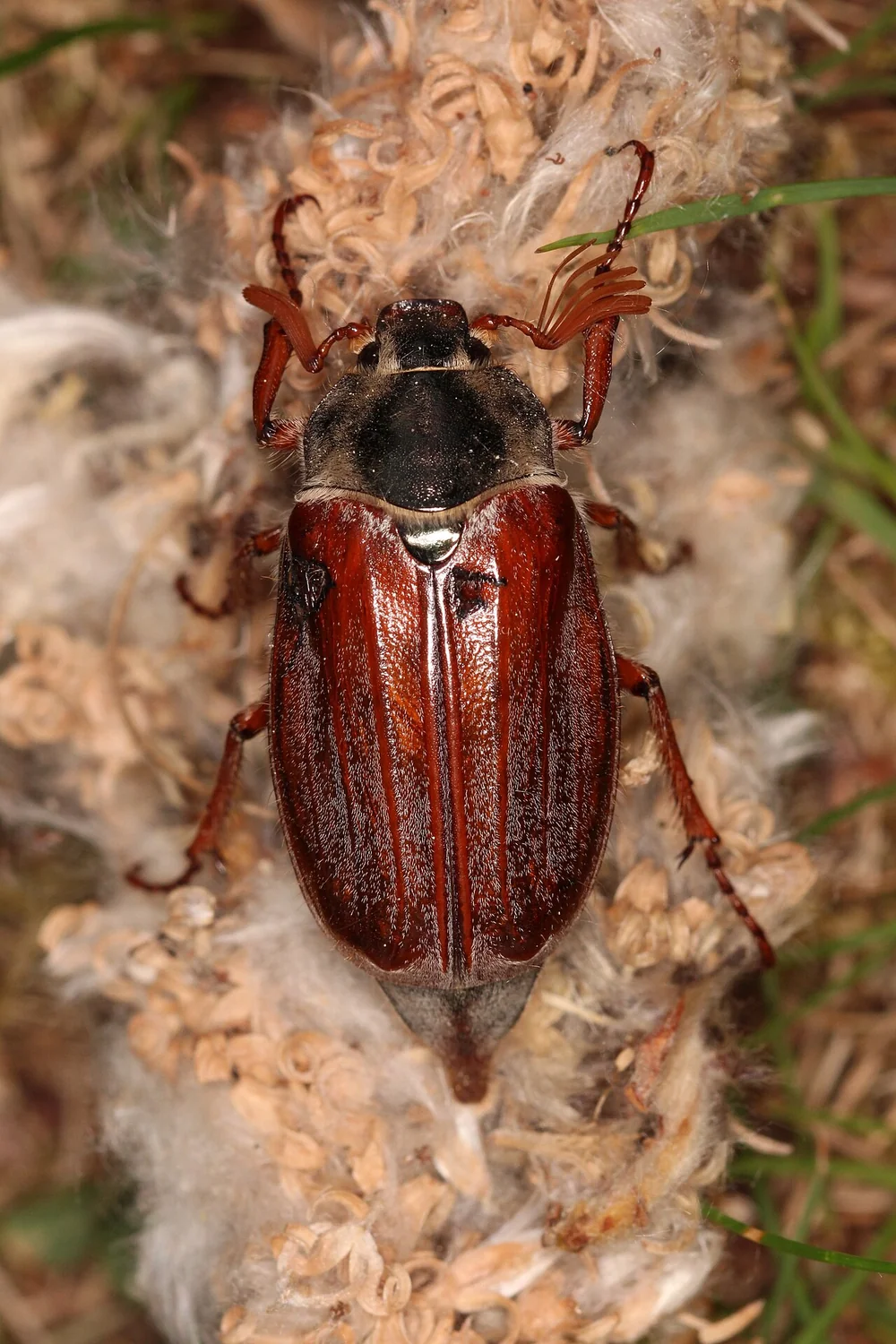
Cockchafer on Hazelnut (Melolontha melolontha): Root Damage and Soil Treatment
Cockchafer grubs cut hazelnut roots: first shoot tip dieback, then dieback reaching the main branches. Soil treatment from early September to mid-October; threshold 3 grubs per m². One generation every three years.
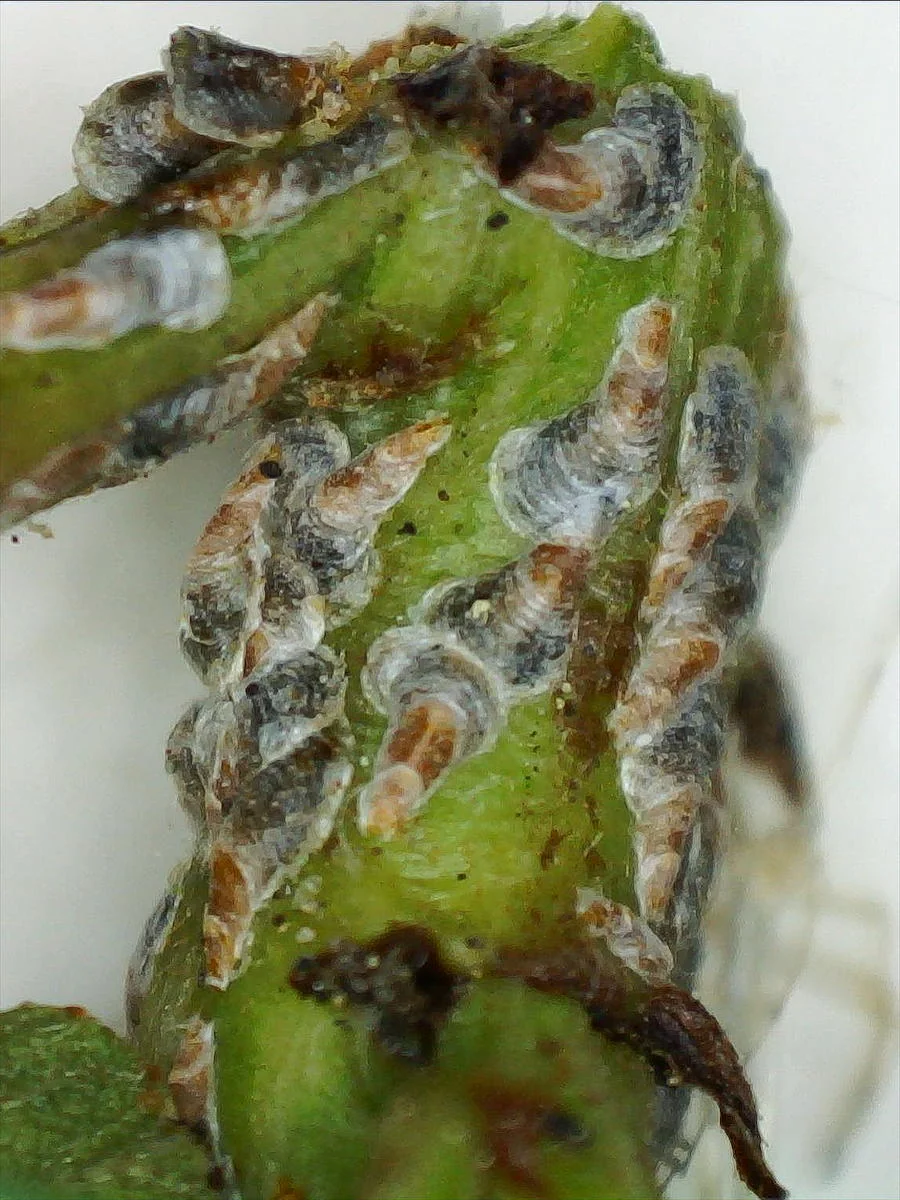
Oystershell Scale on Hazelnut (Lepidosaphes ulmi): Symptoms and Spray Timing
Oystershell scale: dark brown comma- or mussel-shaped shells on the branch. Two spray options — dormant oil in February-March or a summer spray in May. Threshold: 5 egg-bearing individuals per 10 cm of branch.
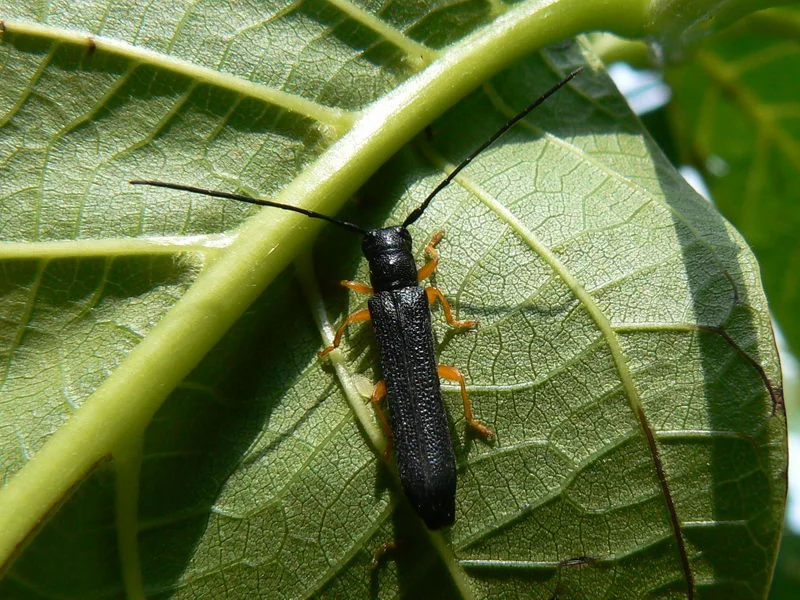
Hazelnut Longhorn Beetle (Oberea linearis): Symptoms, Spraying and Prevention
Hazelnut longhorn beetle (Oberea linearis): why shoot tips die back, and why spraying starts in mid-May. Symptoms, beat-sampling, mechanical control and how to tell it from the shot-hole borer.
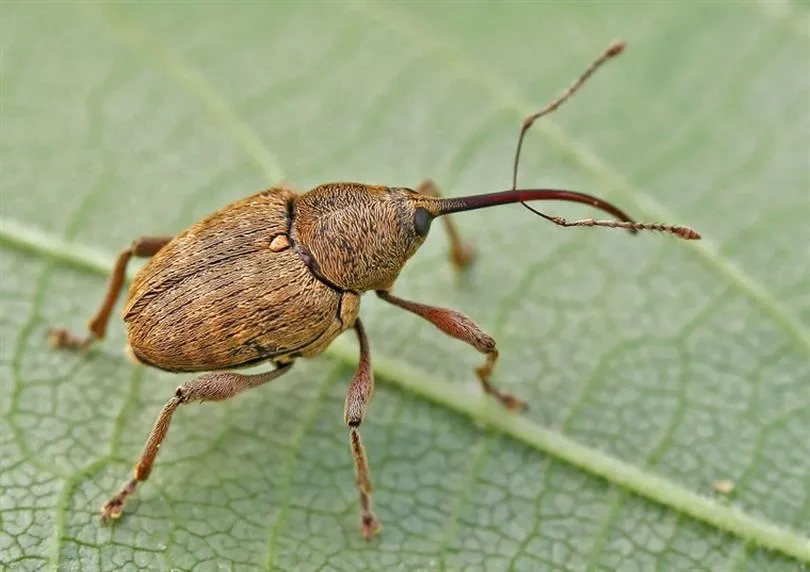
Hazelnut Weevil Control Guide: Identification, Spraying and Prevention
What is the hazelnut weevil (Curculio nucum, formerly Balaninus nucum), its damage symptoms, life cycle and control methods. Spray timing and dosages.
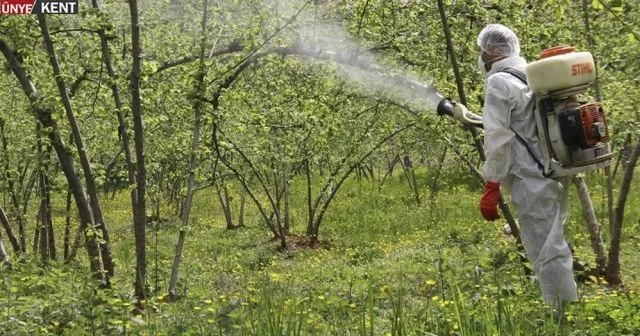
Hazelnut Spraying Calendar: Annual Program for All Pests
Hazelnut orchard spraying calendar: spray timings, dosages and rules against all pests and diseases from February to October.
Monitoring: Find Out What You Actually Have
Monitoring means walking the same route through the orchard at regular intervals, looking at the same marked bushes, and writing down dates. Without dates you have impressions; with dates you have a record you can compare against next season. The checkpoints change through the year: the base of the trunk for sawdust-like frass and round exit holes 8-12 mm across, which is how the citrus long-horned beetle announces itself; buds in late winter for the swollen, misshapen ones that indicate bud mite; shoot tips in spring for drilling and drying; and the nuts themselves in summer, where a pinhead entry hole and a later 2-3 mm round exit hole are the mark of the hazelnut weevil.
Beat sampling turns impressions into numbers. Spread a light-coloured sheet or a tray under a branch, tap the branch sharply a fixed number of times with a padded stick, and count what falls. Do it on the same number of bushes, at the same time of day, on each visit. It costs nothing, takes minutes, and it is the difference between saying 'there seem to be a lot of them this year' and knowing whether the population is rising or falling.
Traps have a specific job: they tell you when adults are active, not how much damage they are doing. Pheromone traps are used in the Turkish spray calendar to follow stink bug populations, and a trap catch that suddenly climbs is a signal to go and inspect the crop, not an automatic instruction to spray. Ask your provincial or district agricultural directorate which traps are available and appropriate for the pests present in your area.
The Economic Threshold: Damage Is Not Automatically a Reason to Spray
The economic threshold is the pest population level at which the value of the crop you would save exceeds the cost of the treatment. Below that level, spraying loses money by definition: you pay for product, fuel and labour to prevent damage worth less than the bill. Finding a few damaged nuts or a chewed leaf is normal in any orchard and is not, on its own, a decision.
The hidden costs push the threshold higher than growers expect. Broad-spectrum insecticides remove natural enemies along with the target, and an orchard stripped of its predators and parasitoids often produces a worse outbreak later in the same season. Add the risk of selecting for resistance, the pre-harvest interval that may block a later application when you really need one, and the effect on pollinators, and an unnecessary spray becomes an actively bad trade.
Threshold figures are specific to the pest, the region and the value of the crop, and they are set by research institutes and extension services rather than by the product label. Get the current numbers for your area from the agricultural directorate, count first, and treat the decision as arithmetic rather than as a reflex.
What Works Without a Sprayer
A surprising amount of hazelnut pest management is mechanical. The February care guide is explicit that hand-picking swollen, abnormally shaped buds and destroying them is a highly effective measure against bud mite, and that mechanical clean-up should always come before any chemical treatment. The same logic applies elsewhere: collect nuts that drop early, before the weevil larvae inside them reach the soil; gather infested nuts left on the ground after harvest; remove dried shoot tips; and destroy infested wood rather than stacking it. Shallow cultivation under the bushes after harvest brings overwintering weevil pupae to the surface.
Natural enemies do real work if you let them. Birds, particularly starlings and crows, dig weevil pupae out of the soil, which is why supporting bird populations in and around the orchard counts as a control measure. Research on egg parasitoids of the brown marmorated stink bug is ongoing. You protect all of them the same way: avoid unnecessary broad-spectrum applications, treat spots rather than whole orchards where that is possible, and never spray during bee flight hours - early morning or evening only.
Canopy management sits underneath everything else. A regularly pruned, open bush is one you can actually inspect, and it is one where spray reaches the inside of the canopy when treatment is justified. See care and pruning. For quarantine pests such as the citrus long-horned beetle, the two decisive measures are buying certified, inspected nursery stock and reporting suspected finds promptly so that removal and buffer-zone work can be organised.
Timing: Spray the Stage You Can Actually Reach
Most hazelnut pests spend the damaging part of their life somewhere a spray cannot follow. A weevil larva feeding inside a kernel and a long-horned beetle larva tunnelling through a trunk are both effectively out of reach. That is why weevil control is aimed at the adults after they emerge from the soil at the end of May and before they lay eggs, and why long-horned beetle management depends primarily on removing and destroying infested trees, with trunk-directed treatment during the adult flight period from May to August as a limited supplement.
The dormant window works on the same principle in reverse. After leaf fall and before bud swell there is no foliage in the way, and scale insects overwintering on bark are fully exposed - which is exactly why the January and February guides put the dormant-season treatment there. Miss it and the same insects become far harder and far more expensive to reach in summer. The bud mite and shoot moth windows are narrower still: both close as the buds burst.
Which means the calendar is a guide, not a schedule. A mild February brings bud swell forward and moves everything behind it; a cold, late spring pushes it back. Watch the bush and the pest rather than the date, keep the wind and the bees in mind - the Turkish spray calendar advises against applications above 5 km/h of wind - and observe pre-harvest intervals without exception. The care calendar guides set out the normal sequence to adjust from.
Where the damage happens and when the pest is actually reachable
| Pest | Damaging stage | What to look for | Window when it is exposed |
|---|---|---|---|
| Citrus long-horned beetle | Larva tunnelling in trunk and thick branches | Round exit holes 8-12 mm, frass at the trunk base, sudden branch dieback | Adults on the wing, May-August (guide) |
| Hazelnut weevil | Larva feeding inside the kernel | Pinhead entry hole, later a 2-3 mm round exit hole, early nut drop | Adults after emergence from the soil, from late May |
| Comma scale | Nymphs and adults on bark | Encrustations on trunks and branches | Dormant season: after leaf fall, before bud swell |
| Hazelnut bud mite | Mites inside the buds | Swollen, abnormally shaped buds | Late winter, while buds are still closed (hand-picking) |
| Hazelnut shoot moth | Larva entering the buds | Drilling and drying on swelling buds | As buds swell, before they burst |
| Hazelnut gall midge | Larva on the leaves | Small blister-like galls on leaves | Adult emergence from soil, late March to early April |
Frequently Asked Questions
How often should I walk the orchard to monitor pests?
Weekly during the active season is a reasonable working rhythm, tightening to every few days when a critical window is approaching - bud swell, adult weevil emergence at the end of May, or the run-up to harvest. Out of season a fortnightly walk is usually enough. What matters more than the exact frequency is that you follow the same route, look at the same bushes and record the date every time.
What is an economic threshold, in plain terms?
It is the point at which the crop you would save by treating is worth more than the treatment costs. Below it, spraying is a net loss even if the pest is present. Thresholds are set per pest and per region by research and extension services, so ask your agricultural directorate for the figures that apply where you farm rather than guessing from the amount of damage you can see.
Do pheromone traps control the pest, or only measure it?
In the way they are used in the hazelnut spray calendar, they measure. A trap tells you that adults are flying and roughly how many, which is the signal to go and inspect the crop and decide. Treating a rising trap catch as an automatic instruction to spray leads to applications that are badly timed relative to the actual damaging stage.
Why is spraying against the hazelnut weevil pointless once the nuts are attacked?
Because by then the larva is inside the shell, where no foliar application reaches it. The weevil is only exposed as an adult, after it emerges from the soil at the end of May and before the female drills into the young nut to lay. Everything after that point is mechanical: collect the nuts that drop early and clear the fallen nuts under the bushes so the larvae cannot pupate in your soil.
What should I do if I find round exit holes and sawdust at the base of a trunk?
Do not treat it as a routine problem. Round exit holes 8-12 mm across with frass accumulating at the trunk base are the classic sign of the citrus long-horned beetle, a quarantine pest whose management is organised officially through removal, buffer zones and nursery stock inspection. Notify your provincial or district agricultural directorate, and read the citrus long-horned beetle guide first.
Can I control pests without any chemical treatment at all?
For several of them you can go a very long way. Hand-picking bud-mite buds, collecting early-dropped and leftover nuts, shallow cultivation after harvest, removing infested wood, keeping the canopy open and supporting bird populations all reduce pressure substantially. Chemical treatment then becomes the exception used when monitoring shows a threshold has been passed, which is also the arrangement that keeps those products working.
Other Topics
Download Findik App
Download the Findik app for job listings, team building and more.