
What Is Ammonium Sulfate (21-0-0)?
Ammonium sulfate ((NH₄)₂SO₄) is a white-to-beige crystalline nitrogen fertilizer containing 21% nitrogen (N) and 24% sulfur (S). Because it looks like granulated sugar, growers across the Black Sea region and most of Anatolia call it “sugar fertilizer” (şeker gübre). Its grade is written 21-0-0: it contains no phosphorus and no potassium.
All of its nitrogen is in the ammonium (NH₄⁺) form, and its sulfur is in the sulfate (SO₄²⁻) form, which plants take up directly. Besides the crystalline product, a granular version is also sold; in the granular form the nitrogen content can drop to around 20.5%.
| Property | Value |
|---|---|
| Formula | (NH₄)₂SO₄ (21-0-0) |
| Nitrogen (N) | 21% — entirely ammonium nitrogen |
| Sulfur (S) | 24% — in sulfate form |
| Phosphorus / Potassium | None |
| Solubility | Readily water-soluble |
| Effect on soil pH | Acidifying (physiologically acidic) |
| Physical form | White-beige crystal or granule |
| Common local name | Sugar fertilizer |
What Does “Ammonium Form” Actually Mean?
Nitrogen fertilizers deliver nitrogen in three chemical forms: ammonium (NH₄⁺), nitrate (NO₃⁻) and urea (NH₂). Ammonium sulfate is entirely ammonium, and that has two practical consequences:
- It resists leaching better. The ammonium ion carries a positive charge and binds to soil colloids. Nitrate, being negatively charged, drains below the root zone with rainfall. Along the Black Sea coast, where annual rainfall exceeds 1,000 mm, this is a genuine advantage.
- It acts more slowly but lasts longer. Ammonium becomes fully available only as soil bacteria convert it to nitrate (nitrification). In cold soil that conversion slows down, so very early applications may not deliver the expected response.
There is a price, though: nitrification releases hydrogen ions (H⁺) into the soil. That is the real source of ammonium sulfate’s acidifying character — more on this below.
What Does It Do in a Hazelnut Orchard?
The Nitrogen Contribution
Nitrogen is the nutrient hazelnut consumes in the largest quantity, and the Hazelnut Research Institute’s fertilization guidance builds the whole annual programme around nitrogen timing. In hazelnut, nitrogen drives:
- Shoot growth — annual shoot length determines how many fruiting buds next season will carry
- Leaf area — larger photosynthetic capacity means a bigger “engine” for the bush
- Protein and chlorophyll synthesis — directly visible in leaf colour and kernel quality
- Cluster formation — in a trial in Samsun, sucker-control treatments using 21% ammonium sulfate and 26% calcium ammonium nitrate solutions positively affected the number of female flowers and clusters per shoot, while producing no difference in fruit quality measures (nut weight, kernel ratio, shell thickness) 📚 Serdar et al., 2017
The Overlooked Role of Sulfur
What separates ammonium sulfate from an ordinary nitrogen source is its 24% sulfur. Most fertilizer articles skip this part, yet sulfur matters for hazelnut:
- It is the building block of sulfur-containing amino acids such as methionine and cysteine; however much nitrogen you supply, protein synthesis stalls without sulfur
- It supports oil synthesis — the chemical basis of kernel quality in hazelnut
- It plays an indirect role in chlorophyll formation; sulfur deficiency shows as yellowing of the young leaves (nitrogen deficiency starts on old leaves — that is the distinguishing sign)
In high-rainfall regions sulfate sulfur leaches much like nitrate, so supplementing sulfur under Black Sea conditions is not unreasonable. But ammonium sulfate is not your only option: potassium sulfate carries 18% sulfur without acidifying the soil to the same degree.
The Acidity Question: Black Sea Soils and Ammonium Sulfate
This is the critical section. Ammonium sulfate is one of the most widely used nitrogen fertilizers in Turkish hazelnut growing — but being widespread does not mean it is right for your orchard.
What Is a Physiologically Acidic Fertilizer?
A fertilizer need not be acidic itself; if the transformations it undergoes in the soil acidify the medium, it is called a physiologically acidic fertilizer. That is exactly what happens with ammonium sulfate: H⁺ ions are released both when the plant takes up the ammonium ion and when soil bacteria oxidise ammonium to nitrate. The result is a gradual drop in soil pH.
This property is an advantage in calcareous, high-pH soils — as pH falls, iron, zinc and manganese availability improves along with phosphorus uptake. The problem is that this advantage does not apply to most Black Sea hazelnut orchards.
The pH Reality of Black Sea Soils
The Hazelnut Research Institute states that hazelnut develops normally in soils with a pH between 5 and 7. In much of the region, the reality sits at or below the lower end of that range: limestone is scarce along the Eastern Black Sea coast while acidic rocks such as granite and dacite are common, and heavy rainfall leaches calcium out of the profile, leaving naturally acid soils.
In samples taken from 71 hazelnut orchards across 40 villages in the Kumru district of Ordu, soil pH ranged widely from 4.53 to 7.87, and the orchards were found deficient in total nitrogen and in available phosphorus, potassium and zinc. The researchers’ conclusion is unambiguous: every orchard needs its own fertilization programme 📚 Karadeniz & Özkutlu, 2023
What Do Official Sources Recommend?
Publications by the Hazelnut Research Institute and the provincial directorates recommend Calcium Ammonium Nitrate (CAN, 26% N), which contains lime, for acidic soils, and state that ammonium sulfate is suited to alkaline (high-pH) soils. The Giresun Provincial Directorate also notes that nitrogen uptake declines in soils that fall below pH 4.5. In other words, using ammonium sulfate in an acid orchard can also mean failing to get full value from the nitrogen you paid for.
The Cumulative Effect Over Years
A single season of ammonium sulfate will not measurably move soil pH. The problem appears with repetition. Applying the same fertilizer every March for 10–15 years, with no liming, pulls pH steadily downwards. Once pH drops below 5:
- Phosphorus binds with iron and aluminium and becomes unavailable
- Aluminium and manganese can reach toxic levels, damaging fine roots
- Calcium and magnesium are leached out
- Soil microbial activity — and therefore organic matter breakdown — slows
You pay for the fertilizer, but the soil can no longer deliver that nitrogen to the plant.
Compensating With Lime
If you intend to keep using ammonium sulfate, liming is not negotiable. The Hazelnut Research Institute recommends liming in November–December, once every 3–5 years according to soil analysis, spread over a 40–50 cm band beneath the branch tips and worked into the top 5–10 cm of soil.
Liming has a measured payoff in hazelnut: in a field trial on acid soil, lime application raised in-shell yield by 29% over the control, while sugar industry waste sludge raised it by 41%; the highest yield (2.47 kg per bush) and 54% kernel ratio were obtained at a sludge rate of 1.5 times the lime requirement 📚 Özyazıcı, 2014
Never Apply Lime and Nitrogen Together
Applying lime together with ammonium-based fertilizers such as ammonium sulfate causes nitrogen to escape as ammonia gas. Lime in autumn (November–December), nitrogen in spring, with at least one month between them. See our fertilization programme guide for details.
When Is It Applied in Hazelnuts?
Publications from the Hazelnut Research Institute and FİSKOBİRLİK recommend splitting nitrogen into two applications rather than one:
First Application — Late February / March
The period when buds begin to swell and root activity resumes. Half the annual nitrogen goes on now. The Giresun Provincial Directorate points to after 15 March for the first application.
Second Application — Late May / Early June
The period of flower bud formation and nut development. The remaining half is applied here. The Giresun Provincial Directorate suggests after 20 May for the second application.
No Nitrogen After July
Late nitrogen prolongs shoot growth, delays lignification and sends the bush into winter unprepared. The result: soft-tissued shoots that are exposed to frost damage and diseases such as powdery mildew. Do not apply top-dressed nitrogen after July.
How Is It Applied?
The application method determines how much of the fertilizer actually reaches the plant. Official guidance describes it this way: the fertilizer is spread evenly over a ring-shaped band 30–40 cm wide beneath the branch tips, then worked with a hoe into the top 5–10 cm of soil.
✓ Ammonium Sulfate Application Steps
- ✓ Have your soil analysis result and pH value in hand — the decision starts there
- ✓ Locate the drip line of the branch tips; do not fertilize at the base of the stems (the fine feeder roots are not there)
- ✓ Spread the fertilizer evenly over the 30-40 cm ring band
- ✓ Work it into the top 5-10 cm with a hoe — do not leave it on the surface
- ✓ Apply when the soil is moist but not muddy
- ✓ Do not apply on a day with heavy rain forecast; runoff will carry the fertilizer off the orchard
- ✓ If you limed in the same season, leave at least a month between the two operations
Incorporating the fertilizer is not a trivial detail: ammonium left on the surface volatilises as ammonia, especially in dry, warm weather, and on sloping ground it is physically washed away by rain.
How Is the Rate Determined?
There is no single rate that suits every orchard. The rate comes from three inputs:
- Soil analysis — organic matter, total nitrogen and pH (see our soil analysis guide; provincial and district directorates run the analysis free of charge)
- Tree age and bush size — a newly established bush and a 20-year-old bush in full production do not need the same nitrogen
- Yield target and past yield — the more in-shell nuts you take out each year, the more nutrients you must put back
Converting Pure Nitrogen to Fertilizer Quantity
An agricultural directorate will usually give you a pure nitrogen (N) figure, not a fertilizer quantity. The conversion is simple division:
Fertilizer quantity = Pure nitrogen ÷ 0.21
In practice for ammonium sulfate: multiply the required pure nitrogen by roughly 5 (100 ÷ 21 = 4.76).
| Pure nitrogen required | Ammonium sulfate needed | Sulfur supplied alongside |
|---|---|---|
| 100 g | ~476 g | ~114 g S |
| 200 g | ~952 g | ~229 g S |
| 4 kg | ~19 kg | ~4.6 kg S |
| 6 kg | ~28.6 kg | ~6.9 kg S |
An Equivalence Derived From Official Recommendations
The Giresun Provincial Directorate of Agriculture and Forestry gives the following per-bush figures for two split applications: CAN (26% N) → 650 g per application, 1,300 g total, or urea (46% N) → 375 g per application, 750 g total.
Both recommendations amount to roughly 340 g of pure nitrogen per bush per year. Delivering that same nitrogen as ammonium sulfate would require roughly 1.6 kg per bush per year (about 800 g per application). This figure is not an official ammonium sulfate recommendation — it is the arithmetic equivalent of the official CAN/urea rates, and your orchard’s actual requirement may differ.
Do Not Set the Rate on Your Own
The figures above illustrate the calculation logic. The exact rate depends on your soil analysis result. Before applying, consult your provincial or district directorate of agriculture, or an agricultural engineer; with your analysis report in hand they will give you a recommendation tailored to your orchard.
Ammonium Sulfate, CAN or Urea?
A comparison of the three nitrogen fertilizers from a hazelnut perspective:
| Criterion | Ammonium Sulfate (21-0-0) | Calcium Ammonium Nitrate (26-0-0) | Urea (46-0-0) |
|---|---|---|---|
| Nitrogen content | 21% | 26% | 46% |
| Nitrogen form | All ammonium | Half ammonium, half nitrate | Urea (amide) |
| Additional nutrient | 24% sulfur | Calcium + magnesium (lime) | None |
| Effect on soil pH | Acidifying | Near-neutral / buffering | Slightly acidifying |
| Leaching risk | Low (ammonium) | Moderate (nitrate fraction) | Moderate |
| Volatilisation (ammonia) loss | Yes, if left on the surface | Low | High — must be incorporated |
| Quantity needed for the same N | Highest | Moderate | Lowest |
| On acid soil | Not recommended | The recommended choice | Usable |
| On alkaline/calcareous soil | Best fit | May be ineffective | Usable |
A practical decision rule:
- Below pH 5 → stay away from ammonium sulfate. Choose calcium ammonium nitrate and plan a liming programme.
- pH 5–6.5 → CAN first; use ammonium sulfate occasionally where sulfur is deficient, on condition that you lime regularly and monitor pH.
- Above pH 7 → ammonium sulfate is a sound choice; it supplies nitrogen, pulls pH toward the ideal range and improves micronutrient uptake.
- If haulage and cost are the priority → urea is the cheapest per unit of nitrogen, but it must be incorporated into the soil.
Common Mistakes
- Using it without an analysis. “My neighbour spreads sugar fertilizer, so I will too” is the most expensive mistake in the book. Applying an acidifying fertilizer without knowing your pH deepens the very problem you are trying to solve.
- Using the same fertilizer for a decade. Locking on to one product changes the soil in one direction only. Rotate fertilizer types according to analysis results.
- Skipping the liming. If you use ammonium sulfate, a liming programme is a mandatory companion, not an optional extra.
- Top-dressing at the wrong time. Nitrogen after July prolongs shoot growth and increases frost sensitivity. Applying too early, into cold or frozen soil, fails to deliver because nitrification is slow.
- Leaving the fertilizer on the surface. Spreading and walking away donates part of your nitrogen to the atmosphere and, on slopes, to runoff.
- Over-applying nitrogen. Excess nitrogen lowers kernel quality, softens leaf tissue and increases susceptibility to powdery mildew, and leaves shoots unprepared for winter. “More fertilizer means more yield” does not hold in hazelnut.
- Applying it together with lime. This loses nitrogen as ammonia.
Summary: Ammonium Sulfate Checklist
- Get a soil analysis first; do not decide before you know your pH
- Above pH 7 ammonium sulfate is a good choice; below pH 5, switch to CAN
- Split the nitrogen in two: March and late May–early June
- Spread over the 30–40 cm band at the drip line, incorporate to 5–10 cm
- The 24% sulfur is a bonus — valuable in orchards with sulfur deficiency
- If you use it, lime every 3–5 years (November–December)
- Never apply lime and nitrogen at the same time
- No nitrogen after July
- Confirm the rate with your provincial/district directorate or an agricultural engineer
For the full annual fertilizer calendar see our Hazelnut Fertilization Programme guide, and for sampling and reading results see our Soil Analysis Guide. For phosphorus sources look at Urea Phosphate 18-44-0, and for potassium and sulfur at Potassium Sulfate 0-0-51.
📚 Hazelnut Research Institute 📚 Giresun Provincial Directorate of Agriculture and Forestry 📚 Trabzon Commodity Exchange 📚 FİSKOBİRLİK 📚 İGSAN - Ammonium Sulfate 21%📚Sources
- Republic of Türkiye Ministry of Agriculture and Forestry - Hazelnut Research Institute, Fertilization
- Giresun Provincial Directorate of Agriculture and Forestry - Points to Consider in Nitrogen Fertilization of Hazelnuts
- Trabzon Commodity Exchange - Hazelnut Orchard Management
- FİSKOBİRLİK - Hazelnut Cultivation
- Özyazıcı, G. (2014) - Effect of Lime and Sugar Industry Waste Sludge on Hazelnut Grown in Acid Soil, Turkish Journal of Agricultural Research
- Karadeniz, U. & Özkutlu, F. (2023) - Soil Fertility Status of Hazelnut Orchards in Ordu-Kumru, Academic Journal of Agriculture
- Serdar, Ü. et al. (2017) - Sucker Control with Nitrogen Solution in Hazelnut, Anadolu Journal of Agricultural Sciences
- İGSAN - Ammonium Sulfate 21% Product Information
Related Guides
View all Fertilization guides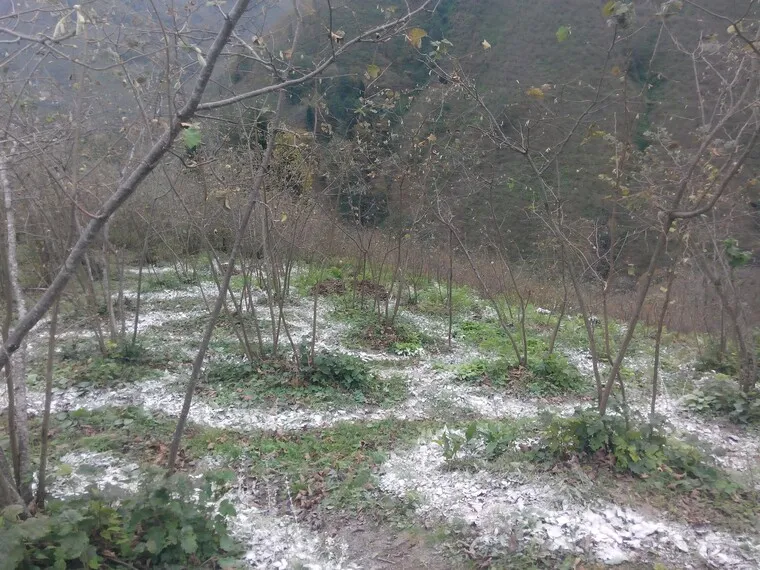
Hazelnut Fertilization Program: Annual Schedule and Application Rates
When to fertilize hazelnuts, which fertilizer types to use, and how much per decare. A practical guide to nitrogen, phosphorus, potassium and organic fertilizer applications.
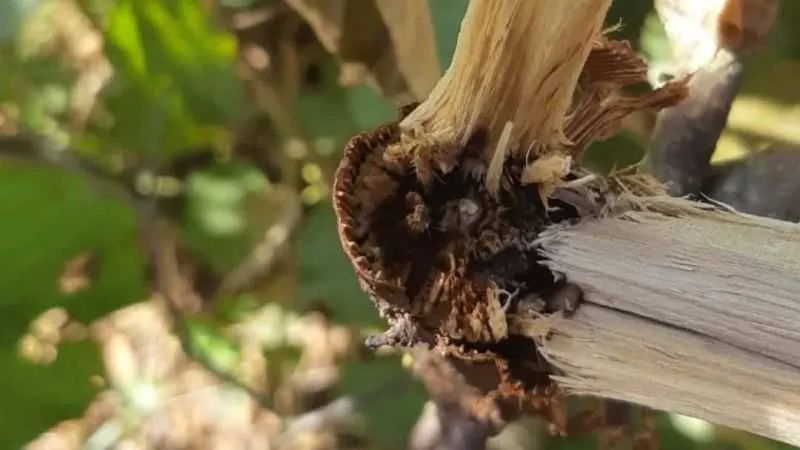
Soil and Leaf Analysis Guide for Hazelnut Orchards
When to have a soil analysis done in a hazelnut orchard, how to take the sample, and how to read the results. Leaf analysis timing and method explained.
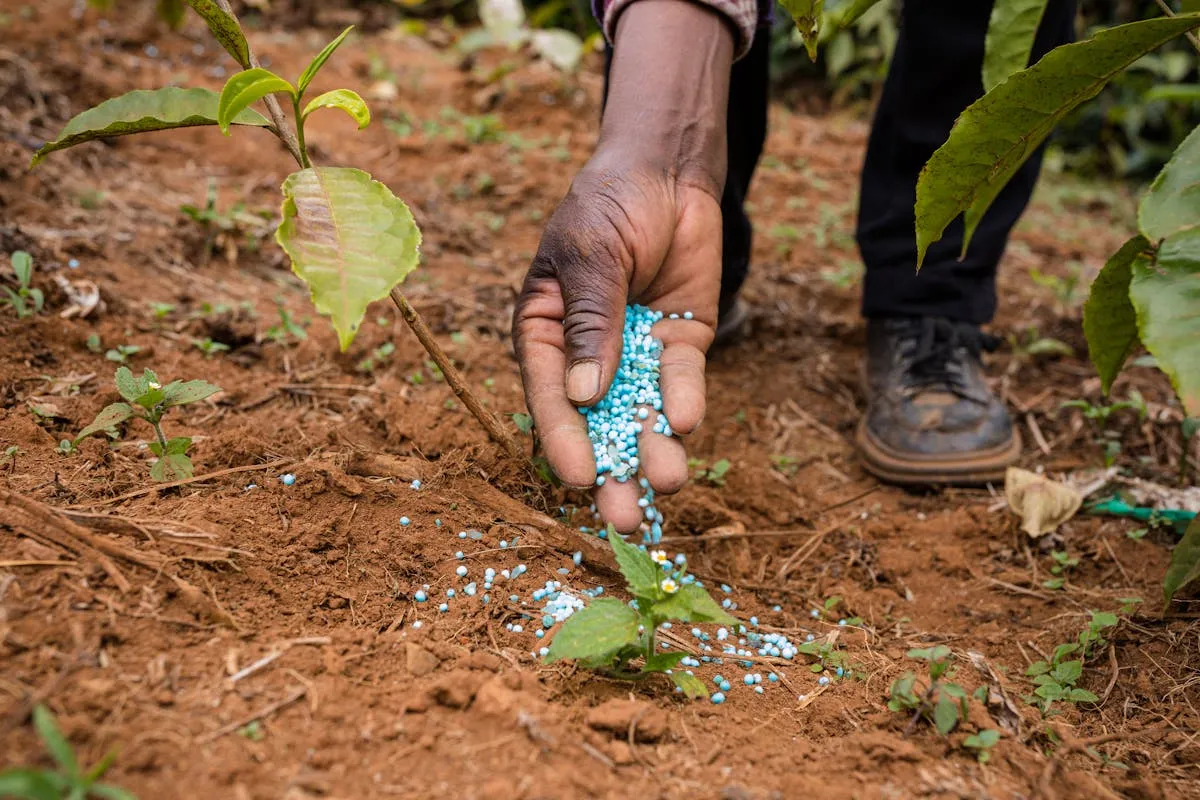
Urea Phosphate 18-44-0 Fertilizer: Usage and Benefits in Hazelnut
What is urea phosphate 18-44-0 fertilizer and how is it used in hazelnut orchards? Application timing, dosage calculation, differences from DAP, and key considerations.
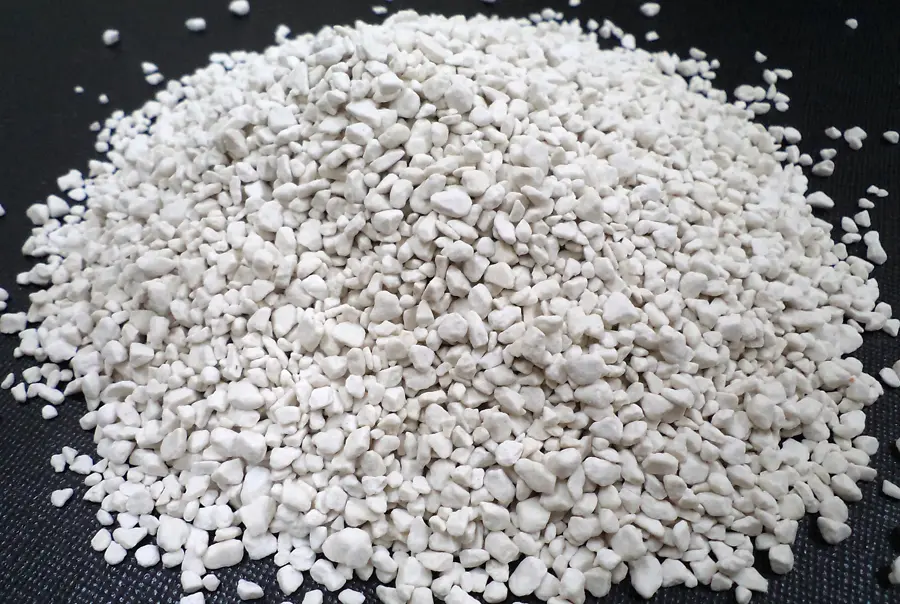
Potassium Sulfate (0-0-51) Fertilizer: Use and Dosage in Hazelnuts
What is potassium sulfate fertilizer, and when and how should it be used in hazelnuts? Learn about 51% K2O and 18% sulfur content, dosage, application timing, and important considerations.
More Fertilization Guides
Ammonium Nitrate (33-0-0): Use, Dosage and Leaching Risk in Hazelnuts
What is ammonium nitrate fertilizer and how is it used in hazelnuts? The 16.5% ammonium + 16.5% nitrate balance, how it differs from CAN, behaviour on acid soils, nitrate leaching and dose calculation.
Boron Fertilization in Hazelnuts: Blank Nuts, Dosage and Toxicity Risk
What does boron do in hazelnuts, and does a deficiency cause blank nuts? Critical boron values in soil and leaf analysis, soil and foliar application rates, and the risk of boron toxicity.
Farmyard Manure and Organic Matter in Hazelnut Orchards: Building the Foundation
What does farmyard (barn) manure do in a hazelnut orchard, what is well-rotted manure, when and how is it applied? The role of organic matter in holding water and nutrients, husk compost and common mistakes.
Zinc Sulfate (ZnSO₄) on Hazelnut: Deficiency, Dose and Timing
How do you recognise zinc deficiency in hazelnut, and when and at what rate is zinc sulfate applied to the soil or the leaf? Results from the Ordu Palaz trial and leaf-analysis critical values.