
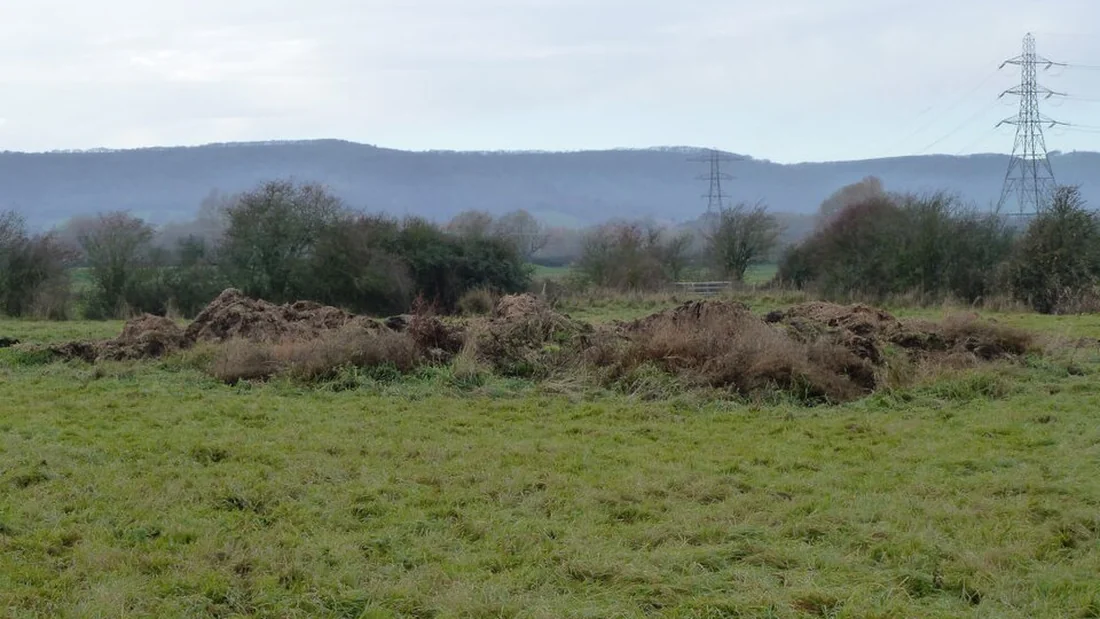
Why Farmyard Manure Deserves Its Own Article
When fertilizer comes up in hazelnut growing, nitrogen comes first, then phosphorus and potassium. Yet what determines how long those three elements stay in the soil is not the fertilizer itself but the soil’s organic matter content.
Hazelnut land in the Black Sea region is sloping, rainy and prone to leaching. On such land, a soil low in organic matter cannot hold what you apply: nitrogen leaches away, surface runoff carries fertilizer off the orchard, and in dry weeks no water is left in the root zone. That is why farmyard manure is not “one more fertilizer” — it is the foundation that makes every other fertilizer work.
This article expands the single line about farmyard manure in our fertilization programme.
What Organic Matter Does in the Soil
Organic matter is the dark, spongy material left behind when plant and animal residues decompose. It makes up only a small percentage of the soil, yet its effect is disproportionately large:
- Water holding. Organic matter holds many times its own weight in water and releases it slowly. The orchards that suffer first in a summer drought are the ones lowest in organic matter.
- Nutrient holding (cation exchange capacity). Organic matter surfaces hold calcium, magnesium, potassium and ammonium electrically, slowing their loss to rainfall. The higher the cation exchange capacity, the more yield the same fertilizer delivers.
- Soil structure. It glues soil particles together into aggregates. The result is a more porous, better-aerated soil that is easier to hoe.
- Microbial life. It is the carbon source for soil bacteria and fungi. Without organic matter, microbial activity falls and mineralisation — the conversion of nutrients into plant-available forms — slows down.
- Erosion resistance. Aggregated soil resists raindrop impact and surface runoff far better. On sloping hazelnut land this directly means less soil loss.
Organic Matter Is Not a Fertilizer — It Is the Container
The nutrient content of organic matter is low; its real job is not to carry nutrients but to hold them. This is why an increase in organic matter usually shows up in yield not in the year of application but in the years that follow. It is an investment that requires patience.
Where Do Black Sea Hazelnut Soils Stand?
Soil fertility studies in the region’s hazelnut orchards point to a consistent picture.
In samples taken from the 0–30 cm layer of 71 hazelnut orchards across 40 villages in the Kumru district of Ordu, soils were generally found to be clayey, salt-free and of medium organic matter status, while total nitrogen, available phosphorus, exchangeable potassium and zinc were deficient. Soil pH in the same study ranged from 4.53 to 7.87 — meaning that even within a single district, orchards differ enormously. 📚 Karadeniz & Özkutlu (2023) - Academic Journal of Agriculture
Another study covering Ordu and Giresun provinces found total nitrogen and exchangeable calcium and magnesium adequate, while available phosphorus and exchangeable potassium were insufficient.
Read together, the message is this: the regional problem is usually not “there are no nutrients in the soil” but that nutrients cannot reach the plant and cannot stay in the soil. Organic matter and pH sit right in the middle of both bottlenecks. That is why farmyard manure and liming complement each other.
Do not guess your own orchard’s organic matter percentage — read it from a soil analysis report. How to interpret the organic matter line is explained in that article.
What Farmyard Manure Gives — and What It Does Not
The nutrient content of farmyard manure is not fixed. Manure from two barns in the same village can differ several-fold. The main reasons:
| Source of variation | Effect |
|---|---|
| Animal species | Poultry manure is far stronger than cattle manure and must be used in smaller amounts |
| Feed regime | Animals use only part of what they eat; the remaining nutrients pass into the manure via dung and urine |
| Bedding material | The more straw, sawdust or soil in the mix, the lower the nutrient density and the higher the carbon ratio |
| Whether urine is retained | A large share of the nitrogen is in the urine; urine that drains away takes nitrogen with it |
| Storage method and duration | A heap left in the open loses nutrients to rain; loosely stacked “hot” manures contain more nutrients than compacted “cold” ones |
The contrast with mineral fertilizers is clear. Urea contains 46% nitrogen and potassium sulfate 51% K₂O — known figures guaranteed on the label. The content of farmyard manure can only be known through laboratory analysis, and it changes with every batch.
| Farmyard manure | Mineral fertilizer | |
|---|---|---|
| Nutrient density | Low and variable | High and label-guaranteed |
| Speed of effect | Slow, spread over years | Fast, within the same season |
| Organic matter contribution | High — this is its real benefit | None |
| Effect on soil structure | Marked improvement | None |
| Ease of calculating a rate | Difficult without analysis | Easy |
Farmyard Manure Does Not Replace Mineral Fertilizer
Do not cut nitrogen, phosphorus and potassium applications just because you have applied farmyard manure. Manure prepares the ground; it does not cover the season’s nutrient demand. The correct arrangement is to use both: organic matter raises the soil’s holding capacity, mineral fertilizer meets the season’s need. See our fertilization programme for the full plan.
Well-Rotted Manure vs. Fresh Manure
This is the single most critical point. As the Hazelnut Research Station’s farmer training publication states plainly: unrotted barn manure contains diseases, pests and weeds; applying it can bring disease and pest problems and increase the weed load. For that reason, manure taken into the orchard must be well rotted.
Fresh manure carries four distinct risks:
- Weed seed. Seeds that pass alive through the animal’s digestive system are effectively sown into your orchard.
- Pathogens and pests. An immature heap allows disease organisms to survive.
- Nitrogen hunger. Fresh manure has a high carbon-to-nitrogen ratio. Once worked into the soil, microorganisms consume soil nitrogen to break down that carbon, and the tree is temporarily left without nitrogen. Rotting lowers the carbon/nitrogen ratio and removes this risk.
- Root burn. Ammonia and soluble salts in fresh manure can scorch the fine roots they touch.
How to Tell Manure Is Well Rotted
- The colour is dark brown to black; the original yellow-green tone has gone
- The smell is earthy, like a forest floor, not sharp ammonia
- The structure crumbles; straw and bedding are no longer recognisable
- The inside of the heap is the same temperature as the outside — no warmth when you reach into it
How to Let the Heap Mature
Provincial directorate publications describe two classic methods:
- Hot heap method: The manure is stacked loosely so air can enter. Heap temperature rises to around 60 °C, reached in roughly 1 week in summer and 15–20 days in winter, and the manure is ready for use in about 3 months.
- Cold heap method: The manure is compacted and rots under anaerobic conditions; the temperature does not exceed 30 °C. Slower, but with lower nitrogen losses.
In both methods the heap must be protected from rain and drainage water; that is where most of the nutrient loss happens.
When to Apply
The Hazelnut Research Station’s fertilization calendar places animal manure in the November–March window. The logic:
- The soil is moist, so decomposition starts as soon as the manure is worked in
- The tree is dormant, so hoeing in the root zone causes the least damage
- It takes months for organic matter to become plant-available — manure applied in winter is working by spring
- Winter soil work does not clash with the busy spring schedule
Why not spring? Manure applied in spring cannot catch the peak demand period, and late hoeing in wet soil both wounds roots and compacts the soil.
How to Apply
The method matters as much as the amount. The Hazelnut Research Station is specific: animal manure is spread into a circular band 30–40 cm wide under the canopy projection and worked into the soil.
Three points deserve special attention:
Canopy projection. The fine absorbing roots are not at the trunk base but under the drip line of the branch tips. Manure heaped at the trunk is both wasted and a rot risk at the root collar.
Incorporation. The same publication states that lime, animal manure and nitrogen fertilizer must always be hoed into the soil after application. Manure left on the surface loses nitrogen to the air, never contacts the soil, and washes away in the first heavy rain.
Sloping ground. The same source notes that on slopes the root system is distributed more heavily downslope, while on flat ground it is even. On a sloping orchard, distribute the manure asymmetrically, following the downslope root concentration. Keep the gap between spreading and hoeing short, and do not apply when heavy rain is forecast.
✓ Farmyard Manure Application Steps
- ✓ Have a soil analysis done first; make sure the organic matter and pH lines are included
- ✓ Confirm the manure is well rotted: colour, smell, crumbliness and no warmth left in the heap
- ✓ Choose the November–March window; the soil should be moist but not muddy
- ✓ Spread into the 30–40 cm circular band under the canopy projection; never heap it at the trunk
- ✓ Hoe it into the soil the same day, working shallow enough not to cut structural roots
- ✓ On slopes, follow the root distribution and avoid applying before heavy rain
- ✓ Do not apply together with lime or phosphorus fertilizer; leave at least a month between them
- ✓ Record the date and amount; compare the effect at your next soil analysis
Do Not Apply Together With Lime and Phosphorus
The Hazelnut Research Station publication states clearly that lime and phosphorus fertilizers must not be applied at the same time. Rather than squeezing manure, lime and mineral fertilizer into the same week, spread them across the calendar. If you are liming, follow the timing rules in our liming guide.
How Much to Apply
There is no single correct figure here; sources use different scales.
| Source | Recommendation |
|---|---|
| Hazelnut Research Station (2013) | November–March, a 30–40 cm band under the canopy projection, worked into the soil (amount left to soil analysis) |
| Bayburt Provincial Directorate | 1–4 tonnes per decare, depending on the crop |
| Our own fertilization programme | 25–30 kg of well-rotted manure per bush (2–3 tonnes per decare), every 3–4 years |
When setting the amount, weigh three variables together: tree age and canopy width (a young bush takes less), the soil’s current organic matter percentage (use the upper end of the range if the analysis is low) and the quality of the manure (a light, bedding-heavy manure needs to be applied in larger amounts).
As a practical rule for frequency: do not apply every year. Organic matter breaks down over several years; stacked applications lead to salt build-up and wasted money. Every 3–4 years, run alongside a soil analysis repeated at the same interval, is the soundest pattern.
Do Not Use These Figures Without Adapting Them to Your Orchard
The nutrient content of farmyard manure is highly variable — it differs several-fold according to animal species, feed, bedding and storage conditions. The amounts above are general references. The exact rate is set by evaluating your soil analysis together with an analysis of the manure you will use. Before applying, consult your provincial or district agriculture directorate or an agricultural engineer.
If Farmyard Manure Is Unavailable: Alternatives
In villages where livestock farming has declined, farmyard manure has become hard to find. There are other ways to close the organic matter gap.
Hazelnut Husk Compost
This is the most sensible option because it recycles a waste the orchard already produces. In a field trial in Bulancak, Giresun, on the Tombul variety, compost made from husk and pruning waste by the windrow method was worked in 50 cm wide and 15 cm deep under the canopy projection. The results:
| Compost rate | Yield (kg/bush) | Increase over control |
|---|---|---|
| Control (0) | 1.89 | — |
| 0.5 t/da | — | 74.07% |
| 1.0 t/da | 3.68 | 94.71% |
| 1.5 t/da | — | 84.65% |
| 2.0 t/da | — | 72.48% |
The highest yield came from the 1.0 t/da rate; at higher rates the relative gain fell back. The researchers recommend applying compost made from post-harvest waste at 1.0 t/da. 📚 Yavuzkılıç & Gülser (2024) - Journal of Soil Science and Plant Nutrition
In the same study, organic matter content was measured at 92.97% in the husk and 96.35% in the pruning waste; husk is an extremely rich source of organic matter. Because its carbon/nitrogen ratio is high, however, it must not be worked into the soil directly — it has to be composted first. The Samsun Provincial Directorate describes spreading husk in roughly 20 cm layers, adding well-rotted barn manure and agricultural lime to each layer and moistening it, with maturation completed in 6 months to 1 year.
Green Manuring
This means sowing a legume between the rows and working it into the soil at flowering. On sloping land it brings a further benefit: the cover crop protects the soil through winter and reduces erosion.
Organomineral Fertilizer
These are products in which organic material and a mineral nutrient source are combined at the factory, with the content guaranteed on the label. They are a practical middle ground for growers who cannot source farmyard manure; see our organomineral fertilizer article for the detail.
Common Mistakes
- Using unrotted manure. The costliest mistake: a year later you are fighting weeds.
- Heaping manure at the trunk. The fine roots are not there, and root collar rot becomes a risk.
- Leaving it on the surface. Uncovered manure loses nitrogen to the air and washes away with rain.
- Applying every year. Unnecessary cost and salt build-up.
- Cutting mineral fertilizer. Farmyard manure does not cover the season’s nitrogen demand.
- Applying lime, phosphorus fertilizer and manure at once. Spread the operations across the calendar.
- Leaving the heap out in the rain. A large share of the nutrients drains away.
- Setting a rate without an analysis. In a soil already adequate in organic matter, extra application is money lost.
Summary
- Organic matter is what keeps applied fertilizer in the soil — critical on sloping, rainy land
- Regional soils are generally of medium organic matter status, but orchards differ enormously
- Manure taken into the orchard must be well rotted
- The application window is November–March; a 30–40 cm band under the canopy projection, hoed in the same day
- The amount is set by soil analysis plus manure analysis; the general reference is 25–30 kg per bush, every 3–4 years
- Do not apply at the same time as lime or phosphorus fertilizer
- Where farmyard manure is unavailable, husk compost is a strong alternative (1.0 t/da gave the best result in the trial)
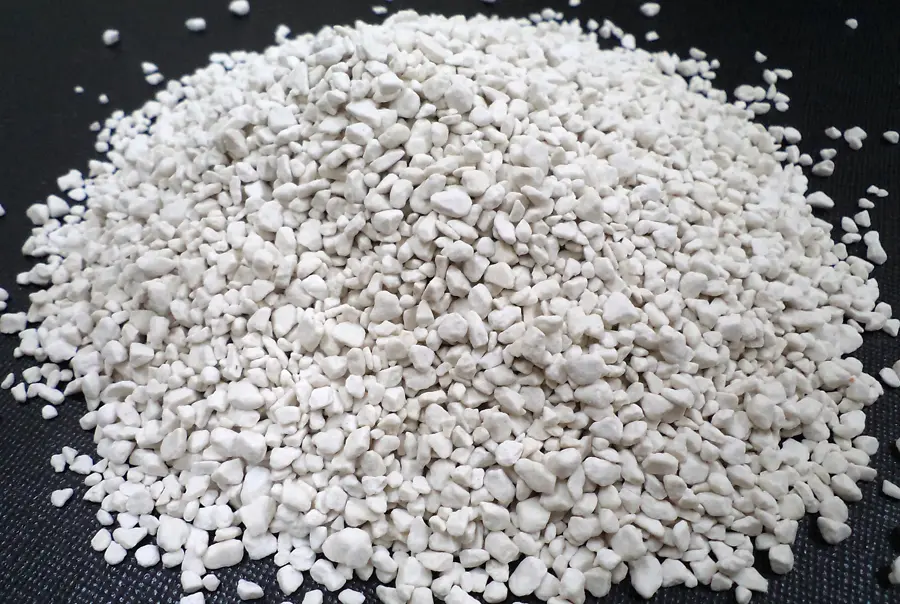
For the full annual fertilizer calendar see Hazelnut Fertilization Programme, and for sampling and report reading see the Soil Analysis Guide. Our articles on liming, which complements organic matter on acid soils, and on the chlorine-free potassium source potassium sulfate (0-0-51) continue this subject.
📚 Hazelnut Research Station - Fertilization in Hazelnut (2013) 📚 Bayburt Provincial Directorate of Agriculture and Forestry - Storage and Application of Barn Manure 📚 Yavuzkılıç & Gülser (2024) - Journal of Soil Science and Plant Nutrition 📚 Karadeniz & Özkutlu (2023) - Academic Journal of Agriculture 📚 Samsun Provincial Directorate of Agriculture and Forestry - Hazelnut Husk Compost📚Sources
- Republic of Türkiye Ministry of Agriculture and Forestry - Hazelnut Research Station, Fertilization in Hazelnut (Farmer Training Series No. 4, Giresun 2013)
- Bayburt Provincial Directorate of Agriculture and Forestry - Storage and Application of Barn Manure
- Yavuzkılıç, Y. & Gülser, C. (2024) - Effect of Hazelnut Waste Compost on Hazelnut Yield and Leaf Macronutrient Content, Journal of Soil Science and Plant Nutrition 12(1)
- Karadeniz, U. & Özkutlu, F. (2023) - Determination of Soil Fertility Status of Hazelnut Orchards in Ordu-Kumru, Academic Journal of Agriculture
- Plant Nutrient Contents of Some Hazelnut Orchard Soils in Ordu and Giresun Provinces, Journal of Soil Science and Plant Nutrition
- Samsun Provincial Directorate of Agriculture and Forestry - Hazelnut Husk Compost as a Natural Fertilizer
- Image: Çiftlik gübresi yığını — Robin Webster, CC BY-SA 2.0 (cropped, converted to WebP)
Related Guides
View all Fertilization guides
Soil and Leaf Analysis Guide for Hazelnut Orchards
When to have a soil analysis done in a hazelnut orchard, how to take the sample, and how to read the results. Leaf analysis timing and method explained.
Hazelnut Fertilization Program: Annual Schedule and Application Rates
When to fertilize hazelnuts, which fertilizer types to use, and how much per decare. A practical guide to nitrogen, phosphorus, potassium and organic fertilizer applications.
Liming Acidic Hazelnut Soils: Raising Soil pH in the Orchard
Black Sea soils are acidic by nature. Without liming, much of the fertilizer you spread never reaches the tree. How lime requirement is determined, which liming material to choose, and when and how to apply it.
Potassium Sulfate (0-0-51) Fertilizer: Use and Dosage in Hazelnuts
What is potassium sulfate fertilizer, and when and how should it be used in hazelnuts? Learn about 51% K2O and 18% sulfur content, dosage, application timing, and important considerations.