
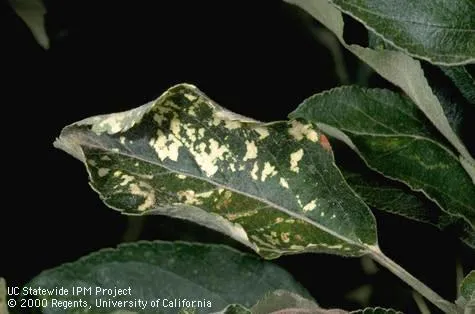
What Is Hazelnut Mosaic Disease?
Hazelnut mosaic disease is the most important viral disease of hazelnut cultivation, caused by Apple mosaic virus (ApMV). ApMV is a plant virus belonging to the genus Ilarvirus within the family Bromoviridae. The virus consists of isometric particles 25-29 nm in diameter and contains three different RNA segments.
Turkey is the largest producer, supplying approximately 69% of world hazelnut production. For this reason, mosaic disease is of great economic importance for the country. Research conducted in the Western Black Sea region determined that the average infection rate is 13.6%.
There Is No Cure
Hazelnut mosaic disease is a viral disease, and in infected plants, it cannot be treated with any chemical pesticide or biological control method. The basis of disease management relies entirely on preventive measures.
Symptoms
The symptoms of mosaic disease appear most prominently in spring (April-May), when air temperatures are mild. As summer heat increases, virus concentration drops and symptoms may be temporarily masked.
Typical Leaf Symptoms
- Chlorotic rings: Yellow-green ring-shaped spots on the leaf surface
- Oak-leaf pattern: Yellow-white areas shaped like oak leaves on the leaf — the most characteristic symptom of the disease
- Vein banding: Yellow stripes and bands along leaf veins
- Mosaic-type spotting: Irregularly distributed yellow, light green and dark green areas
- Line patterns: Thin yellow lines and streaks on the leaf surface
- General yellowing: Yellowing of the entire leaf in severe infections
Characteristics of Symptoms
Symptoms show irregular distribution on the plant. Some shoots in the same bush may show symptoms while others do not. Some hazelnut cultivars may show no symptoms at all despite being infected (asymptomatic carriers); this situation causes the disease to spread undetected.
Caution in Diagnosis
Mosaic symptoms can sometimes be confused with herbicide (weedkiller) damage. However, herbicide damage generally appears throughout the entire plant, whereas mosaic appears on specific branches and leaves. If in doubt, consult your provincial/district agricultural directorate for a laboratory test (ELISA or RT-PCR).
Impact on Yield
Mosaic disease seriously affects hazelnut yield:
| Impact Area | Description |
|---|---|
| Yield loss | 20-42% crop loss in infected trees |
| Fruit number | The number of fruits (nuts) produced by infected plants is significantly reduced |
| Vegetative growth | Growth retardation is observed in young infected plants |
| Fruit quality | No significant difference in fruit size and quality is observed |
| Economic loss | Estimated to cause millions of TL in annual losses across Turkey |
A detailed study conducted in the Western Black Sea region showed that yield losses varied by province: 35.6% in Duzce, 28.3% in Zonguldak, and 19.7% in Bartin. The average yield loss was calculated at 28.2%.
Research Data
In research conducted between 2005-2008 in 213 hazelnut orchards in the Western Black Sea region, a total of 1,465 samples were examined and disease symptoms were detected in 84 orchards. The average infection rate was determined as 13.6%. A separate study in Giresun detected an infection rate of 7.86%.
Spread Pathways
Unlike many plant viruses, the mosaic virus is not transmitted by insects. Its spread pathways are limited but effective:
1. Vegetative Propagation (Primary Spread Pathway)
The most important factor in disease spread is vegetative propagation material taken from infected plants. New seedlings produced by layering, grafting or cuttings also carry the virus from the parent plant. All branches taken from a single bush may be infected.
2. Root Grafting
In closely planted hazelnut bushes, roots can merge underground (root grafting). The virus can pass to a healthy plant through this natural fusion. This risk increases especially in densely planted orchards.
3. Mechanical Transmission
Pruning shears, saws and other garden tools can carry the virus from infected plants to healthy ones. Although this route is not as effective as vegetative propagation, it poses a significant risk, especially in closely planted orchards.
Not Insect-Transmitted
Hazelnut mosaic virus is not transmitted by aphids, thrips or other insects. While this characteristic limits the speed of virus spread, it also complicates management — because it cannot be prevented through insect spraying.
Why Is There No Cure?
Once viruses establish themselves inside living plant cells, they reproduce using the cell’s own genetic machinery. Therefore:
- Chemical pesticides are ineffective: Fungicides or bactericides do not work against viruses. An antiviral agricultural chemical has not yet been developed.
- The virus is inside cells: The virus resides in the plant’s vascular tissues (phloem) and leaf cells. No externally applied substance can destroy the virus particles.
- Systemic infection: Once the virus enters the plant, it spreads to all plant tissues. Cutting an infected branch does not eliminate the virus from the plant.
The only exception is producing virus-free plant material through meristem culture technique and thermotherapy in nurseries. In this method, a very small meristem tissue (0.2-0.5 mm) from the plant tip is taken and a new plant is grown under laboratory conditions. However, this is a clean seedling production method, not an individual tree treatment.
Prevention Methods
In mosaic disease, the basis of management is prevention. The following measures are vital for protecting your orchard:
Use Virus-Free Seedlings
When establishing a new orchard or adding to an existing one, use certified, virus-tested seedlings. A certified seedling is one that has been inspected by the Seed Registration and Certification Directorate General and proven virus-free through ELISA testing.
Removal of Infected Plants
Inspect your orchard during each growing season. Mark bushes showing mosaic symptoms and do not use them as propagation material. Remove severely infected plants from the orchard and burn or bury them.
Tool and Equipment Disinfection
When moving from tree to tree during pruning and cultural operations, disinfect your tools:
| Disinfectant | Concentration | Application |
|---|---|---|
| Sodium hypochlorite (bleach) | 3% | Immerse tools for 1-2 minutes |
| Sodium hydroxide + formalin | 2% + 2% | Immerse in mixture, no rinsing needed |
| Ethyl alcohol | 70% | Spray or wipe with cloth |
Planting Distance
Leave adequate spacing between hazelnut bushes. Dense planting increases the risk of root grafting, creating conditions for natural virus spread. Recommended planting spacing: 4x4 m or 5x5 m.
Weed Control
Some weeds can serve as intermediate hosts for ApMV. Regularly remove weeds within and around the orchard; berry plants and wild plants from the rose family in particular pose a risk.
Taking Seedlings from Infected Bushes Is Prohibited
Absolutely do not take layering, cutting or grafting material from bushes showing mosaic symptoms or known to be infected. A single infected seedling can spread the virus to your entire new orchard.
Nursery Considerations
Additional important points for nursery operations and seedling-producing farmers:
Source Plant (Rootstock) Control
- Inspect mother bushes from which propagation material will be taken each spring
- Mark bushes showing yellow rings, oak-leaf patterns or vein banding and exclude them from production
- Confirm suspected plants with an ELISA test
Nursery Hygiene
- Disinfect all tools between each use
- Soil or containers that have been in contact with infected plants should be sterilized before reuse
- Always clean weeds in the nursery area
Virus Testing and Certification
- Before offering seedlings for sale, their virus-free status should be verified by ELISA or RT-PCR testing
- Take advantage of Turkish Ministry of Agriculture and Forestry certification programs
- Source material from nurseries that produce certified seedlings
Virus Elimination Through Thermotherapy
This is a method applied by research institutions. After infected plants are kept at 30-38°C for 2-4 weeks, meristem tip excision is performed. In this way, virus-free plant material can be obtained. However, this process requires specialized laboratory conditions and is not practical for individual farmers.
Government Support
In Turkey, government subsidies are available for the use of certified seedlings. Under the domestic certified seedling use support program, financial support is provided for certified seedlings purchased from approved nurseries. Contact your provincial agricultural directorate for detailed information.
Conclusion
Hazelnut mosaic disease (ApMV) is an incurable but preventable viral disease that poses a serious threat to hazelnut cultivation. This virus, found at an average rate of 10-15% in hazelnut orchards across Turkey, can cause 20-42% yield loss in infected trees.
In summary:
- Always use certified, virus-free seedlings when establishing a new orchard
- Carefully inspect your orchard each spring and mark symptomatic bushes
- Never take propagation material from infected plants
- Disinfect your pruning tools when moving from tree to tree
- Leave adequate planting distance to reduce root grafting risk
- If in doubt, contact your provincial agricultural directorate for laboratory testing
For overall hazelnut orchard care, see our Hazelnut guide. For information on other diseases, see our Powdery mildew guide.
📚 Hazelnut Research Institute 📚 Akbas & Degirmenci (2009) - ApMV Research 📚 Agrowy - Hazelnut Mosaic Disease📚Sources
Related Guides
View all Diseases guides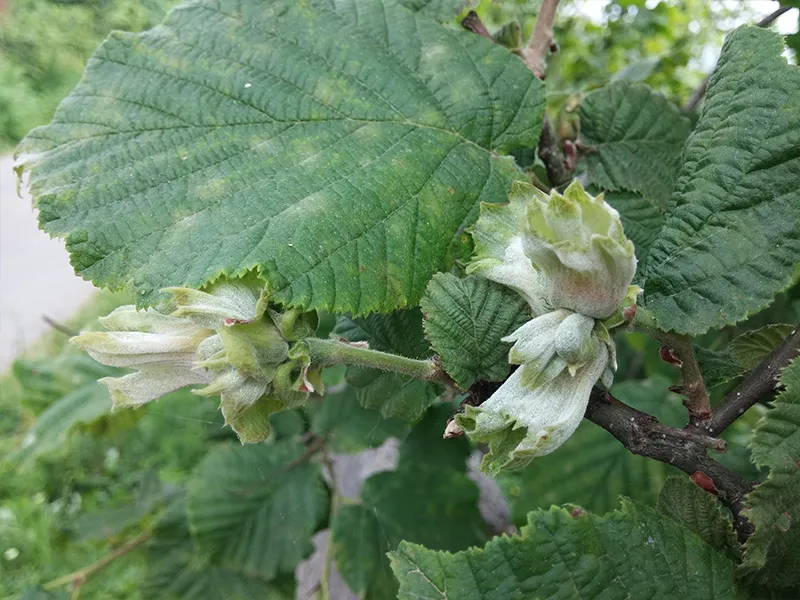
Powdery Mildew in Hazelnuts: Symptoms, Control and Spraying
What is powdery mildew in hazelnuts, what are its symptoms, when should you spray and how is it controlled? Includes an overview of the new powdery mildew (Erysiphe corylacearum).
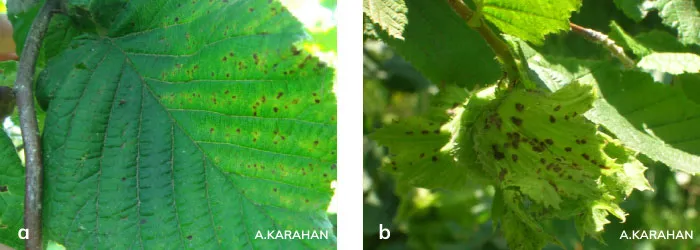
Hazelnut Bacterial Blight: Symptoms, Treatment and Prevention
What is hazelnut bacterial blight (Xanthomonas arboricola pv. corylina), its symptoms, spread pathways and control methods.
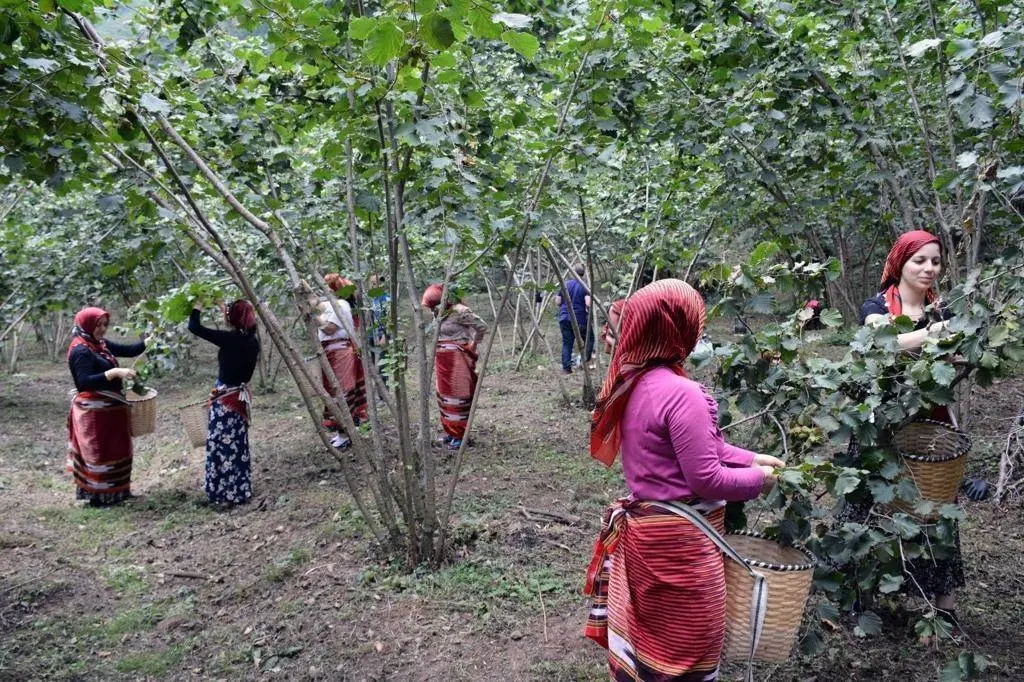
Hazelnut Growing Guide: From Planting to Harvest, Step by Step
A complete guide to growing hazelnuts. Pruning, fertilization, pest control, harvest and market knowledge — everything a hazelnut grower needs on a single page.
More Diseases Guides
Hazelnut Bacterial Blight: Symptoms, Treatment and Prevention
What is hazelnut bacterial blight (Xanthomonas arboricola pv. corylina), its symptoms, spread pathways and control methods.
Hazelnut Branch Canker: Symptoms, Control and Pruning Methods
What is hazelnut branch canker (Nectria galligena), its symptoms, risk factors at high altitudes and control methods.
New Powdery Mildew (Erysiphe corylacearum): The New Threat to Hazelnuts
What is the new powdery mildew disease in hazelnuts (Erysiphe corylacearum), its differences from traditional powdery mildew and current control methods.
Hazelnut Root Rot: Armillaria and Rosellinia Control Guide
Hazelnut root rot diseases (Armillaria mellea, Rosellinia necatrix) symptoms, identification and control methods.