What Is Root Rot?
Root rot refers to soil-borne fungal diseases that destroy the root system of hazelnut trees and, if left untreated, cause the tree to dry out completely. Two different root rot pathogens are commonly found in hazelnuts:
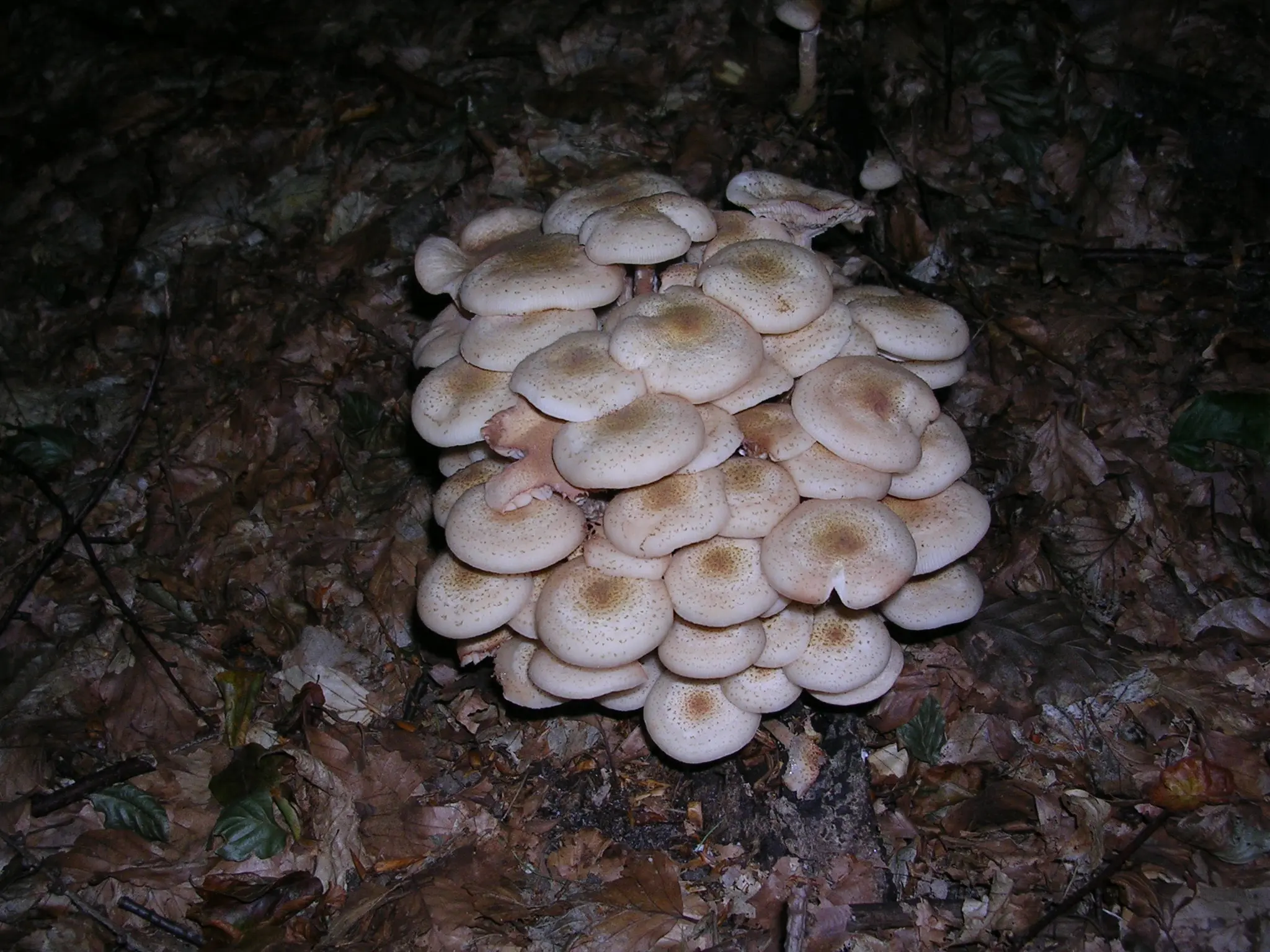
- Armillaria root rot (Armillaria mellea) — commonly known as the “honey mushroom,” a cap-forming fungus
- Rosellinia root rot (Rosellinia necatrix) — also called “white root rot”
Both diseases destroy the cambium layer between the bark and the heartwood of the roots, blocking the tree’s water and nutrient uptake. Although the above-ground symptoms of the two diseases are similar, distinguishing between them is important for developing the correct control strategy.
Critical Warning
Root rot diseases, unlike leaf or branch diseases, are very difficult to reverse. By the time above-ground symptoms become visible, the root system has typically sustained significant damage. Therefore, early diagnosis and preventive measures are vitally important.
Root rot fungi can survive in the soil and in infected root debris for many years — Armillaria species for up to 100 years. This makes disease management difficult and is the most important factor to consider when establishing a new orchard.
Armillaria Root Rot (Armillaria mellea)
Armillaria root rot is a common soil-borne fungal disease found on hazelnuts as well as many fruit and forest trees. The causal agent is Armillaria mellea, commonly known as the honey mushroom.
Symptoms and Disease Progression
Armillaria infection generally progresses slowly and symptoms appear gradually over several years:
Year 1: Slowed shoot growth and slight leaf size reduction. The disease is usually not noticed at this stage.
Year 2: Distinct yellowing and premature leaf drop begins. One side of the tree may be more affected — this indicates the side where the root infection is located.
Year 3: Dieback begins from the tips of branches and shoots backward. Fruit yield declines noticeably.
Year 4: The tree dies completely.
Rapid Death
In severe infections, the tree can also die within 1-2 years. The disease progresses much more rapidly, especially in stressed trees (drought, waterlogging, wounded roots).
Root and Root Crown Symptoms
Definitive diagnosis of the disease is made by examining the roots:
- When bark is peeled from roots, a white, paper-thin mycelial mat (fan-shaped) is visible between the bark and heartwood
- In early stages the heartwood is light brown, turning yellowish and spongy as the disease advances
- Black, shoelace-like rhizomorphs (thick mycelial strands) are found on roots and in the soil — this is Armillaria’s most distinguishing feature
- Rhizomorphs can extend up to 1 meter per year, reaching the roots of neighboring trees
Honey Mushroom (Diagnostic Feature)
After the first autumn rains, honey-colored mushrooms form at the root crown of diseased trees. These mushrooms:
- Have caps 5-15 cm in diameter
- Their upper surfaces are yellowish-brown, undersides white and lamellate
- A white ring is present on their stems
- They emerge in clusters
- Colors darken from the base upward, becoming blackish
The presence of these mushrooms is definitive proof of Armillaria infection in the orchard. The mushrooms and the root fragments from which they emerge should be immediately collected and destroyed.
Rosellinia Root Rot (Rosellinia necatrix)
Also known as white root rot, this disease is caused by the fungus Rosellinia necatrix. In addition to hazelnuts, it also affects olive, walnut, apple, avocado and many other fruit trees.
Symptoms
The above-ground symptoms of Rosellinia infection are similar to those of Armillaria:
- The first symptom is leaf yellowing — it may occur on one side or throughout the entire tree
- Leaf size reduction and premature drop
- Dieback from branch tips backward
- Fruit yield declines, nuts drop prematurely before ripening
- In advanced stages, the tree dies completely
Root Symptoms
Rosellinia’s root symptoms differ from Armillaria:
- Fine roots blacken and decay
- On thick roots and at the root crown, a mycelial layer that is initially white and then turns grey-black forms
- Mycelial strands show pear-shaped swellings at septum (partition) points — this is Rosellinia’s microscopic diagnostic feature
- Under stress conditions, brown-black sclerotia of 3-4 mm diameter form
- The fungus destroys the cambium layer but cannot penetrate the heartwood
Differences from Armillaria
In Rosellinia infection, honey-colored mushroom caps do not form at the tree’s root base, and black rhizomorphs are absent. Instead, a white, cottony mycelial network envelops the roots. This difference is the easiest way to distinguish the two diseases in the field.
Spread Pathways
Rosellinia’s spread mechanisms:
- Infected root fragments are carried by irrigation water and flood/overflow waters
- Mycelial fragments can remain viable in water for weeks
- New infections start from infected root debris in the soil
- Spread accelerates in spring and autumn with sufficient rainfall and suitable temperatures
- It is more common in heavy, water-retaining soils with poor drainage
Distinguishing Between the Two Diseases
It is necessary to distinguish between the two diseases for the correct control strategy:
| Feature | Armillaria mellea | Rosellinia necatrix |
|---|---|---|
| Common name | Honey mushroom root rot | White root rot |
| Mushroom caps | Honey-colored mushrooms form in autumn | Mushroom caps do not form |
| Rhizomorphs | Black, shoelace-like | Absent |
| Mycelium color | White, fan-shaped mats | White-cottony, then grey-black |
| Mycelium odor | Mushroom smell present | Mushroom smell absent |
| Heartwood | Infects, makes spongy | Cannot penetrate heartwood |
| Soil preference | Sandy, well-drained soils | Heavy, water-retaining soils |
| Survival in soil | Up to 100 years | Many years (via sclerotia) |
| Spread | Rhizomorphs + root contact | Water + infected root fragments |
Quick Field Diagnosis
Expose the root crown of the dying tree. If there are white fan-shaped mycelial mats beneath the bark and black strands (rhizomorphs) on the root surface, it is likely Armillaria; if there is white cottony mycelium and no black strands, it is likely Rosellinia. The appearance of honey-colored mushrooms at the base in autumn confirms Armillaria.
Control Methods
For both root rot diseases, control relies primarily on cultural measures. Chemical treatment has limited effectiveness because it is difficult for chemicals to reach the roots in the soil.
1. Removal and Destruction of Diseased Trees
Trees with completely decayed roots should be removed leaving no root fragments behind and burned in their own pit. After removal:
- 3 kg/m3 of quicklime is added to the pit
- Or the pit is washed with 3-5% Bordeaux mixture
- No seedlings should be planted in that spot for at least 2 years
2. Trench Isolation
Trenches are dug around the diseased area to prevent the disease from spreading to healthy trees:
- For Armillaria: A trench 60 cm deep and 30 cm wide — blocks rhizomorph passage
- For Rosellinia: A trench at least 1 meter deep — prevents mycelial strand passage
- If there is a risk of contamination from a neighboring orchard, a perimeter trench 60-70 cm deep is dug at the orchard boundary
- Trench soil is thrown toward the diseased side
Trench Maintenance
Ensure that trenches do not fill up with rain and soil erosion. A filled trench loses its protective function. Inspect trenches regularly and renew them as needed.
3. Treatment of Newly Infected Trees
If the infection is limited to one portion of the root, there is a chance of saving the tree:
- Diseased root portions are cut and removed
- Cut surfaces are cleaned and one of the following treatments is applied:
- 5% Bordeaux mixture brushed on
- 2% bluestone (copper sulfate) solution applied
- 5% Stockholm tar (juniper tar-based) painted on
- After the treatment dries, the area is sealed with grafting wax or a juniper tar mixture (750 g juniper tar + 250 g bluestone)
4. Preventive Soil Treatment
To protect healthy trees surrounding diseased ones:
- In autumn or spring, a 2% bluestone solution is applied to the tree’s canopy drip line
- Calculate 10 liters of treated water per square meter
- Water and fertilizer should be applied to the canopy drip line, not directly to the root crown
5. Cultural Measures
- Open drainage channels in the orchard to prevent water accumulation
- Protect the orchard from floods and overflow
- Take care not to wound roots during soil cultivation
- In spring, expose root crowns to allow drying by summer sun and air
- Do not plant hazelnuts too deep — deep planting increases root crown diseases
- Maintain overall tree health through regular pruning
- Avoid excessive irrigation
Considerations for New Orchard Establishment
Root rot diseases can also pose major problems in new orchards. If preventive measures are not taken, the entire investment can be lost:
Site Selection:
- Avoid sites where root rot has previously occurred
- Prefer well-drained soils over heavy, water-retaining ones
- Armillaria risk is high in former forest land — soil must be inspected
Site Preparation:
- All old tree stumps and root fragments thicker than 2.5 cm should be removed
- The soil should be plowed deeply in multiple directions to bring root debris to the surface
- All woody debris should be burned
- The site should be left fallow for at least 1 year
Seedling Planting:
- Use healthy, certified seedlings
- Do not plant seedlings too deep
- Drip irrigation emitters should be positioned away from the trunk
- Have a soil analysis done to check pH and nutrient balance
Soil pH
Root rot fungi are more active in acidic soils. Apply liming as needed to maintain soil pH in the 6.5-7.0 range. This both reduces disease risk and improves hazelnut nutrient uptake.
Conclusion
Root rot diseases are difficult-to-manage diseases that cause serious economic losses in hazelnut orchards. Although Armillaria and Rosellinia are different fungi, both destroy the root system and kill the tree.
In summary:
- When yellowing of leaves and weakening of shoots are observed, check the roots
- Honey-colored mushrooms and black strands indicate Armillaria; white cottony mycelium indicates Rosellinia
- Uproot and burn completely diseased trees, and apply lime to the site
- Prevent the spread of the disease with trench isolation
- Try treatment with a juniper tar + bluestone mixture on trees in the early stages of infection
- When establishing a new orchard, be sure to clean out old root debris
- Increase the general resistance of your trees through drainage, pruning and balanced fertilization
For all aspects of hazelnut care, see our Hazelnut guide. For the spray program, see our Spray schedule. For information on leaf diseases, review our Powdery mildew guide.
📚 Hazelnut Research Institute 📚 FAO - Rosellinia necatrix 📚 PNW Pest Management Handbooks📚Sources
Related Guides
View all Diseases guides
Powdery Mildew in Hazelnuts: Symptoms, Control and Spraying
What is powdery mildew in hazelnuts, what are its symptoms, when should you spray and how is it controlled? Includes an overview of the new powdery mildew (Erysiphe corylacearum).
Hazelnut Growing Guide: From Planting to Harvest, Step by Step
A complete guide to growing hazelnuts. Pruning, fertilization, pest control, harvest and market knowledge — everything a hazelnut grower needs on a single page.
Hazelnut Pruning Guide: Prune Correctly, Harvest More
When to prune hazelnuts, the three pruning types — formative, maintenance and rejuvenation — plus cutting technique, tools, disinfection and the mistakes that cost yield.
More Diseases Guides
Hazelnut Bacterial Blight: Symptoms, Treatment and Prevention
What is hazelnut bacterial blight (Xanthomonas arboricola pv. corylina), its symptoms, spread pathways and control methods.
Hazelnut Branch Canker: Symptoms, Control and Pruning Methods
What is hazelnut branch canker (Nectria galligena), its symptoms, risk factors at high altitudes and control methods.
New Powdery Mildew (Erysiphe corylacearum): The New Threat to Hazelnuts
What is the new powdery mildew disease in hazelnuts (Erysiphe corylacearum), its differences from traditional powdery mildew and current control methods.
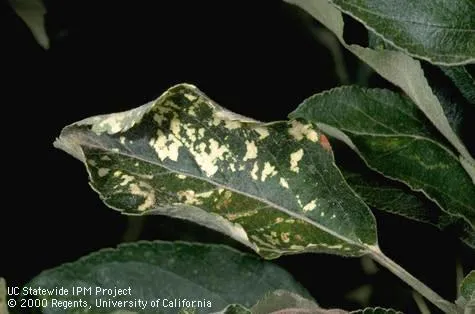
Hazelnut Mosaic Disease: Symptoms, Spread and Prevention Methods
What is hazelnut mosaic disease (Apple Mosaic Virus), its leaf symptoms, spread pathways and prevention methods.