Hazelnut Diseases
Common diseases in hazelnut orchards, their symptoms and treatment methods.
6 guidesDisease problems in a hazelnut orchard rarely arrive with a label attached. You notice spotting on the leaves, a branch that never leafed out in spring, or a bush that has been thinning from the top for three seasons running, and then the real work begins: finding out what caused it. This category collects the diseases that actually cost Black Sea growers yield - one bacterium, several fungi and a virus - each written up from the first symptom through the disease cycle to the control measures that are realistic in a working orchard.
The quickest way to use these guides is to start from where the damage sits rather than from what you suspect it is called. Damage confined to leaves and the current year's shoots points one way; sunken, ringed wounds in old wood point another; a bush that declines steadily over several seasons, worse on one side than the other, is usually telling you the problem is below ground. The triage table further down maps the common starting points onto the guide you should open first.
Two things are worth knowing before you open any single guide. Symptoms overlap heavily - browning, dieback and early leaf drop are produced by almost everything here - so a confident diagnosis normally rests on two or three signs agreeing rather than one. And every control chapter starts with cultural measures rather than a spray. That ordering is deliberate: with bacterial and viral problems in particular, planting material and orchard hygiene decide the outcome long before any product does. Insect damage belongs in the same conversation, because wounds are a shared doorway - see hazelnut pests.
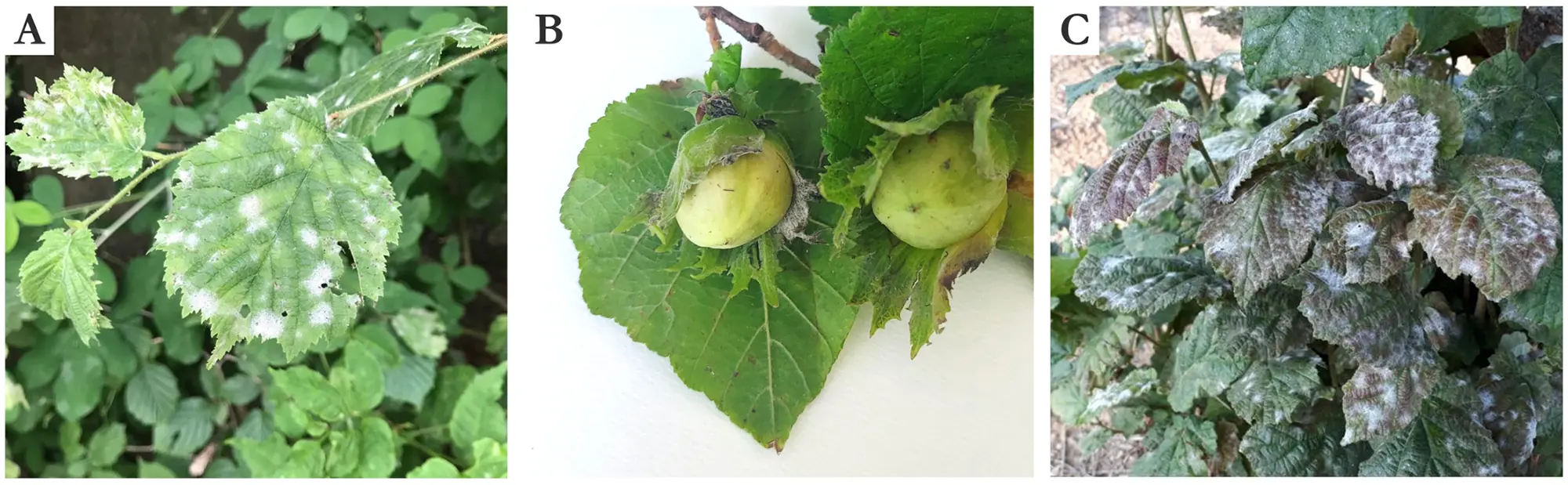
New Powdery Mildew (Erysiphe corylacearum): The New Threat to Hazelnuts
What is the new powdery mildew disease in hazelnuts (Erysiphe corylacearum), its differences from traditional powdery mildew and current control methods.
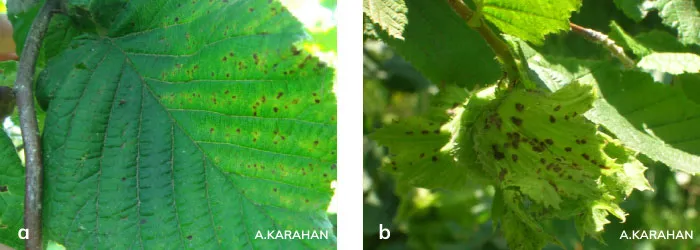
Hazelnut Bacterial Blight: Symptoms, Treatment and Prevention
What is hazelnut bacterial blight (Xanthomonas arboricola pv. corylina), its symptoms, spread pathways and control methods.
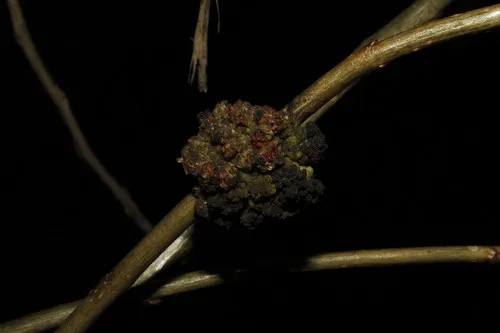
Hazelnut Branch Canker: Symptoms, Control and Pruning Methods
What is hazelnut branch canker (Nectria galligena), its symptoms, risk factors at high altitudes and control methods.
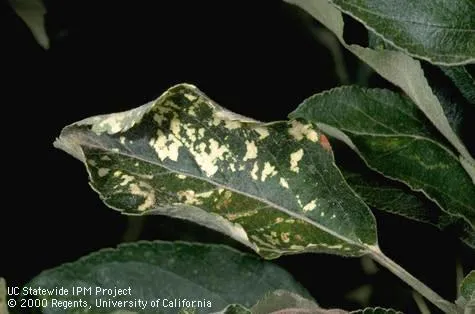
Hazelnut Mosaic Disease: Symptoms, Spread and Prevention Methods
What is hazelnut mosaic disease (Apple Mosaic Virus), its leaf symptoms, spread pathways and prevention methods.
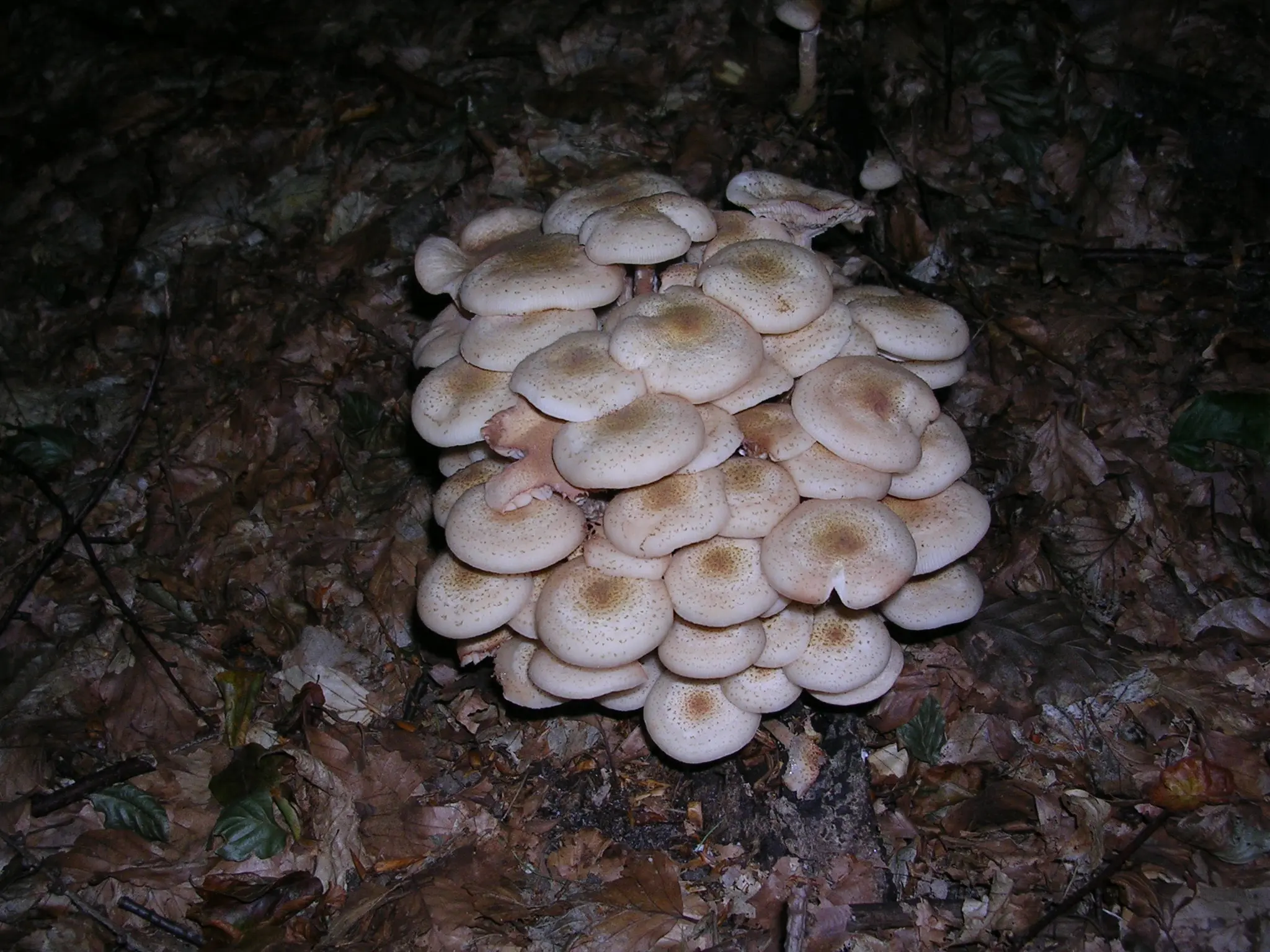
Hazelnut Root Rot: Armillaria and Rosellinia Control Guide
Hazelnut root rot diseases (Armillaria mellea, Rosellinia necatrix) symptoms, identification and control methods.
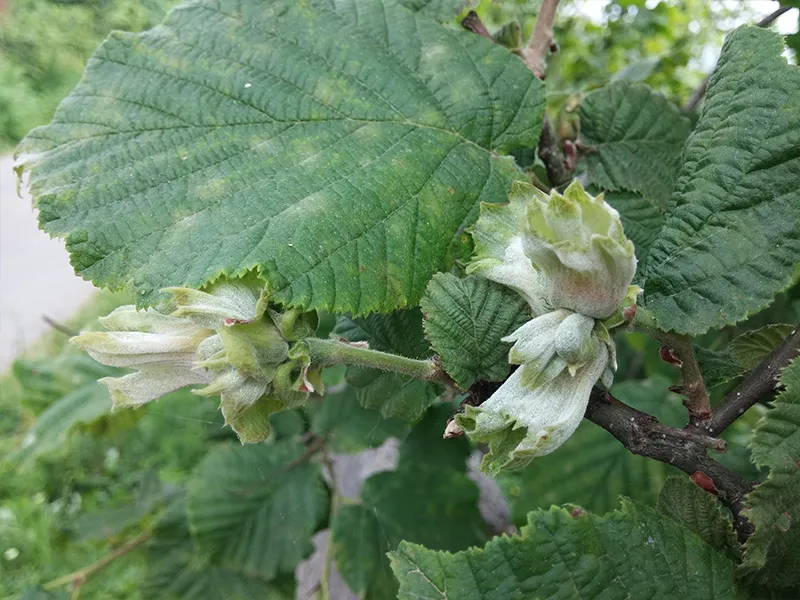
Powdery Mildew in Hazelnuts: Symptoms, Control and Spraying
What is powdery mildew in hazelnuts, what are its symptoms, when should you spray and how is it controlled? Includes an overview of the new powdery mildew (Erysiphe corylacearum).
Start From the Symptom, Not the Disease Name
On leaves, three patterns are worth separating carefully. Small round or angular spots roughly 1-3 mm across, water-soaked and yellowish-green at first and darkening to reddish-brown with a pale halo around them, are the signature of bacterial blight. A white, flour-like coating that smears when you rub it is powdery mildew; since 2013 the species responsible for most of it in Turkey has been Erysiphe corylacearum, covered in the new powdery mildew guide, while the older, traditional powdery mildew has its own guide in the Turkish edition of this site. Yellow rings, oak-leaf shaped blotches and yellow banding along the veins - patterns in the leaf tissue itself, with nothing sitting on the surface - point instead to mosaic virus.
On wood, look at the age of the tissue. Long cankers on one- and two-year-old shoots, with cracked bark and leaves that dry out but stay attached to the branch instead of falling, again point to bacterial blight, which is at its most dangerous on young trees because a canker can girdle the trunk outright. Sunken wounds with raised edges and nested rings on the trunk and main branches, developing slowly over two or three years, are typical of branch canker (Nectria galligena) - a problem that becomes markedly more common in higher, cooler, wetter orchards. The branch canker guide covers both the wound work and the cultivar question.
When a whole bush goes into decline, dig. Yellowing, undersized leaves and dieback that worsen year on year, often on one side of the plant first, combined with black shoelace-like strands on the roots and in the surrounding soil, indicate Armillaria root rot; a white felt of mycelium on the roots points to Rosellinia instead. Both are in the root rot guide. Root diseases are the most commonly misread problem in the orchard, because from above the picture looks exactly like drought stress or a nutrient shortage.
How Disease Gets Into an Orchard - and How to Close the Door
The single most important route is planting material. Bacterial blight moves into new areas mainly on infected seedlings, and mosaic virus spreads almost entirely through vegetative propagation - layering, cuttings and grafting material taken from bushes that were already carrying it. Buy from a reliable nursery, ask for health documentation, and never take propagation material from a bush showing symptoms, however good its yield looks. A single infected seedling can compromise an entire new planting.
The second route is the one you carry yourself. Shears and saws move bacteria and fungal spores from bush to bush in seconds. Disinfect the cutting surfaces at every change of tree - the bacterial blight guide gives 10% household bleach or 70% ethyl alcohol, with a soak of at least twenty seconds. Rain splash, wind-driven rain and wounds left by hail and frost do the rest, which is why a season with heavy hail or a late spring frost is usually followed by a year with more infection than usual.
The third is what you leave lying around. Fallen leaves and prunings are inoculum, not rubbish: the blight bacterium survives on fallen leaves for months, and powdery mildew overwinters in fruiting bodies on the leaf litter. Collect diseased material and destroy it rather than piling it at the orchard edge. Cut cankered wood well below the visible margin - the blight guide recommends 60-100 cm below the infected area - and treat balanced nutrition as part of hygiene, because excess nitrogen produces soft tissue that is far easier to infect. That is one reason the fertilization guides belong beside this category rather than in a separate world.
Rotating Active Ingredients and Keeping Sprays Effective
Not every disease can be sprayed at all. Nothing on the market cures a virus, so mosaic management is entirely a matter of clean planting material, tool hygiene and removing infected bushes. Copper preparations used against bacterial blight are protectants: they stop infection from starting and do very little once it has begun, which is why the guides put so much weight on three timing points - after harvest, at leaf fall and at bud swell - and comparatively little on the rate in the tank.
Where a fungicide is genuinely needed, the second question after 'which product' is 'which one did I use last time'. Powdery mildew can require several applications in a bad season, and repeating the same active ingredient through all of them is the fastest way to select for a population it no longer touches. The new powdery mildew guide sets out the practical version of this: sulfur as the first choice, with triazole and strobilurin group products rotated rather than repeated. Rotation means alternating between chemical groups, not simply switching to a different brand name that contains the same molecule.
This site deliberately publishes no product names or doses. Licensed preparations, permitted rates and pre-harvest intervals change by country, by region and by season, and a product that is legal this year may not be next. Take that list from your provincial or district directorate of agriculture, or from an agricultural engineer who has actually seen the orchard - never from a neighbour's leftover bag.
When to Stop Guessing and Call an Agronomist
Some situations do not repay another week of reading. Ask for help when the symptoms genuinely do not match anything described here, when two candidates fit equally well, or when a treatment that should have worked plainly has not. A misdiagnosis is not just a wasted spray; it also costs you the season in which the real problem could have been contained.
Young orchards deserve a lower threshold for asking. Bacterial blight is at its most destructive in bushes between one and eight years old, where trunk girdling kills the plant outright, and a mistake in those years is one you live with for the life of the orchard. The same applies to a patch of neighbouring bushes failing together: that pattern usually means a soil-borne root disease spreading through the ground, and confirming it means digging and examining roots, not looking at leaves.
There is also a reporting duty worth taking seriously. New pathogens do arrive - Erysiphe corylacearum was first recorded in Turkey in 2013 and spread through the growing regions within a few years - and official surveys depend on growers reporting what they see. Finally, before you uproot anything, get a second opinion. Removing a mature bush is irreversible and expensive, and it is the one decision that deserves a qualified pair of eyes.
Symptom triage: where the damage sits and what it usually means
| Where you see it | What it looks like | Most likely cause | Guide |
|---|---|---|---|
| Leaves | Spots 1-3 mm, reddish-brown with a pale yellow-green halo | Bacterial blight | Bacterial blight |
| Leaves and shoots | White, flour-like coating that smears when rubbed | New powdery mildew (Erysiphe corylacearum) | New powdery mildew |
| Leaves | Yellow rings, oak-leaf blotches, banding along the veins, nothing on the surface | Mosaic virus | Mosaic disease |
| Young shoots | Long cankers, cracked bark, dried leaves that stay attached to the branch | Bacterial blight | Bacterial blight |
| Trunk and main branches | Sunken wounds with raised edges and nested rings, worsening over years | Branch canker (Nectria galligena) | Branch canker |
| Whole bush | Decline over 3-4 years, black shoelace-like strands on roots and in soil | Armillaria root rot | Root rot |
| Whole bush | Decline over several years, white felt of mycelium on the roots | Rosellinia root rot | Root rot |
Frequently Asked Questions
How can I tell a fungal disease from a bacterial one in the orchard?
As a rough field rule, fungal problems usually leave something visible sitting on the plant surface - a coating you can smear, or fruiting structures in old canker tissue - while bacterial infections tend to produce water-soaked spots that later develop halos, plus cankers on young wood whose dried leaves stay attached to the branch. It is only a rule of thumb. If the decision affects whether you remove a bush or start a spray programme, get the sample confirmed rather than relying on appearance.
Is there a spray that cures hazelnut mosaic virus?
No. Fungicides and bactericides have no effect on viruses, and no antiviral plant protection product exists for this disease. Once the virus is inside the plant it becomes systemic, so cutting out a symptomatic branch does not clear it. Management is prevention only: virus-free propagation material, tool disinfection, and removal of infected bushes. See the mosaic disease guide.
Can I compost diseased prunings instead of burning them?
Treat diseased wood and leaf litter as inoculum rather than as garden waste. A pile at the edge of the orchard keeps producing spores and bacteria within splash and wind range of your bushes for months. The guides consistently recommend removing infected material from the orchard and burning it. Healthy prunings are a different matter and can be chipped or composted.
Why does the same disease hit my orchard harder than my neighbour’s?
Usually because of conditions rather than luck. Altitude and humidity strongly favour branch canker; poor drainage favours root rot; a dense, unpruned canopy that stays wet favours powdery mildew; heavy nitrogen produces soft tissue that is easier for everything to infect; and cultivars differ genuinely in susceptibility. Most of those factors are things you can change over a few seasons.
Should I spray copper preventively if I have never seen bacterial blight?
Preventive copper programmes are aimed at orchards with a history of the disease or with known pressure nearby, and the timing of the applications matters more than the fact of spraying. Before committing to a routine programme, confirm with your provincial or district agricultural directorate that it is warranted in your area, and which preparations are currently licensed for hazelnut where you farm.
One of my bushes died suddenly in mid-summer. What should I look at first?
Two possibilities dominate. Check the trunk and the base of the main stems for a canker that has girdled the wood, and then dig at the root crown and look for shoelace-like black strands or a white mycelial felt on the roots. A sudden summer collapse after a season or two of quiet decline is a classic root rot pattern, and it matters because a root problem threatens the neighbouring bushes as well.
Download Findik App
Download the Findik app for job listings, team building and more.