
What Is Powdery Mildew?
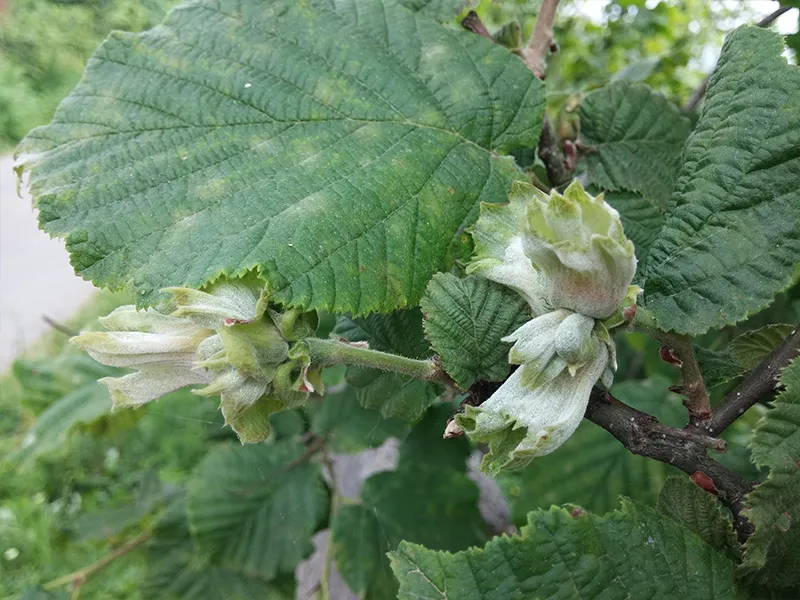
Powdery mildew is a fungal disease that shows itself on hazelnut leaves as a white-grey powdery coating. The traditional powdery mildew agent is Phyllactinia guttata, a widely seen disease in hazelnuts. The disease spreads by wind and increases rapidly in warm, humid weather conditions.
The new powdery mildew (Erysiphe corylacearum) species that has begun to appear in Turkey in recent years, however, progresses far more aggressively and poses a serious threat to hazelnut growers.
Pathogen Information
Traditional powdery mildew: Phyllactinia guttata — white powder on the lower leaf surface, generally active in midsummer. New powdery mildew: Erysiphe corylacearum — dense white coating on the upper leaf surface, more aggressive, recorded in Turkey since 2013.
If powdery mildew is left untreated, the photosynthetic capacity of the leaves drops, fruit development slows down and yield loss can reach 20-40%.
Symptoms
Leaf Symptoms
The most obvious signs of powdery mildew disease appear on the leaves:
- White powdery coating: White-grey powder forming on the leaf surface as if flour had been dusted over it
- Traditional powdery mildew: Generally starts on the lower leaf surface
- New powdery mildew: On both the upper and lower surfaces, with a denser white coating
- Leaf curling: In advanced stages the leaf margins curl upward
- Yellowing and drying: In severe infections the leaves turn yellow and drop prematurely
- Brown spots: As the fungal spores mature, the white powder turns brown
Early diagnosis is critical for successful control. Inspect your leaves regularly from April onward.
Fruit Symptoms
Severe powdery mildew infection also affects the fruit:
- Fruit development slows down, the nuts stay small
- White spots may appear on the husk
- The proportion of blank nuts increases
- Kernel quality declines (small, weak kernels)
- Premature fruit drop may occur in severe infections
Disease Cycle
The powdery mildew fungus overwinters on leaf debris and in tree bark as chasmothecia (closed spore structures). When air temperatures rise in spring, the spores are released and new infections begin.
Spring (April-May):
- The overwintered spores are spread by wind
- The first infections begin on young leaves
- Spread accelerates when the temperature is between 15-25°C
Summer (June-July):
- The disease reaches its peak
- Warm (20-30°C) and humid weather (60-80% relative humidity) increases the spread
- A wet leaf surface makes infection easier
- The disease is more severe in unpruned, crowded orchards
Autumn:
- The fungus forms its overwintering structures (chasmothecia)
- When the leaves fall, the infected debris drops to the ground
- The inoculum source for the new season is ready
Control Methods
Cultural Measures
Cultural measures that must be taken before and alongside chemical control:
- Pruning: Regular pruning must ensure ventilation of the tree canopy. Crowded branches create a favorable environment for the disease. See our pruning guide
- Orchard hygiene: Infected leaves that fall in autumn should be collected and removed from the orchard or burned
- Ventilation: The spacing between trees must be sufficient and the inter-row areas kept clean
- Balanced fertilization: Excessive nitrogen fertilization creates soft leaf tissue and increases susceptibility to powdery mildew
The Effect of Pruning
Powdery mildew disease is noticeably less common in regularly pruned orchards. Air circulation makes it harder for the fungus to spread. Pruning is the first and most important step in powdery mildew control.
Chemical Control
The main product groups used in powdery mildew control:
| Product Group | Example Active Ingredients | Mode of Action | Note |
|---|---|---|---|
| Sulfur products | Wettable sulfur, liquid sulfur | Preventative | Economical, widely used |
| Triazole group | Tebuconazole, Penconazole | Curative + preventative | Effective, resistance risk |
| Strobilurin group | Trifloxystrobin | Preventative + curative | Good efficacy |
| Boscalid | Boscalid | Curative | Effective against the new powdery mildew |
Application: The lower and upper leaf surfaces must be thoroughly wetted. Spraying should be done early in the morning or in the evening hours.
Spray Timing
Correct timing determines the success of powdery mildew control:
1st spray (late April - early May):
- When the first symptoms appear, or as a preventative
- Sulfur-based products are the first choice
2nd spray (15-20 days later):
- Repeat application if the disease persists
- Rotate to a different active ingredient (to prevent resistance development)
3rd spray (if necessary, June):
- A third application if there is heavy infection
- Prefer systemic products if the new powdery mildew is suspected
For the detailed annual plan, see our spray schedule.
Do Not Be Late
When powdery mildew symptoms appear, spraying must be done immediately. Once the disease has spread, bringing it under control is far more difficult. Preventative spraying is always more effective than curative spraying.
New Powdery Mildew (Erysiphe corylacearum)
Erysiphe corylacearum, which has been appearing in Turkey since 2013, is an invasive fungal species that poses a serious threat to hazelnut production. Of Asian origin, this species was detected first in Azerbaijan and Georgia, and subsequently in Turkey.
Differences from Traditional Powdery Mildew
| Feature | Traditional Powdery Mildew | New Powdery Mildew |
|---|---|---|
| Pathogen | Phyllactinia guttata | Erysiphe corylacearum |
| Infection site | Lower leaf surface | Upper and lower leaf surface |
| Severity | Moderate | High - very high |
| Coating density | Thin powder | Thick white coating |
| Active period | May-July | June-October |
| Yield loss | 10-20% | 20-40%+ |
New Powdery Mildew Warning
The new powdery mildew (Erysiphe corylacearum) is far more aggressive than the traditional powdery mildew. It forms a dense white coating on the leaf, and leaves can become completely covered. Conventional spray programs may prove insufficient — obtain current recommendations from your provincial agricultural directorate.
Controlling the New Powdery Mildew
- Early diagnosis is very important — monitor the leaves closely from June onward
- Prefer systemic products (the triazole group is more effective)
- The number of sprays can rise to 3-4
- Resistance management: Use a different active ingredient group at each spray
- Always follow the recommendations of your provincial agricultural directorate
Conclusion
Powdery mildew is an important problem that is widely seen in hazelnut orchards and causes serious yield losses when left uncontrolled. Particularly with the spread of the new powdery mildew species, more careful and timely intervention is required.
In summary:
- Inspect your leaves regularly from April onward
- Spray immediately at the first symptom, do not be late
- Cultural measures (pruning, hygiene) support chemical control
- Prevent resistance development by rotating different product groups
- Contact your provincial agricultural directorate if you suspect the new powdery mildew
For the annual spray program, review our spray schedule. For all stages of hazelnut care, see our hazelnut guide.
📚 Hazelnut Research Institute 📚 Giresun Provincial Agricultural Directorate📚Sources
Related Guides
View all Diseases guides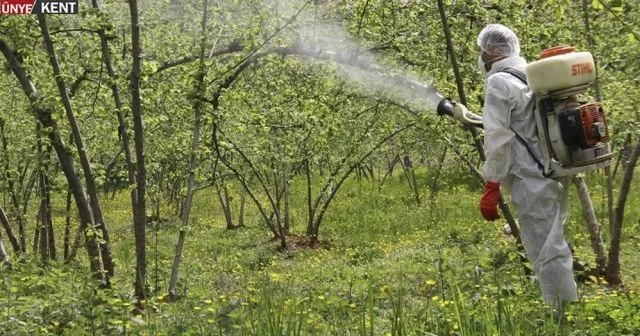
Hazelnut Spraying Calendar: Annual Program for All Pests
Hazelnut orchard spraying calendar: spray timings, dosages and rules against all pests and diseases from February to October.
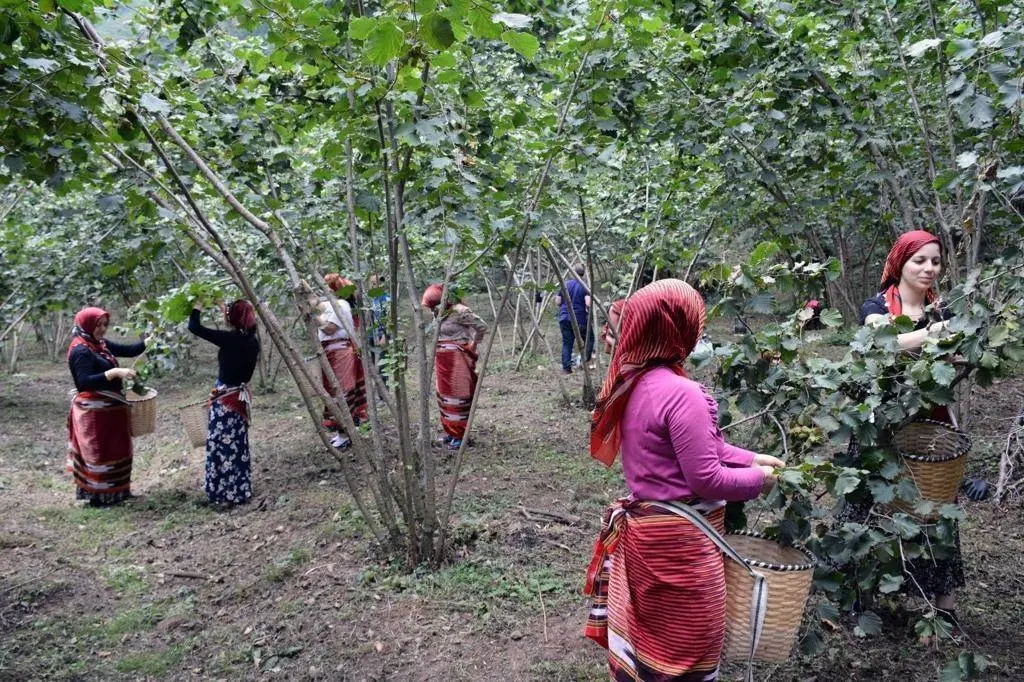
Hazelnut Growing Guide: From Planting to Harvest, Step by Step
A complete guide to growing hazelnuts. Pruning, fertilization, pest control, harvest and market knowledge — everything a hazelnut grower needs on a single page.
More Diseases Guides
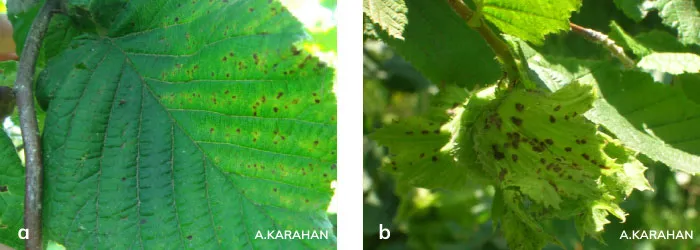
Hazelnut Bacterial Blight: Symptoms, Treatment and Prevention
What is hazelnut bacterial blight (Xanthomonas arboricola pv. corylina), its symptoms, spread pathways and control methods.
Hazelnut Branch Canker: Symptoms, Control and Pruning Methods
What is hazelnut branch canker (Nectria galligena), its symptoms, risk factors at high altitudes and control methods.
New Powdery Mildew (Erysiphe corylacearum): The New Threat to Hazelnuts
What is the new powdery mildew disease in hazelnuts (Erysiphe corylacearum), its differences from traditional powdery mildew and current control methods.
Hazelnut Mosaic Disease: Symptoms, Spread and Prevention Methods
What is hazelnut mosaic disease (Apple Mosaic Virus), its leaf symptoms, spread pathways and prevention methods.