
What Is Bacterial Blight?
Bacterial blight is a serious bacterial disease that causes bud death, leaf spots, branch cankers and fruit rot in hazelnut trees. The causal agent is Xanthomonas arboricola pv. corylina (formerly Xanthomonas campestris pv. corylina), and it can lead to tree death, particularly in nurseries and young orchards.
Pathogen Information
Scientific name: Xanthomonas arboricola pv. corylina (Miller et al.) Vauterin et al. Optimum temperature: 28-32°C (minimum 5-7°C, maximum 37°C) Spread: Via rain, wind, pruning tools and infected planting material
The disease occurs in all hazelnut-growing regions worldwide. It causes significant economic losses in hazelnut orchards in Turkey’s Black Sea region, Italy, the USA (Oregon) and Chile. Especially during the first 4-8 years after planting, tree deaths due to trunk girdling are common in young trees.
Symptoms
Bacterial blight affects virtually all organs of the hazelnut tree. Recognizing the symptoms early is the fundamental requirement for successful management.
On Buds
- Infected buds turn brown and eventually die
- Infected buds fail to open in spring or produce diseased shoots
- Bacteria entering between bud scales progress inward and desiccate the entire bud
On Leaves
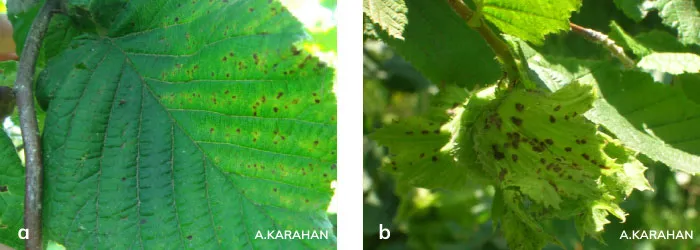
- Round or angular spots, 1-3 mm in diameter appear on leaf surfaces
- Initially, spots are yellowish-green and water-soaked in appearance
- Over time, spots turn reddish-brown
- A characteristic yellowish-green halo surrounds each spot
- In severe infections, leaves drop prematurely; this reduces the tree’s photosynthetic capacity
On Branches and Shoots
- Longitudinal cankers 10-25 cm long develop on shoots and branches
- Longitudinal cracking is observed in canker areas
- When the bark is peeled back, reddish-brown tissue discoloration is visible
- Diseased branches appear dried out from the outside
- Leaves curl and dry but remain attached to the branch without dropping (a characteristic symptom)
- On 1-2 year-old shoots and young trees, cankers can girdle the trunk, causing tree death
On Husks and Nuts
- Dark brown or black spots similar to leaf spots develop on husks
- Spots are initially superficial but gradually deepen and harden over time
- Spots on the nut shell are generally round and brown in appearance
- In severe infections, fruit quality and yield decline
Watch Out for Young Trees
Bacterial blight is particularly dangerous for young trees aged 1-8 years. Tree deaths due to trunk girdling occur most frequently during this period. Careful monitoring is essential in newly established orchards.
Disease Cycle
The progression of bacterial blight throughout the year is closely linked to climatic conditions and the tree’s phenological stages.
Winter (December-February):
- The bacterium overwinters in infected buds, cankered branches and leaf debris
- It is not active at low temperatures but remains viable
- It can survive on fallen leaves for more than 4 months (but cannot overwinter in soil)
Spring (March-May):
- When temperatures rise and rains begin, the bacterium multiplies epiphytically on leaf surfaces
- When buds break, diseased shoots emerge from infected buds
- Rain splash carries bacteria to new leaves and buds
- Infection accelerates in periods of temperatures above 20°C and rainfall
Summer (June-August):
- The bacterium enters through natural openings and wounds on leaves, husks and fruit
- Leaf spots become prominent and branch cankers develop
- The disease reaches its peak in hot and humid weather
- Infected fruit carries the disease into autumn
Autumn (September-November):
- Bacteria move from infected fruit and leaves to dormant buds and branch wounds
- Infected debris falling to the ground as leaves drop creates a new inoculum source
- The disease cycle transitions to its winter form, ready to begin again
Spread Pathways
Understanding how bacterial blight spreads is critical for developing protection strategies.
-
Infected planting material: This is the most important route of spread. Infected seedlings carry the disease to new areas. Infection observed in nurseries poses a direct risk during orchard establishment
-
Rain splash: Rain droplets carry bacteria from leaf and branch surfaces to healthy tissues at close range
-
Wind: When combined with rain, wind enables bacteria to spread over longer distances
-
Pruning tools: Shears and saws that are not disinfected when moving from tree to tree directly transmit the disease
-
Wounds and natural openings: Leaf stomata, hail damage and frost injuries serve as entry points for bacteria into the plant
Be Careful with Seedling Selection
The most important reason for the spread of the disease to new areas is infected planting material. Always request a health certificate when purchasing seedlings and source them from reliable nurseries. A single diseased seedling can put the entire orchard at risk.
Control Methods
In bacterial blight management, cultural measures and chemical control must be applied together. Spraying alone is not sufficient.
Cultural Measures
Cultural management forms the foundation of bacterial blight control:
- Use healthy seedlings: Choose certified, disease-free seedlings when establishing orchards. Autumn planting is recommended
- Pruning and sanitation: Cut diseased branches 60-100 cm below the infected area. Remove cut material from the orchard and destroy it (burn)
- Tool disinfection: Disinfect pruning tools at every tree change with 10% bleach (sodium hypochlorite) or 70% ethyl alcohol. Soak tools in the solution for at least 20 seconds
- Orchard location: Plant in well-drained soils with adequate nutrients. Avoid areas with high water tables
- Pruning timing: In diseased orchards, prune during summer and winter when the bacterium is not active
- Balanced fertilization: Excessive nitrogen fertilization makes the plant susceptible to disease. See our fertilization program
- Ventilation: Improve air circulation by maintaining adequate spacing between trees
Post-Pruning Disinfection
Disinfecting pruning shears after every tree may seem tedious, but it is the most effective way to prevent the spread of bacterial blight from tree to tree. Keep a bucket of disinfectant solution with you.
Chemical Control
In chemical control against bacterial blight, copper-based preparations (especially Bordeaux mixture) are used as protectants. Copper compounds prevent infection by inhibiting bacterial multiplication.
Licensed preparations:
- Bordeaux mixture (1% solution)
- Copper oxychloride (3-9 kg/ha)
- Copper hydroxide (Kocide etc.)
Chemical control is preventative in nature; its effectiveness is limited once infection has started. Therefore, correct timing is very important.
For a detailed spray calendar, see our Spray schedule.
Bordeaux Mixture Application Schedule
For bacterial blight management, three applications per year with 1% Bordeaux mixture are recommended. These three sprays target the critical points of the disease cycle.
Preparing Bordeaux Mixture
1% Bordeaux mixture recipe:
- 1 kg copper sulfate (bluestone, 98%)
- 500 g quicklime (unslaked lime)
- 100 liters of water
Copper sulfate and lime are dissolved separately in water, then the lime solution is slowly mixed into the copper sulfate solution (not the other way around).
1st Application: Post-Harvest (Late August - Early September)
- Should be done before autumn rains begin
- This application protects the wounds left exposed after harvest
- Creates a protective barrier before bacteria spread with autumn rains
- Apply on a calm, dry day
2nd Application: Leaf Fall (November)
- Applied when 75% of leaves have fallen
- During this period, bacteria transition to dormant buds
- Spraying aims to prevent buds from becoming infected
- The entire tree surface (branches, trunk, buds) should be thoroughly wetted
3rd Application: Bud Break (Late March - Early April)
- Applied when leaf buds begin to swell, before they burst
- Prevents overwintering bacteria from becoming active in spring
- Newly emerging shoots are protected
- Apply in calm, dry weather conditions
Timing Is Critical
Spray timing determines the success of management. The first spray applied before autumn rains is particularly important. Spraying done after rains have started does not provide adequate protection. Spring spraying alone is insufficient.
Cultivar Susceptibility
There are differences in susceptibility to bacterial blight among hazelnut cultivars. Research conducted at Ordu University examined the disease tolerance of 15 Turkish hazelnut cultivars:
- Lowest lesioned leaf rate: Incekara cultivar
- Highest lesioned leaf rate: Yassi Badem cultivar
- Lowest lesion severity: Uzunmusa cultivar
- Highest lesion severity: Yassi Badem cultivar
- Highest antimicrobial effect: Mincane cultivar (in leaf extracts)
Cultivar Selection
Choosing disease-tolerant cultivars when establishing a new orchard provides a long-term advantage. However, climate adaptation, yield and market value should also be considered in cultivar selection. Get current cultivar recommendations from your local agricultural directorate.
Conclusion
Bacterial blight is an important disease that can cause serious economic losses in hazelnut orchards and particularly threatens young trees. Early diagnosis and an integrated approach are of great importance in management.
In summary:
- Use certified, healthy seedlings when establishing an orchard
- Cut diseased branches 60-100 cm below the infected area and destroy them
- Disinfect pruning tools after every tree
- Apply preventative sprays with Bordeaux mixture three times per year (post-harvest, leaf fall, bud break)
- Avoid excessive nitrogen fertilization, ensure balanced nutrition
- Closely monitor disease symptoms in young orchards during the first years
For more information about hazelnut diseases, see our Powdery mildew guide and annual Spray schedule. For all aspects of hazelnut care, review our Hazelnut guide.
📚 Hazelnut Research Institute 📚 Ordu Provincial Directorate of Agriculture and Forestry 📚 PNW Pest Management Handbooks 📚 Lamichhane (2014) - Xanthomonas arboricola disease of hazelnut📚Sources
Related Guides
View all Diseases guides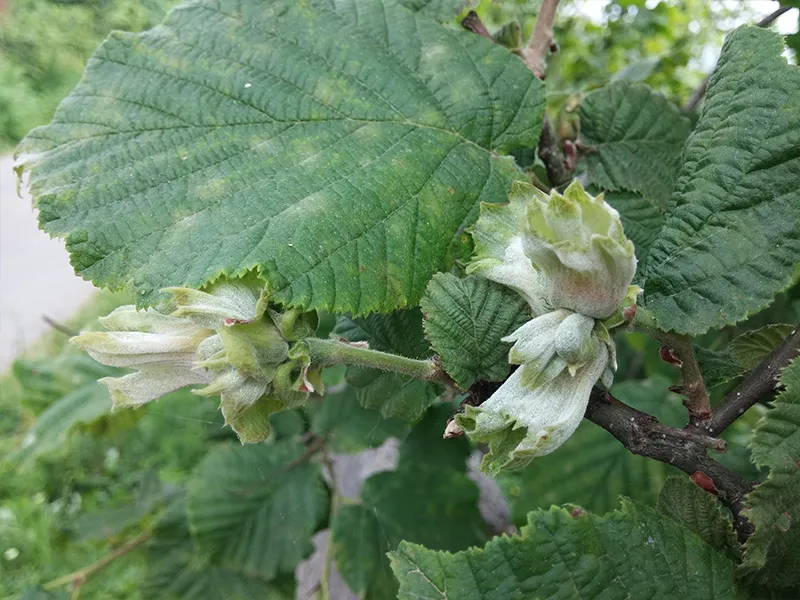
Powdery Mildew in Hazelnuts: Symptoms, Control and Spraying
What is powdery mildew in hazelnuts, what are its symptoms, when should you spray and how is it controlled? Includes an overview of the new powdery mildew (Erysiphe corylacearum).
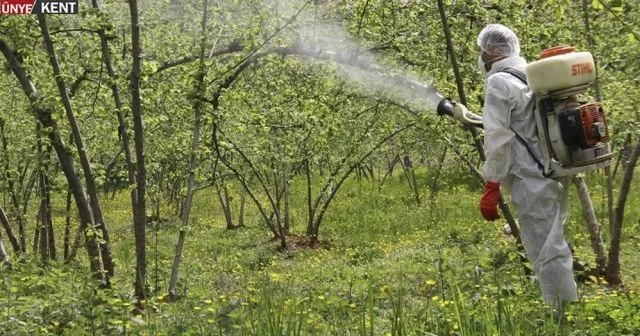
Hazelnut Spraying Calendar: Annual Program for All Pests
Hazelnut orchard spraying calendar: spray timings, dosages and rules against all pests and diseases from February to October.
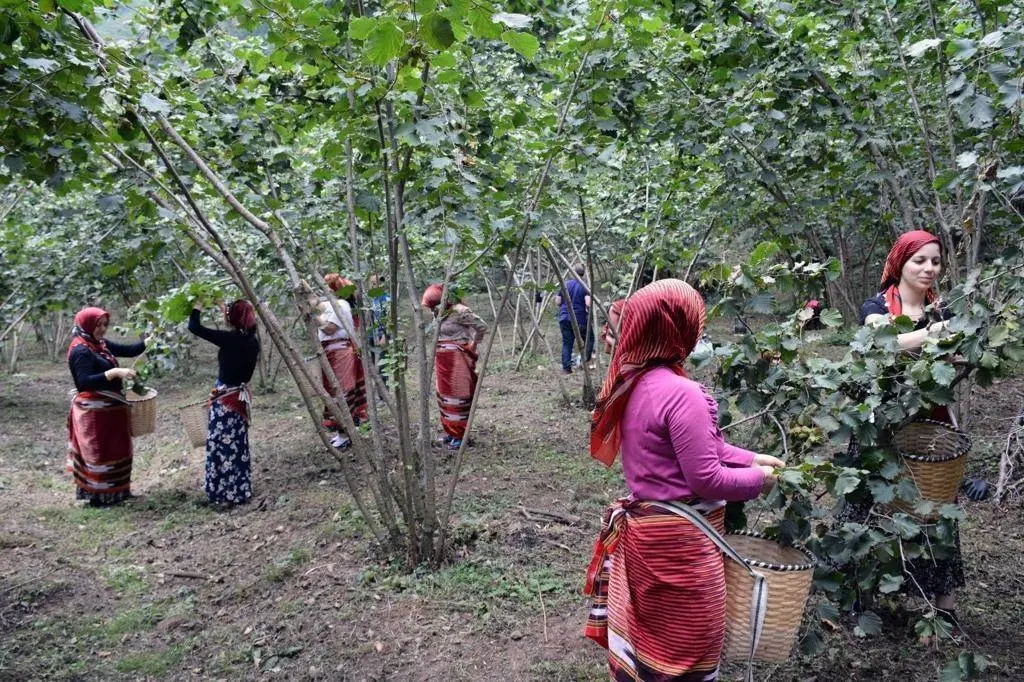
Hazelnut Growing Guide: From Planting to Harvest, Step by Step
A complete guide to growing hazelnuts. Pruning, fertilization, pest control, harvest and market knowledge — everything a hazelnut grower needs on a single page.
More Diseases Guides
Hazelnut Branch Canker: Symptoms, Control and Pruning Methods
What is hazelnut branch canker (Nectria galligena), its symptoms, risk factors at high altitudes and control methods.
New Powdery Mildew (Erysiphe corylacearum): The New Threat to Hazelnuts
What is the new powdery mildew disease in hazelnuts (Erysiphe corylacearum), its differences from traditional powdery mildew and current control methods.
Hazelnut Mosaic Disease: Symptoms, Spread and Prevention Methods
What is hazelnut mosaic disease (Apple Mosaic Virus), its leaf symptoms, spread pathways and prevention methods.
Hazelnut Root Rot: Armillaria and Rosellinia Control Guide
Hazelnut root rot diseases (Armillaria mellea, Rosellinia necatrix) symptoms, identification and control methods.