What Is Organomineral Fertilizer?
As the name suggests, an organomineral fertilizer combines two worlds in a single product: organic matter and mineral plant nutrients. The Turkish regulation defines it as “products obtained through the reaction or mixture of an organic content with one or more primary, secondary or micro plant nutrients” (Regulation on Organic and Organomineral Fertilizers, Official Gazette 29.03.2014/28956).
In practice this means the granule in your hand contains both an organic source — leonardite, compost or fermented animal manure — and nitrogen, phosphorus and potassium. The two are not bagged separately and mixed in the field; they are combined into the same granule at the factory. That is what makes the difference: the nutrient is released from within an organic matrix.
Not a Blend — the Same Granule
Spreading farmyard manure from one bag and compound fertilizer from another is not the same as applying organomineral fertilizer. In an organomineral product the organic and mineral fractions are physically intertwined; the nutrient ion passes through the organic matter on its way into the soil. That proximity is where the effect comes from.
Three-Way Comparison: Chemical, Organomineral, Farmyard Manure
| Property | Chemical (compound/straight) | Organomineral | Farmyard manure |
|---|---|---|---|
| Nutrient density | Very high (18-46% single element) | Moderate | Very low, variable |
| Organic matter | None | Present, but limited | High — this is the real source |
| Nutrient content known? | Yes, stated on the label | Yes, stated on the label | No, varies batch to batch |
| Speed of effect | Fast | Moderate | Slow, spread over years |
| Effect on soil structure | Negligible | Limited | Marked (water holding, aggregates) |
| Ease of application | Granular, easy | Granular, easy | Heavy, hard to haul and spread |
| Cost per unit nutrient | Lowest | Higher | Lowest if you own livestock |
| Weed seed / pathogen risk | None | None | Present if not well rotted |
Read the table carefully: organomineral fertilizer is not an “organic product” that replaces chemical fertilizer. It is an intermediate form sitting between chemical fertilizer and farmyard manure, carrying some of the advantages of each — partially.
What Does It Solve?
1. It slows nitrogen loss
The best documented effect of organomineral fertilizer is on the nitrogen side. In an incubation study at Uludağ University, soils treated with organomineral fertilizer at 20 and 40 g/kg showed ammonium nitrogen levels rising by 71% and 73%, while the ammonification rate increased by 61-80% by the end of incubation. The same treatment lowered nitrate concentrations and thereby suppressed nitrification potential (Dindar and Yazgan Yiğit, 2023).
For hazelnuts the implication is direct: nitrate does not hold in the soil, and rainfall carries it below the root zone. Given the Black Sea region’s annual rainfall above 1000 mm and its sloping terrain, keeping nitrogen in the ammonium form for longer is a genuinely useful property. The authors read this as an increase in nitrogen use efficiency.
2. Phosphorus in acid soil — partial help
The classic problem of hazelnut soils is that applied phosphorus binds to iron and aluminium and never reaches the plant; we cover this in detail in our DAP fertilizer guide. The organomineral claim here is that organic matter surrounding the granule occupies the adsorption sites before the phosphate ions do, delaying fixation.
This Mechanism Was Not Confirmed in Every Study
A five-season field trial on an acidic soil tested exactly this hypothesis. The result: organomineral fertilizer was 167-174% more efficient than MAP at a rate of 60 kg/ha P₂O₅ and gave a small but statistically significant yield advantage at higher rates — yet no difference was seen between the two sources in available soil phosphorus. The authors note that the protective effect of the organic fraction was confined to “only a very thin layer around the granule”, most of the organic source being insoluble lignocellulosic compounds (de Melo Benites et al., 2022).
So the benefit is real, but the mechanism is weaker than advertising suggests. Organomineral fertilizer does not replace liming or correct placement depth.
3. Moisture and root environment around the granule
Organic matter holds water. Keeping moisture a little longer in the few millimetres surrounding the granule helps the nutrient dissolve and reach the root during dry springs. This does not change the water regime of the whole orchard — it is an advantage at granule scale, not orchard scale.
What Does It Not Solve?
Honesty is required here, because this is the point sales pitches exaggerate most.
Organomineral fertilizer will not close your soil’s organic matter deficit. The amount you apply per decare is measured in tens of kilograms, and the organic matter is only a fraction of that. Raising soil organic matter by one percentage point requires tonnes of organic material per decare. The gap is on the order of a hundredfold.
If you genuinely want to raise soil organic matter, the route is well known: well-rotted farmyard manure, compost, green manuring, chipping pruning residues and leaving them in the orchard, and cover crops. Organomineral fertilizer does not replace these; it stands beside them.
Is Your Orchard's Organic Matter Actually Low?
That assumption deserves testing too. A study of hazelnut orchard soils in Ordu and Giresun found the soils generally acidic, with available phosphorus and exchangeable potassium insufficient and iron deficient — but organic matter at an adequate level (Ay and Kızılkaya, 2022). In other words, the real bottleneck in an average hazelnut orchard is usually not organic matter but pH and phosphorus-potassium. Let your soil analysis decide, not the advertising.
How to Read the Label
Content requirements for organomineral fertilizers are set by Ministry legislation and vary by product group. For current requirements, rely on the product label and your provincial/district directorate of agriculture. What to check when buying:
✓ Checklist for the Bag
- ✓ Is there a registration / licence number — do not buy a product without Ministry registration
- ✓ Is the product named 'organomineral fertilizer', or is it actually a 'soil conditioner'
- ✓ What is the organic matter percentage — if no figure is printed, ask
- ✓ Are the N-P-K ratios clearly stated; can you calculate how many kilograms of each element you get
- ✓ Is the humic/fulvic acid content given as a percentage, or does it just say 'contains'
- ✓ What is the organic source: leonardite, compost, or fermented animal manure
- ✓ Are the production date and batch number legible
- ✓ Are you getting an invoice — it is required for the support payment application
Be careful with humic and fulvic acid claims. “Contains humic acid” on a label means nothing on its own; what matters is how much, as a percentage. If no figure is printed, the content is either very low or was never measured. Likewise, a product with low N-P-K ratios delivers little pure nutrient per kilogram. Compare not the price of the bag but the price per kilogram of pure nutrient.
When and How to Apply It in Hazelnuts
Organomineral fertilizers are predominantly base fertilizers: the phosphorus and potassium they contain are immobile, and the organic fraction needs time to break down. Their place is therefore the classic winter fertilization window of the hazelnut year.
| Period | Application | Note |
|---|---|---|
| November – February | Main organomineral application | On moist soil, after pruning |
| November – December | Liming (if required) | Not at the same time as phosphate/organomineral fertilizer |
| March | First nitrogen application | With a separate nitrogen fertilizer |
| Late May – early June | Second nitrogen application | With a separate nitrogen fertilizer |
Placement rules do not change in hazelnuts. The Hazelnut Research Institute’s farmer brochure is explicit: “When fertilizing hazelnuts, the fertilizer must be applied to the canopy drip line (in a band).” Fertilizer dumped at the base of the trunk is wasted; the absorbing fine roots concentrate where the branches end.
In practice: incorporate it 3-5 cm deep along the drip line. If you are using a phosphorus-heavy product and your orchard shows a phosphorus deficit, it is more effective — as with phosphate fertilizers — to place it in holes opened along the drip line and cover them with soil. Covering serves two purposes: it stops the organic fraction from drying out on the surface, and it reduces nitrogen volatilization losses.
Rates Are Not Learned From This Page
Nutrient ratios of organomineral fertilizers differ widely between brands, so no single rate can be given. The rate depends on the product label and on your soil analysis result. Consult your provincial/district directorate of agriculture or an agricultural engineer — these directorates support farmers with soil analysis and fertilizer recommendations.
How It Fits Your Existing Fertilization Programme
Organomineral fertilizer is a product that replaces part of your programme, not one that is added on top of it. The most common mistake is to carry out winter fertilization exactly as before and then apply organomineral fertilizer as well; that is both wasted money and nutrient overloading.
The correct approach:
- From the label, calculate the kilograms of pure N, P₂O₅ and K₂O delivered by the amount you plan to apply.
- Subtract those amounts from the annual requirement in your fertilization programme.
- Cover the remaining gap with conventional fertilizers — most of the nitrogen, in particular, must still be given separately in spring.
Organomineral fertilizer alone does not meet the annual nitrogen requirement of hazelnuts. The split March and late-May nitrogen applications stay where they are.
Cost and the Support Payment Side
Let us be plain: per unit of pure nutrient, organomineral fertilizer costs more than conventional chemical fertilizer. A kilogram of nitrogen from urea is cheaper than a kilogram of nitrogen from an organomineral product. What you buy in return are the partial benefits of the organic matrix — reduced nitrogen loss and a more favourable root environment around the granule.
One factor partly offsets that price gap: a state support payment is made for the use of solid organic and organomineral fertilizers. For the payment amount, which products qualify, the application steps and the invoice/registration requirements, see our news article Solid Organic and Organomineral Fertilizer Support 2026 — it covers the current figures and the application process in detail.
Frame the decision like this: put the cost of buying the same pure nutrient as conventional fertilizer next to the organomineral cost minus the support payment. If the gap narrows, organomineral makes sense; if it is still wide, spending that money on liming or farmyard manure will return more.
Common Mistakes
- Choosing without a soil analysis. You cannot pick a formulation without knowing which nutrient is short; organomineral N-P-K ratios vary enormously.
- Treating it as a substitute for farmyard manure. An organic matter deficit is not closed by organomineral fertilizer.
- Adding it on top of the existing programme. If you do not subtract the nutrients it delivers, you over-fertilize.
- Broadcasting it and leaving it on the surface. Without incorporation, nitrogen volatilizes and the organic fraction dries out.
- Dumping it at the trunk base. The absorbing roots are at the canopy drip line.
- Skipping liming. No phosphorus source performs fully in an acid soil whose pH has not been corrected.
- Buying unregistered products. Their efficacy is unknown and your support application will be rejected.
- Buying without an invoice. An invoice is mandatory for growers who want the support payment.
Summary
- Organomineral fertilizer = organic matter + mineral nutrient in the same granule; not a blend, but combined during manufacture
- It is an intermediate form between chemical fertilizer and farmyard manure, and replaces neither
- Its best documented effect is on nitrogen: ammonium is preserved and nitrification is suppressed
- It helps with phosphorus in acid soil, but the mechanism is weaker than claimed; it is no alternative to liming
- It does not close the organic matter deficit — that needs farmyard manure, compost and cover crops
- On the label, look for the registration number, organic matter percentage and N-P-K ratios; “contains humic acid” without a figure tells you nothing
- Apply November-February, at the canopy drip line, and cover with soil
- It costs more per unit nutrient; the support payment partly offsets this
- Formulation and rate are decided by soil analysis
For the full annual calendar see our hazelnut fertilization programme, for sampling and interpreting results the soil analysis guide, and for the organic matter side the farmyard manure guide.
📚 Turkish Regulation on Organic and Organomineral Fertilizers and Soil Conditioners (Official Gazette 29.03.2014/28956) 📚 Dindar and Yazgan Yiğit (2023), Uludağ Univ. Journal of the Faculty of Engineering 28(2) 📚 de Melo Benites et al. (2022), Frontiers in Agronomy 4 📚 Ay and Kızılkaya (2022), Journal of Soil Science and Plant Nutrition 📚 Hazelnut Research Institute - Fertilization in Hazelnuts 📚 Sakarya Provincial Directorate of Agriculture and Forestry - Fertilization in Hazelnuts📚Sources
- Turkish Regulation on the Production, Import, Export and Placing on the Market of Organic and Organomineral Fertilizers, Soil Conditioners and Other Organic-Based Products (Official Gazette 29.03.2014 / 28956)
- Dindar E., Yazgan Yiğit Ç. (2023) - Effect of Organomineral Fertilizer Use on Soil Nitrogen Processes, Uludağ Univ. Journal of the Faculty of Engineering 28(2)
- de Melo Benites V. et al. (2022) - Organomineral Fertilizer Is an Agronomic Efficient Alternative for Poultry Litter Phosphorus Recycling in an Acidic Ferralsol, Frontiers in Agronomy 4
- Ay A., Kızılkaya R. (2022) - Plant Nutrient Contents of Hazelnut Orchard Soils in Ordu and Giresun, Journal of Soil Science and Plant Nutrition
- Turkish Ministry of Agriculture and Forestry - Hazelnut Research Institute, Fertilization in Hazelnuts (Farmer Training Series No: 4)
- Sakarya Provincial Directorate of Agriculture and Forestry - Fertilization in Hazelnuts
Related Guides
View all Fertilization guides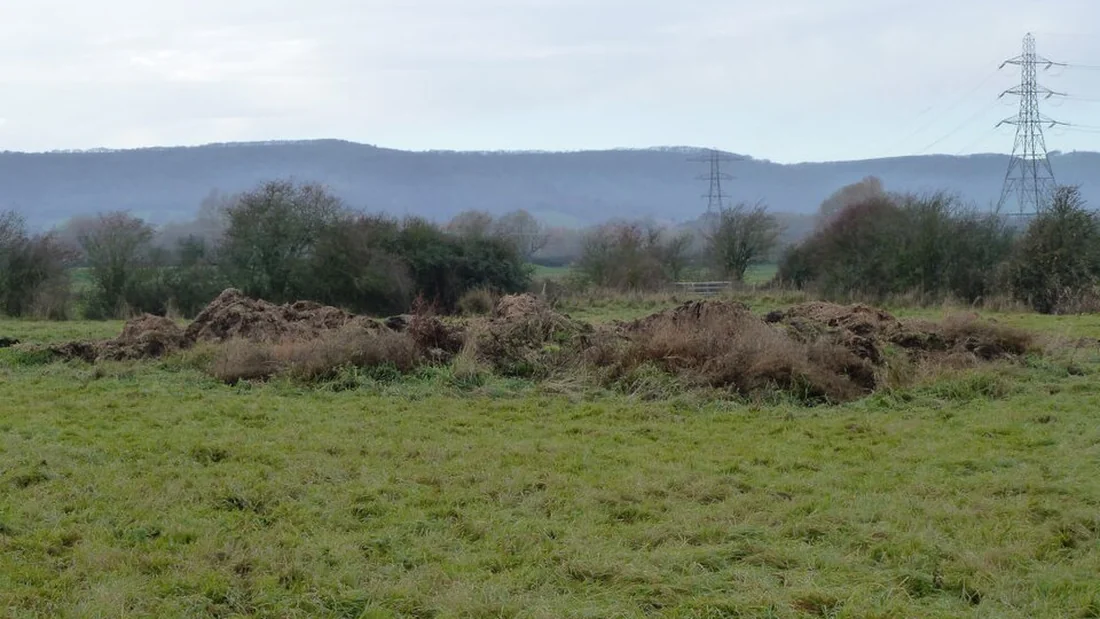
Farmyard Manure and Organic Matter in Hazelnut Orchards: Building the Foundation
What does farmyard (barn) manure do in a hazelnut orchard, what is well-rotted manure, when and how is it applied? The role of organic matter in holding water and nutrients, husk compost and common mistakes.
Soil and Leaf Analysis Guide for Hazelnut Orchards
When to have a soil analysis done in a hazelnut orchard, how to take the sample, and how to read the results. Leaf analysis timing and method explained.
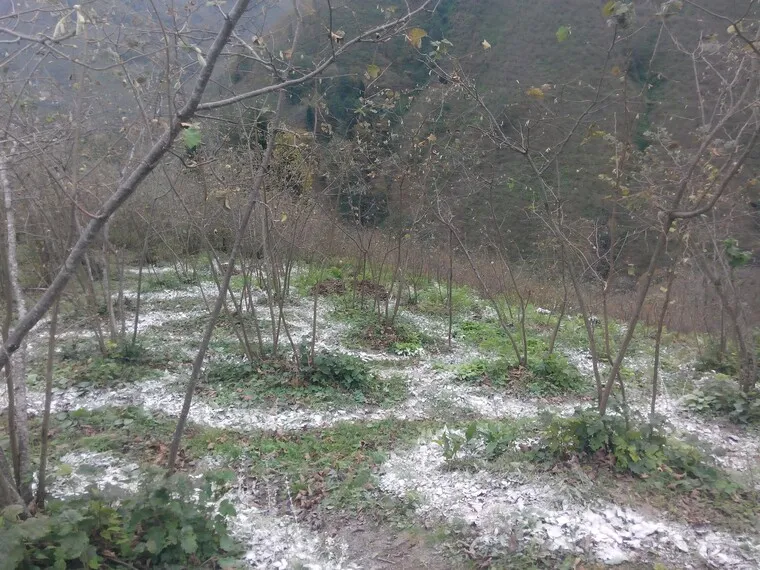
Hazelnut Fertilization Program: Annual Schedule and Application Rates
When to fertilize hazelnuts, which fertilizer types to use, and how much per decare. A practical guide to nitrogen, phosphorus, potassium and organic fertilizer applications.
DAP Fertilizer (18-46-0): Use, Timing and Dosage in Hazelnut
What is DAP (diammonium phosphate, 18-46-0) and how is it applied in hazelnut orchards? Phosphorus fixation in acid soils, band placement, planting-hole use and how it differs from urea phosphate.
More Fertilization Guides
Ammonium Nitrate (33-0-0): Use, Dosage and Leaching Risk in Hazelnuts
What is ammonium nitrate fertilizer and how is it used in hazelnuts? The 16.5% ammonium + 16.5% nitrate balance, how it differs from CAN, behaviour on acid soils, nitrate leaching and dose calculation.
Ammonium Sulfate (21-0-0) Fertilizer: Use in Hazelnuts and the Acidity Risk
What is ammonium sulfate fertilizer, and when and how should it be used in hazelnut orchards? 21% nitrogen + 24% sulfur, dosage logic, soil acidification risk and a comparison with CAN.
Boron Fertilization in Hazelnuts: Blank Nuts, Dosage and Toxicity Risk
What does boron do in hazelnuts, and does a deficiency cause blank nuts? Critical boron values in soil and leaf analysis, soil and foliar application rates, and the risk of boron toxicity.
Farmyard Manure and Organic Matter in Hazelnut Orchards: Building the Foundation
What does farmyard (barn) manure do in a hazelnut orchard, what is well-rotted manure, when and how is it applied? The role of organic matter in holding water and nutrients, husk compost and common mistakes.