
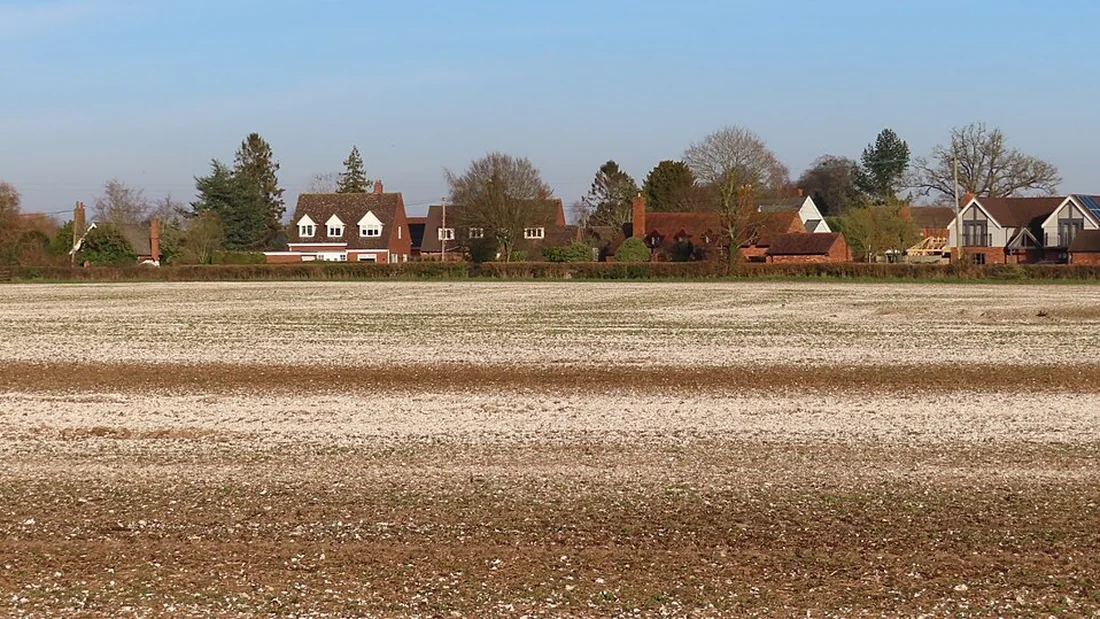
What Is Liming, and Why Is It So Often Skipped?
Liming means supplying an acidic soil with a source of calcium — and, where needed, magnesium — carbonate in order to lift soil pH into the range hazelnut actually wants. Unlike fertilizing, it is not an annual, visible, habitual job: it is done once every few years, its effect is not immediate, and no bag carries the promise “increases yield”. That is precisely why it is one of the most neglected operations in hazelnut orchards.
Yet liming is not a competitor to your fertilization programme — it is its precondition. When soil pH is low, a substantial part of the nitrogen, phosphorus and potassium you apply never reaches the plant. In an unlimed acidic orchard, part of the money spent on fertilizer is lost on day one.
The Hazelnut Research Institute’s growing guide is clear on the target: hazelnut achieves normal growth and heavy cropping in soils with a pH between 5 and 7. The reality across much of the Black Sea region is at or below the bottom of that range.
Why Acidic Soil Is a Problem
Soil pH determines the chemical form a nutrient takes, and therefore whether the root can take it up at all. A nutrient can be physically present in the soil and still, for the plant, effectively absent. Three things go wrong on the acid side:
1. Phosphorus becomes fixed. As pH falls, free iron (Fe) and aluminium (Al) ions increase in the soil solution. Phosphate binds to them and forms insoluble compounds. The phosphorus fertilizer you spread is still there — the root simply cannot pull it out.
2. Calcium, magnesium and potassium decline. In acid soils these basic cations are stripped from the soil colloids and leached away, replaced by hydrogen and aluminium. Along the eastern Black Sea coast, where annual rainfall is high, this leaching runs continuously.
3. Aluminium and manganese turn toxic. Below roughly pH 5 aluminium becomes soluble and directly poisons the fine feeder roots. The root system stays short and poorly branched, so the bush has to find both water and nutrients within a smaller volume of soil. Manganese can reach toxic levels in the same way.
| Soil pH | Phosphorus | Ca / Mg / K | Al – Mn toxicity | Microbial activity |
|---|---|---|---|---|
| Below 4.5 | Very low — bound by Fe/Al | Very low | High risk | Very slow |
| 4.5 – 5.0 | Low | Low | Risky | Slow |
| 5.0 – 5.5 | Limited | Limited | Borderline | Moderate |
| 5.5 – 7.0 | Maximum availability | Adequate | None | Highest |
| Above 7.5 | Bound by Ca | Ca high, K/Mg competition | None | High |
The benefit is not purely chemical, either. Liming an acid soil improves its aeration, warming and water-holding behaviour; microbial activity rises, organic matter breaks down more evenly, and nutrient losses through leaching fall.
”I Fertilize, But I See No Benefit”
This is one of the sentences hazelnut growers say most often. Much of the answer lies in soil pH.
Consider the situation: every March you apply nitrogen, and in autumn phosphorus and potassium. But your soil pH is 4.8. Under those conditions most of the phosphorus binds to iron and aluminium; potassium and magnesium leach away; and because the root tips are already under aluminium pressure, the absorbing surface that should be collecting all of it has shrunk. You bought the fertilizer, hauled it, spread it — but the soil cannot deliver it to the tree.
This is not a theoretical worry. It has been measured in hazelnut: in a three-year field trial on acid soil in Samsun, liming raised in-shell hazelnut yield by 29% over the control, while sugar industry waste sludge raised it by 41%. The highest yield (2.47 kg per bush) and 54% kernel ratio came from the sludge rate equivalent to 1.5 times the lime requirement. In the same study, soil pH rose with increasing rates, and strong positive relationships were found between pH and available phosphorus (r = 0.84), available potassium (r = 0.76) and exchangeable calcium (r = 0.77) 📚 Özyazıcı, 2014
Those correlations confirm the core argument of this article: as pH rises, the phosphorus and potassium already sitting in the soil become “available”. In a sense, liming also releases the fertilizer you applied in earlier years and that has been locked up ever since.
The pH Reality of Black Sea Soils
Limestone is scarce in the eastern Black Sea region, while acidic rocks such as granite and dacite are widespread. Add rainfall above 1,000 mm a year, constantly washing out calcium and magnesium, and the soils drift naturally towards acidity.
In samples taken from 71 hazelnut orchards across 40 villages in the Kumru district of Ordu, soil pH ranged widely from 4.53 to 7.87, and the orchards were found deficient in total nitrogen and in available phosphorus, potassium and zinc 📚 Karadeniz & Özkutlu, 2023 A separate study of hazelnut orchard soils in Ordu and Giresun likewise regards liming as important in managing the region’s acid-reaction soils — both to correct acidity and to supply the calcium the plant needs 📚 Journal of Soil Science and Plant Nutrition, 2023
Note how wide that range is: within a single district one orchard may need lime while its neighbour needs none at all. This is why “everyone in the village spread lime, so I will too” is a dangerous rule.
Acidifying the Orchard With Your Own Hands
Soil does not only acidify through natural processes. Some practices, sustained over years, pull pH downwards:
- Ammonium-based and urea-based nitrogen fertilizers. The conversion of ammonium to nitrate (nitrification) releases hydrogen ions into the soil. This is why ammonium sulfate (21-0-0) counts as a “physiologically acid” fertilizer; repeated every year, it lowers pH step by step.
- Basic cations removed with the crop. Every harvest carries calcium, magnesium and potassium out of the orchard. If they are not replaced, the gap widens.
- Stopping organic matter inputs. As organic matter falls, so does the soil’s buffering capacity, and pH becomes easier to knock down.
The Giresun Provincial Directorate of Agriculture and Forestry also points out that in soils falling below pH 4.5, the plant’s nitrogen uptake declines. Past a certain point, in other words, acidification neutralises the very nitrogen fertilizer that helped cause it.
How Is Lime Requirement Determined?
There is only one correct starting point: a soil analysis. But there is a common gap here — looking at the pH figure alone is not enough.
pH tells you whether you have a problem; it does not tell you how much lime you need. What sets the rate is the soil’s buffering capacity, which depends on texture (sand-to-clay ratio), clay type and organic matter content. The amount of lime needed to lift a sandy soil and a heavy clay soil from the same pH 5.0 to the same target differs several-fold: a sandy soil rises quickly on little lime, while a clayey, organic-rich soil demands far more and responds far more slowly.
For that reason, when you submit samples ask the laboratory to run a lime requirement (buffer pH) test alongside the pH measurement. What should come out of the report is not a pH number but a quantity of lime per unit area. For sampling technique and how to read the report, see our soil analysis guide; analyses can be run at laboratories attached to the provincial and district agriculture directorates.
In Özyazıcı’s 2014 trial, too, the rates were not set as fixed kilogram figures but as multiples of the soil’s lime requirement (0.5 / 1 / 1.5 times). It is no accident that even a scientific study defines dose this way: for hazelnut there is no such thing as a single lime rate that suits everyone.
Never Spread Lime Without an Analysis
The lime rate must be set from the lime requirement test in your soil analysis. Spreading lime on an orchard whose pH is already suitable damages soil structure and exposes the hazelnut to harm from excess lime. Over-liming creates micronutrient deficiencies — as pH rises, iron, zinc and manganese become unavailable; Özyazıcı’s study likewise found a negative relationship between soil pH and available iron (r = −0.62). Consult your provincial or district agriculture directorate, or an agricultural engineer, before applying.
Which Liming Material?
| Material | Chemistry | When to choose it | Watch out for |
|---|---|---|---|
| Calcitic lime (agricultural lime) | CaCO₃ | The standard choice when magnesium is adequate | Slow, gradual action; the safest option |
| Dolomitic lime | CaCO₃ + MgCO₃ | When the analysis also shows low magnesium | Closes the Mg gap at the same time |
| Slaked (hydrated) lime | Ca(OH)₂ | When a fast pH lift is needed | Very fast, harsh action; high risk of root burn and pH overshoot if overdosed |
Two criteria decide the choice in practice:
- Magnesium status. If the soil analysis shows low magnesium, choose dolomitic lime rather than calcitic. Supplying calcium alone can make an existing magnesium shortage visible, because the added calcium competes with magnesium.
- Fineness of grind. Lime dissolves very slowly in water, and its effect is proportional to particle fineness. A coarsely ground material can sit in the soil unchanged for years.
Note: the lime filler in calcium ammonium nitrate (CAN) makes the fertilizer neutral, but it does not supply enough lime to raise pH. Using CAN does not count as having limed.
When Is It Applied?
The Hazelnut Research Institute considers November–December the appropriate window for liming. There are three reasons for it: the orchard workload is light after harvest and pruning, winter rainfall helps carry the lime down into the profile, and there are several months left before spring for the lime to act.
The same source recommends repeating the operation every 4–5 years, on the basis of a repeated soil analysis, if the need is confirmed. In practice that interval may shorten depending on soil texture, rainfall and the nitrogen fertilizer you use; growers relying on acidifying fertilizers may come down to three years.
What Must Not Be Applied at the Same Time
| Together with lime | Why not | What to do instead |
|---|---|---|
| Ammonium- and urea-based nitrogen fertilizers | Nitrogen escapes as ammonia gas | Lime in November–December, nitrogen in March–May |
| Phosphorus fertilizers (DAP, TSP, urea phosphate) | Phosphorus binds with calcium and becomes unavailable | Separate the two into different periods |
| Farmyard manure | Nitrogen loss and reaction risk | Leave at least one month between them |
The Hazelnut Research Institute’s grower guide is explicit: lime and phosphorus fertilizers must not be applied at the same time. For details see our DAP (18-46-0) and fertilization programme articles.
The Waiting-Period Rule
Leave at least one month between lime and fertilizer. If you lime in autumn and apply nitrogen in spring, the conflict disappears by itself.
How Is It Applied?
The Hazelnut Research Institute describes two methods:
- Broadcasting over the whole orchard. The recommended quantity of lime is spread evenly across the entire orchard and then hoed in as deeply as possible without damaging the roots.
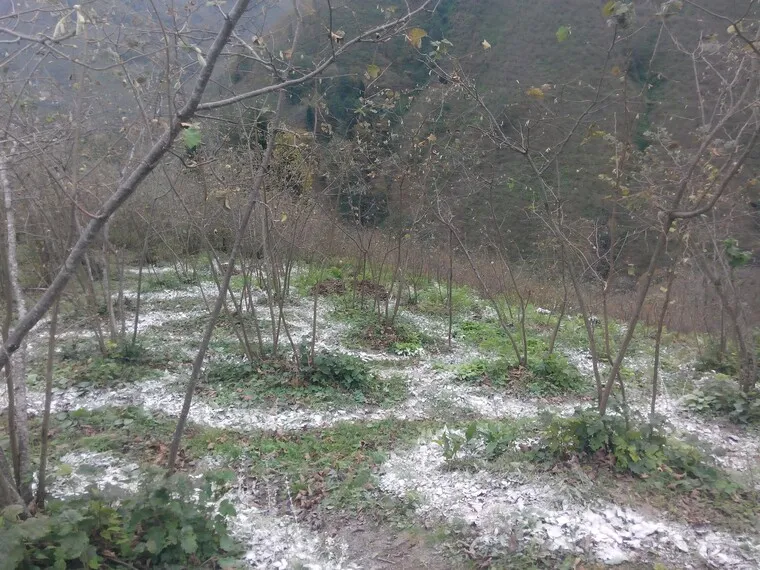
- Band application. The lime is distributed evenly into a ring-shaped band 50–60 cm wide under the drip line of the bushes, and worked into the soil.
Ministry publications give band widths between 30 and 60 cm depending on bush size; what matters is not a fixed figure but the drip line of the branch tips, where the fine feeder roots are concentrated. Whichever method you choose, the critical point is the same: the lime must be mixed into the soil. Lime left on the surface does almost nothing; it acts where it makes contact with soil particles, and it moves downwards on its own extremely slowly.
✓ Liming Step by Step
- ✓ Have a soil analysis done before autumn; ask for the lime requirement test as well as pH
- ✓ Have the report interpreted by your agriculture directorate or an agricultural engineer; get the rate in writing
- ✓ If magnesium is low, choose dolomitic lime instead of calcitic lime
- ✓ Apply in the November-December window, when the soil is moist but not muddy
- ✓ Broadcast evenly over the whole orchard, or place it in the 50-60 cm band under the drip line
- ✓ Work it in with a hoe, at a depth that will not cut the structural roots
- ✓ On sloping ground work downhill from the top; avoid applying just before rain
- ✓ Do not apply phosphorus or nitrogen fertilizer in the same period; leave at least one month
- ✓ Record the date and the rate; repeat the analysis in 3-5 years
On sloping ground there is an extra risk: heavy rain can carry lime that has not yet been incorporated out of the orchard as surface runoff. Keep the gap between spreading and incorporation as short as possible — ideally hoe it in the same day.
How Long Before You See the Effect?
Liming demands patience. Lime is only slightly soluble in water, and its reaction with soil acidity takes months.
| Time since application | What to expect |
|---|---|
| 0–3 months | Usually no measurable pH change yet |
| 3–12 months | pH begins to rise; conditions improve in the root zone |
| 1–2 years | Phosphorus and potassium availability increase; effect on yield |
| 3–5 years | Effect fades; repeat the analysis |
Judging liming on “this year’s yield” is therefore misleading. The proper measure is a repeated soil analysis a few years later.
The Complement: Organic Matter and Hazelnut Husk Compost
Liming on its own is not a complete soil improvement programme. A soil low in organic matter loses its buffering capacity quickly and drifts back to its old acidity within a few years.
For a hazelnut orchard the most accessible source of organic matter is the husk you already have on the threshing floor. According to the Samsun Provincial Directorate of Agriculture and Forestry, husks are laid out on suitable ground in 20 cm layers, each layer treated with well-rotted barn manure and agricultural lime, then moistened and aerated so that composting completes within 6 months to a year. The mature compost is applied under the canopy drip line of the bushes; it raises soil organic matter, improves the soil’s physical, chemical and biological properties and, through them, yield and quality 📚 Samsun Provincial Directorate of Agriculture and Forestry
Note the relationship: compost does not replace lime, it makes lime’s effect last. Plan the two together.
Common Mistakes
- Spreading lime without an analysis. The most expensive mistake of all. Lime applied to an orchard whose pH is already fine creates micronutrient deficiencies — more problems than it solves.
- Setting the rate from pH alone. pH shows the problem, not the dose. A figure given without a lime requirement test is guesswork.
- Leaving lime on the surface. Unincorporated lime can sit in the soil for years doing nothing.
- Applying lime and fertilizer together. Nitrogen escapes as ammonia, phosphorus binds with calcium. Spread the two operations across different periods.
- Counting CAN as liming. CAN does not acidify the soil, but neither does it raise pH.
- Doing it once and forgetting it. Liming is not permanent; acidification resumes the next day. Repeat the analysis every 3–5 years.
- Deciding by looking at your neighbour. In the Kumru study, orchard pH ranged from 4.53 to 7.87. The rate that suits the next plot may damage yours.
- Liming without organic matter. Without organic matter inputs, the effect of lime erodes quickly.
Summary: Liming Checklist
- Hazelnut grows well between pH 5 and 7; Black Sea soils are mostly below that range
- At low pH much of the fertilizer never reaches the plant — liming is the precondition of fertilization
- On acid soil, liming raised hazelnut yield by 29% (Özyazıcı, 2014)
- The rate comes only from the lime requirement test in a soil analysis; pH alone is not enough
- If magnesium is low as well, choose dolomitic lime
- Apply in November–December; repeat every 3–5 years according to analysis
- Place it in the 50–60 cm band under the drip line or broadcast over the orchard, and work it into the soil
- Do not apply it at the same time as phosphorus or nitrogen fertilizers; leave at least a month
- The way to measure the effect is not next year’s yield but a repeated soil analysis
- Support it with organic matter and husk compost
For the full annual fertilizer calendar see our Hazelnut Fertilization Programme, and for sampling and reading reports see our Soil Analysis Guide. On choosing a nitrogen source for acid soil, we suggest reading Calcium Ammonium Nitrate (26-0-0) and Ammonium Sulfate (21-0-0) side by side.
📚 Hazelnut Research Institute - Hazelnut Growing Technique 📚 Özyazıcı, G. (2014) - Turkish Journal of Agricultural Research 📚 Karadeniz & Özkutlu (2023) - Academic Journal of Agriculture 📚 Giresun Provincial Directorate of Agriculture and Forestry 📚 Samsun Provincial Directorate of Agriculture and Forestry - Hazelnut Husk Compost📚Sources
- Turkish Ministry of Agriculture and Forestry - Hazelnut Research Institute, Hazelnut Growing Technique
- Özyazıcı, G. (2014) - Effect of Lime and Sugar Industry Waste Sludge on Yield and Some Soil Properties of Hazelnut Grown on Acid Soil, Turkish Journal of Agricultural Research
- Karadeniz, U. & Özkutlu, F. (2023) - Soil Fertility Status of Hazelnut Orchards in Ordu-Kumru, Academic Journal of Agriculture
- Plant Nutrient Contents of Some Hazelnut Orchard Soils in Ordu and Giresun Provinces, Journal of Soil Science and Plant Nutrition
- Giresun Provincial Directorate of Agriculture and Forestry - Points to Watch in Nitrogen Fertilization of Hazelnut
- Samsun Provincial Directorate of Agriculture and Forestry - Hazelnut Husk Compost as a Natural Fertilizer
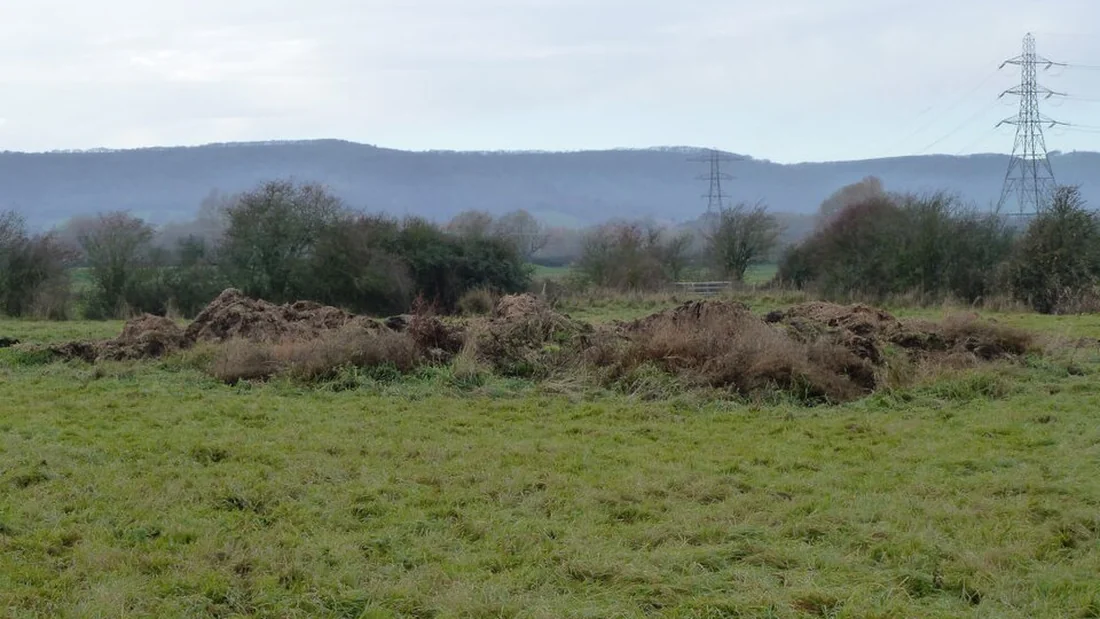
- Image: Tarlaya serilmiş kireç — Philip Halling, CC BY-SA 2.0 (cropped, converted to WebP)
Related Guides
View all Fertilization guides
Soil and Leaf Analysis Guide for Hazelnut Orchards
When to have a soil analysis done in a hazelnut orchard, how to take the sample, and how to read the results. Leaf analysis timing and method explained.
Ammonium Sulfate (21-0-0) Fertilizer: Use in Hazelnuts and the Acidity Risk
What is ammonium sulfate fertilizer, and when and how should it be used in hazelnut orchards? 21% nitrogen + 24% sulfur, dosage logic, soil acidification risk and a comparison with CAN.
Hazelnut Fertilization Program: Annual Schedule and Application Rates
When to fertilize hazelnuts, which fertilizer types to use, and how much per decare. A practical guide to nitrogen, phosphorus, potassium and organic fertilizer applications.
Calcium Ammonium Nitrate (CAN, 26-0-0): Use and Dosage in Hazelnuts
What is CAN fertilizer and why is it preferred for hazelnuts? 26% nitrogen, the ammonium-nitrate balance, safe use on acid soils, timing and dose calculation.
More Fertilization Guides
Ammonium Nitrate (33-0-0): Use, Dosage and Leaching Risk in Hazelnuts
What is ammonium nitrate fertilizer and how is it used in hazelnuts? The 16.5% ammonium + 16.5% nitrate balance, how it differs from CAN, behaviour on acid soils, nitrate leaching and dose calculation.
Ammonium Sulfate (21-0-0) Fertilizer: Use in Hazelnuts and the Acidity Risk
What is ammonium sulfate fertilizer, and when and how should it be used in hazelnut orchards? 21% nitrogen + 24% sulfur, dosage logic, soil acidification risk and a comparison with CAN.
Boron Fertilization in Hazelnuts: Blank Nuts, Dosage and Toxicity Risk
What does boron do in hazelnuts, and does a deficiency cause blank nuts? Critical boron values in soil and leaf analysis, soil and foliar application rates, and the risk of boron toxicity.
Farmyard Manure and Organic Matter in Hazelnut Orchards: Building the Foundation
What does farmyard (barn) manure do in a hazelnut orchard, what is well-rotted manure, when and how is it applied? The role of organic matter in holding water and nutrients, husk compost and common mistakes.