What Is the Hazelnut Longhorn Beetle?
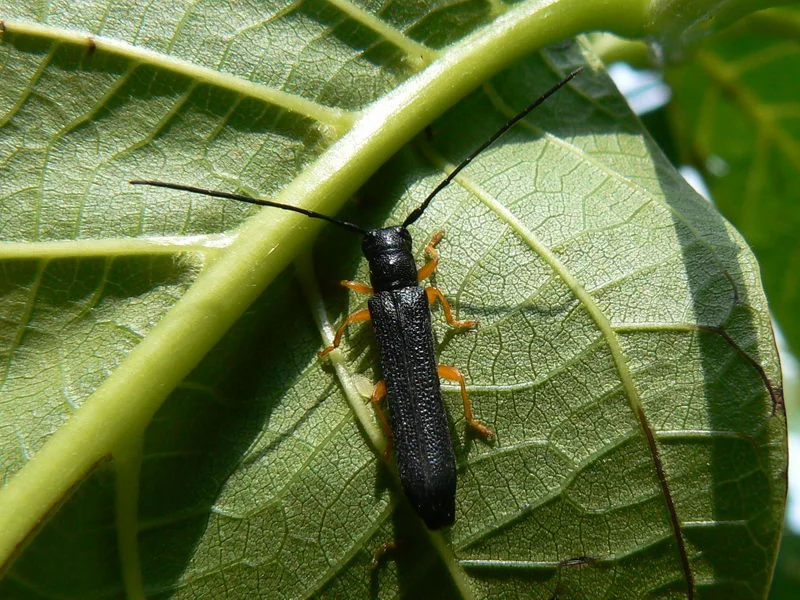
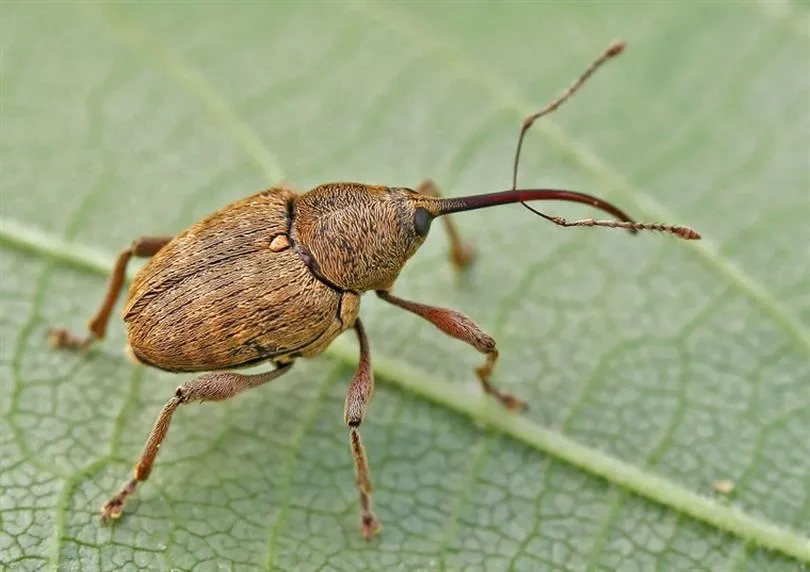
The hazelnut longhorn beetle (Oberea linearis) belongs to the longhorn beetle family (Cerambycidae). It is a slender, cylindrical insect 11-15 mm long, recognized by its black body, long yellowish antennae and yellow legs. In Turkish hazelnut regions it is known as dalkıran (“branch breaker”), teke böceği and locally uçkurutan (“shoot killer”).
The female chews a rectangular notch into the bark 10-30 cm below the shoot tip and lays a single egg there. The hatching larva cuts a ring-shaped gallery around the shoot, severing its sap flow. The result: the shoot tip wilts, dries out and stays hanging on the branch. That damage pattern is exactly what gives the pest its Turkish name.
A Note on Naming
In the Turkish Ministry’s classification the name “Dalkıran” belongs to Xyleborus dispar (the shot-hole borer); the official name of the beetle covered here is “hazelnut longhorn beetle”. Along the Black Sea coast growers call both of them dalkıran, which is why this page keeps that name.
Telling them apart is simple: if only the tip of the shoot dries out and stays hanging on the branch, it is the longhorn beetle (this page). If you see 2 mm round holes in the branch or trunk, sap seeping from them and whole bushes dying, it is the hazelnut shot-hole borer — and the control timing is completely different.
Life Cycle
The life cycle of Oberea linearis takes two years. However, because an orchard always holds individuals from different egg-laying years, adult emergence is seen in practice every single year.
| Stage | Month | What happens |
|---|---|---|
| Year 1 | May – June | Adults emerge from the branches and mate. The female lays eggs in the shoot |
| Year 1 | June – July | Eggs hatch in about 10 days. The larva cuts a ring gallery, severing sap flow; the shoot tip dries out |
| Year 1 | July – October | The larva tunnels 40-60 cm downward inside the branch, ejecting frass through the holes |
| Year 1 | November – March | The larva overwinters inside the gallery |
| Year 2 | April – October | The larva continues tunnelling |
| Year 2 | November – March | Second overwintering |
| Spring of year 3 | April – May | Pupation (~3 weeks), then adult emergence — the cycle starts again |
Damage Symptoms
Visible Signs
- Wilted shoot tips (flagging): the clearest sign. Leaves wilt suddenly and turn brown but remain hanging on the branch
- Ring-cut mark: a circular incision between the dried section and the living tissue
- Frass ejection: fresh sawdust falls from the bark holes of a tunnelled branch
- Branch breakage: at an advanced stage the gallery weakens the branch and it snaps in the wind
Effect on Yield
Fruit buds on the dried shoots are lost, which directly affects the following year’s crop. Left unmanaged, the pest causes serious shoot losses. However, unlike the hazelnut weevil it does not feed on the kernel itself, so the damage shows up mainly as a decline in yield potential rather than direct nut loss.
Reinfestation From Neighbouring Orchards
Controlling this pest in a single orchard leads to reinfestation from neighbouring orchards. For an effective result, plan control simultaneously with the surrounding orchard owners.
Economic Threshold: When Is Intervention Needed?
Use a simple sampling procedure to decide whether spraying is warranted:
A) Tracking the adults (this sets your spray date). From mid-May onwards, pick 10 bushes in the orchard and, early in the morning, beat them onto a 3 × 3.5 m sheet spread underneath. Repeat every 3 days. The day adults start dropping onto the sheet is the day your spray window opens.
B) Damage level (this tells you whether control is needed at all). At the end of summer, count the dried shoots on 10 bushes. If a bush carries more than 5 damaged shoots, plan chemical control for the following season; below that, mechanical control is considered sufficient.
Why Beat-Sampling Beats Traps Here
For this beetle the spray window is narrow and tied to adult flight. Adults fly in the afternoon (roughly 15:00-17:00) high in the canopy, so they are hard to spot by eye during the day; beating the bushes early in the morning is the most reliable way to detect them.
Control Methods
1. Mechanical Control (The Foundation)
Mechanical control is the first step against this pest and can be sufficient on its own under light infestation.
- What to do: cut out wilted, dried and perforated branches. Cut below the gallery, into healthy tissue, so that no larva is left in the branch
- When: infested branches identified during pruning and after harvest must be cut and removed from the orchard by the end of April at the latest. The adults start emerging from inside the branch in May, and from that point on you are too late
- Burning is mandatory: piling the cut branches at the edge of the orchard is not enough. The larvae inside will complete their development and emerge as adults. Infested branches must be burned
- Regular pruning: an airy, well-maintained bush structure makes it harder for the pest to establish. See our pruning guide
Do Not Miss the April Deadline
Remove and burn the infested branches you identify during winter pruning before the end of April. Once the adults emerge in May, the larva inside the branch can no longer be reached — and that branch becomes the source of the next generation in your orchard.
2. Chemical Control
Because the larva tunnels inside the branch it cannot be reached by a spray; the target is therefore the adult beetle. The aim is to catch the female before she lays her eggs — which makes timing everything.
- Start: mid-May — as soon as the first adults show up in your beat-sampling
- Duration: adult flight continues through May and June; keep tracking it by beating
- If you are late: after the end of June the eggs have been laid and the larvae are inside the shoots — spraying that season no longer achieves anything
A July Spray Does Nothing for This Pest
The early-July spray used in hazelnut targets the shot-hole borer (Xyleborus dispar), whose adults emerge in bulk between late June and August. Spraying in July for the longhorn beetle means missing the window entirely. See the shot-hole borer guide to keep the two apart.
Always Consult Before Choosing a Product or Dose
No product name or dosage is given on this page, deliberately. Registered preparations and their dosages vary by region, pest and year. Do not apply any pesticide without consulting your provincial/district directorate of agriculture and forestry or an agricultural engineer. Always notify local beekeepers before spraying.
3. Biological Control
The parasitoid wasp Dolichomitus messor is known to parasitize Oberea linearis larvae. However, biological control does not provide sufficient control on its own; it is a supporting measure alongside the other methods.
Can It Be Sprayed at the Same Time as the Hazelnut Weevil?
This question comes up often, and for this pest the answer is close to yes — the spray windows largely overlap:
| Pest | Spray window |
|---|---|
| Longhorn beetle (Oberea linearis) | From mid-May |
| Hazelnut weevil (Curculio nucum) | Late May – early June |
| Shot-hole borer (Xyleborus dispar) | Early July — a separate window |
In practice the longhorn beetle and the hazelnut weevil can be planned into a single May-June window, and a suitable combined product may target both. Always evaluate that decision with an agricultural engineer — combining is not possible with every registered product. For the full schedule see our hazelnut spraying calendar.
Frequently Asked Questions
When should the spray be applied? First decide which beetle you are dealing with — along the Black Sea coast dalkıran is used for two separate pests, and their dates differ:
- Longhorn beetle (Oberea linearis, this page — the shoot tip dries out): from mid-May, once adults appear in your beat-sampling
- Shot-hole borer (Xyleborus dispar — 2 mm holes in the branch, sap seeping): early July for the first spray, a second 15-20 days later
Ask your provincial directorate of agriculture for the dates specific to your region.
My shoot tips have dried out — is this the longhorn beetle? Most probably yes. A shoot tip that suddenly wilts, turns brown and stays hanging on the branch (flagging) is the most typical sign of Oberea linearis. For a definite diagnosis, cut the branch open and check for a ring gallery or a larva inside. If instead the whole branch or bush is dying and the bark carries 2 mm holes, the problem may be the shot-hole borer.
Is mechanical control enough, or is spraying essential? Under light infestation (fewer than 5 drying shoots per bush), collecting the infested branches through the winter and burning them before the end of April may be enough. If the infestation is high, mechanical control alone will not suffice and must be backed by a May-June spray.
Does it need to be sprayed every year? The life cycle takes two years, but because the orchard holds individuals from different egg-laying years there is adult emergence every year in practice. Check the infestation level every year by beat-sampling and by counting drying shoots, and intervene when the threshold is exceeded.
Which product should I use? Registered products change from year to year and from region to region. Do not select a product on your own; ask your provincial/district directorate of agriculture or your crop protection dealer for the current list of registered products.
This guide is based on data from the Hazelnut Research Institute of the Turkish Ministry of Agriculture and Forestry and on advisories from provincial directorates of agriculture. Always make spraying decisions in consultation with an agricultural engineer.
📚Sources
- Turkish Ministry of Agriculture and Forestry - Hazelnut Research Institute
- Turkish Ministry of Agriculture and Forestry - Hazelnut Research Institute, Hazelnut Pests
- Turkish Ministry of Agriculture and Forestry - TAGEM Standard Pesticide Trial Methods for Hazelnut Pests
- Image: Oberea linearis — Milan Đurić, CC BY-SA 4.0 (converted to WebP)
Related Guides
View all Pest Control guides
Hazelnut Spraying Calendar: Annual Program for All Pests
Hazelnut orchard spraying calendar: spray timings, dosages and rules against all pests and diseases from February to October.
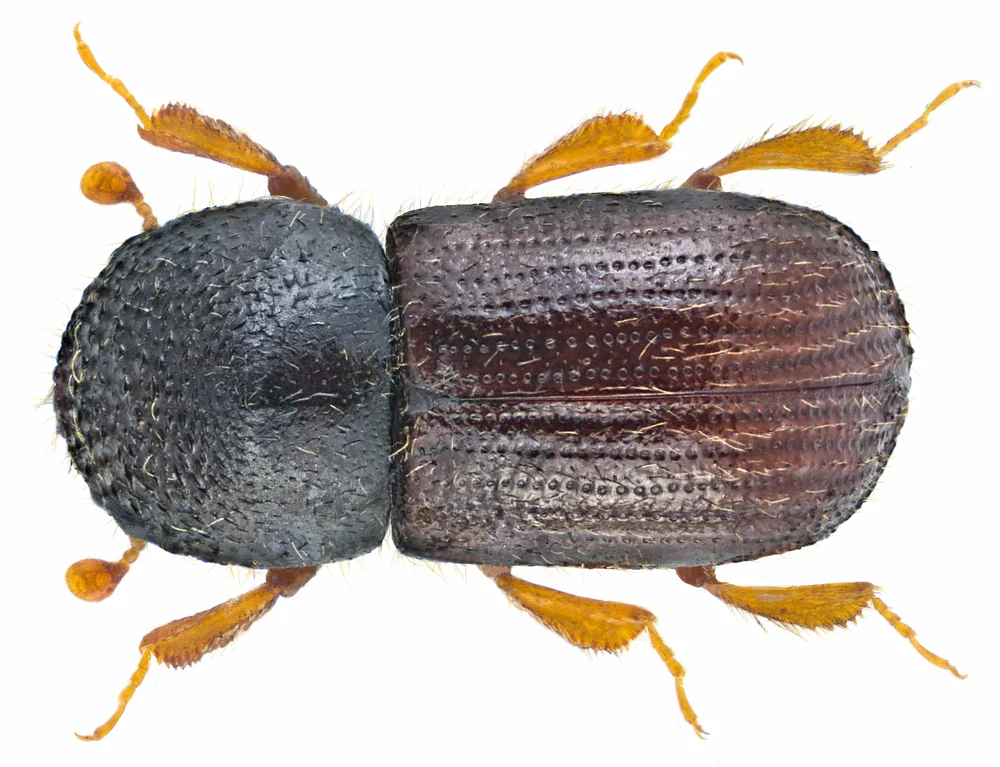
Hazelnut Shot-Hole Borer (Xyleborus dispar): Symptoms, Traps and Spray Timing
Hazelnut shot-hole borer / dalkıran (Xyleborus dispar): 2 mm holes in the branch and seeping sap. When to hang red sticky traps, why the spray goes on in early July, and why whole bushes die.
Hazelnut Weevil Control Guide: Identification, Spraying and Prevention
What is the hazelnut weevil (Curculio nucum, formerly Balaninus nucum), its damage symptoms, life cycle and control methods. Spray timing and dosages.
Hazelnut Pruning Guide: Prune Correctly, Harvest More
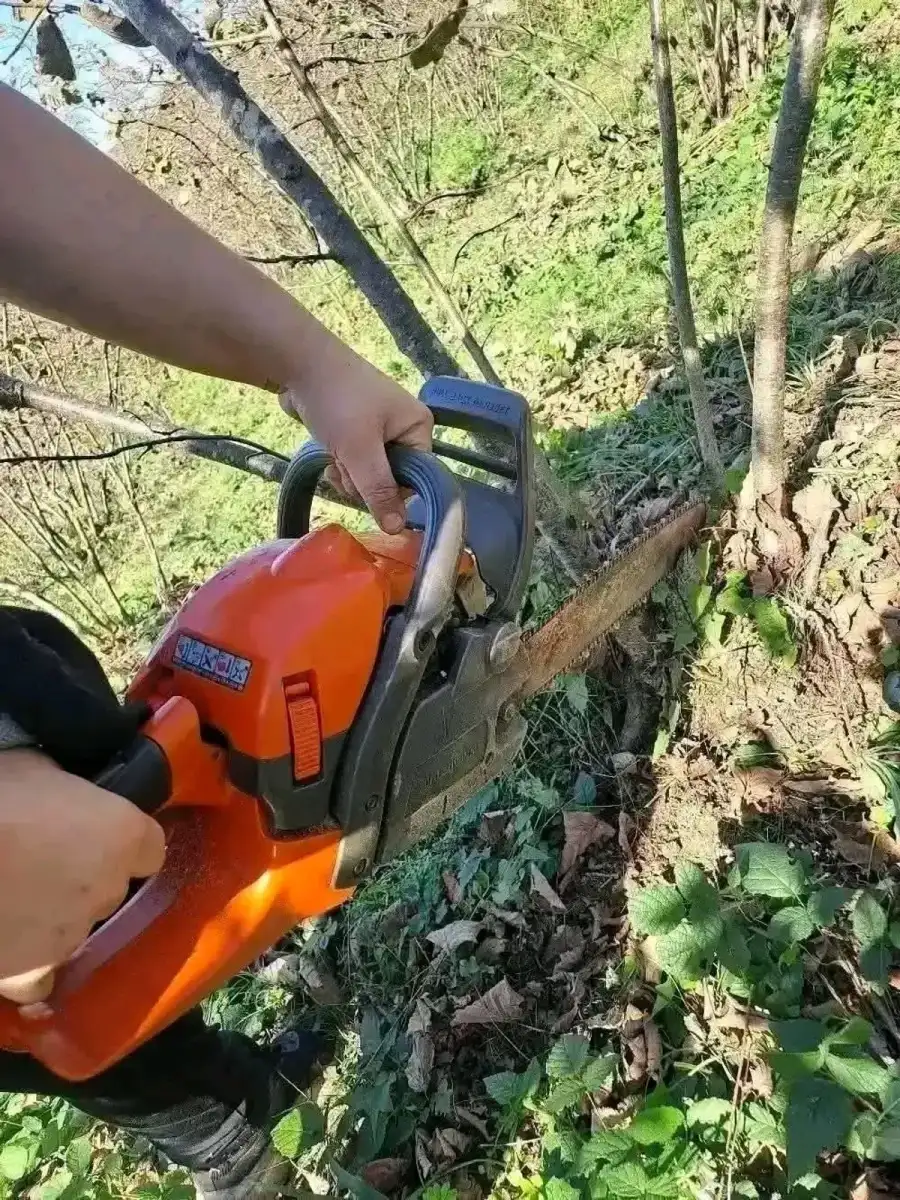
When to prune hazelnuts, the three pruning types — formative, maintenance and rejuvenation — plus cutting technique, tools, disinfection and the mistakes that cost yield.
Hazelnut Growing Guide: From Planting to Harvest, Step by Step
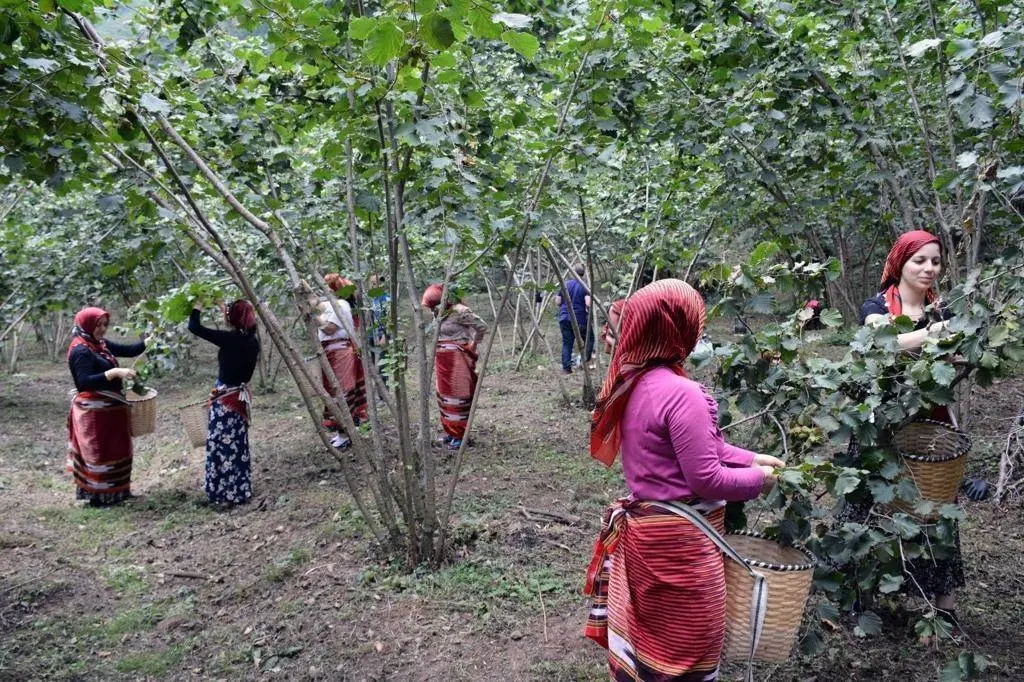
A complete guide to growing hazelnuts. Pruning, fertilization, pest control, harvest and market knowledge — everything a hazelnut grower needs on a single page.
More Pest Control Guides
Fall Webworm on Hazelnut (Hyphantria cunea): Web Nests and Control
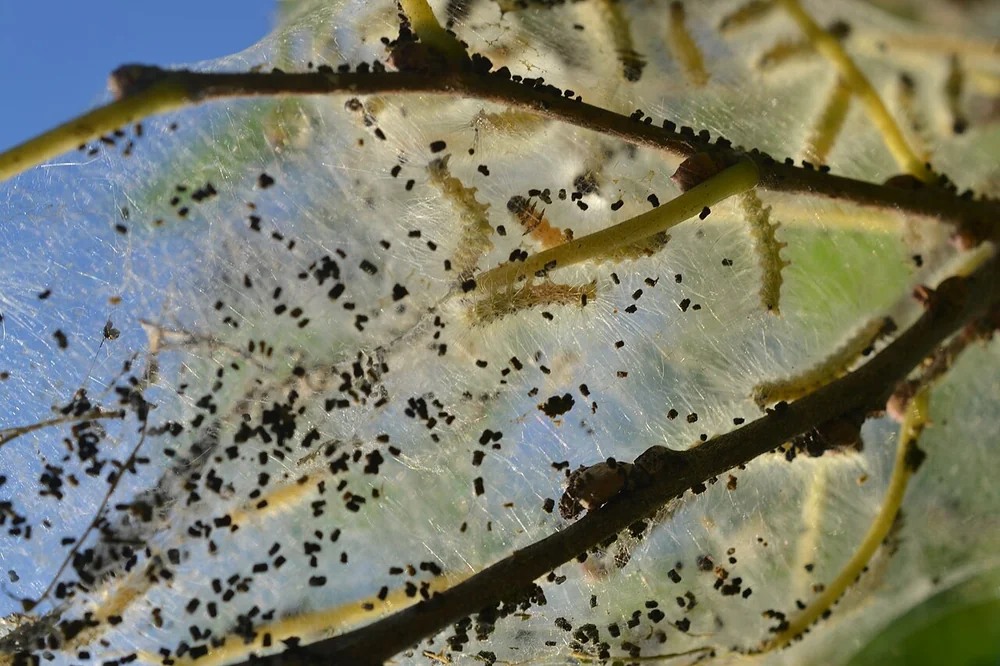
Fall webworm: silken web nests under the leaves, foliage eaten down to the midrib. Two to three generations a year; spray while the webs are new. Cutting and burning the nests is the most effective method.
Hazelnut Shoot Moth (Gypsonoma dealbana): Symptoms and Spray Timing
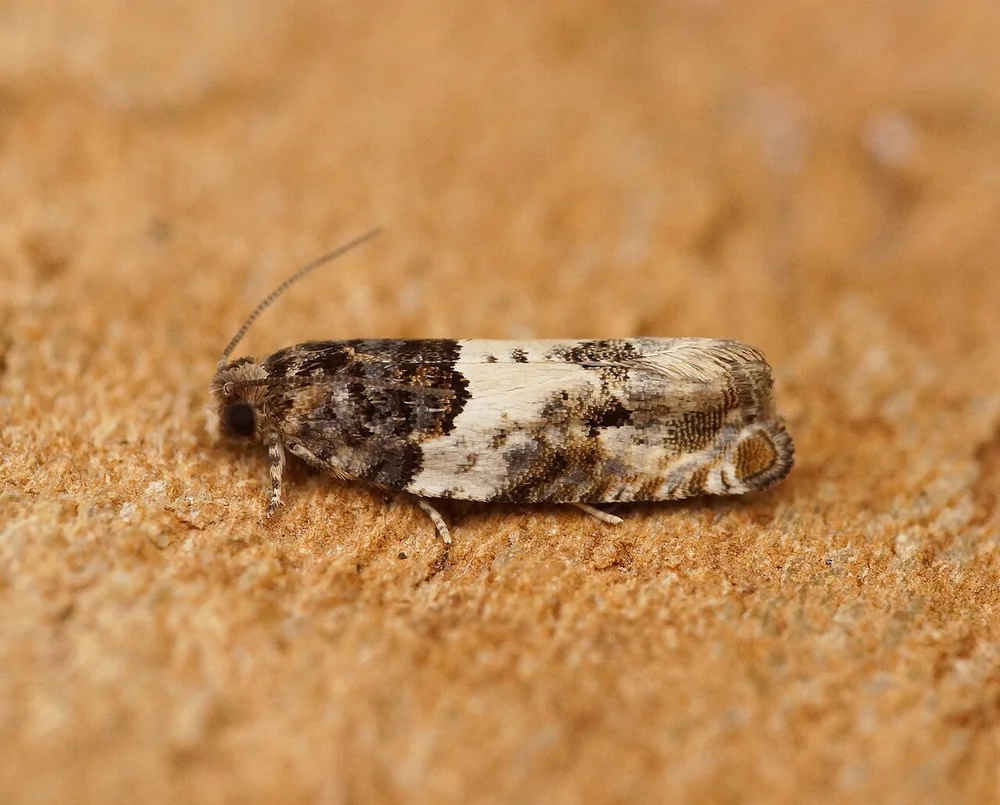
Hazelnut shoot moth: triangular brown patches on the leaf and dying shoots. Spraying is done after harvest, finishing by the end of September. Threshold: 15 feeding marks per 100 leaves.
Hazelnut Gall Midge (Mikomyia coryli): Symptoms and Spray Timing
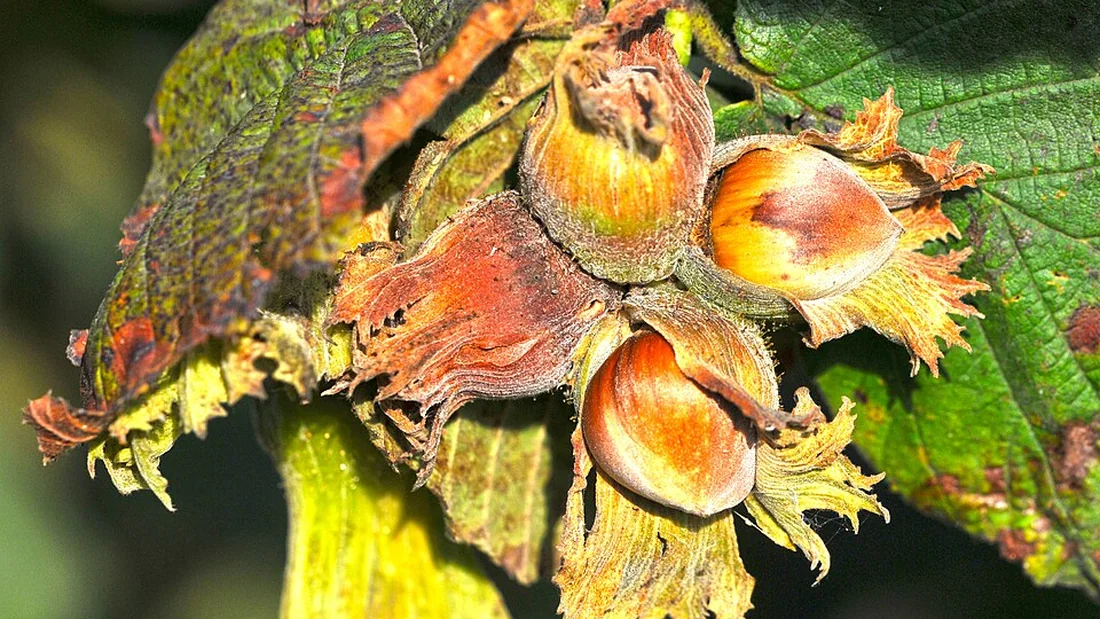
Hazelnut gall midge: galls along the leaf veins, on the husk cluster and at shoot tips. Spray when shoots carry two leaflets, late March to early April, repeated 20 days later. Threshold 50% infestation.
Hazelnut Shot-Hole Borer (Xyleborus dispar): Symptoms, Traps and Spray Timing
Hazelnut shot-hole borer / dalkıran (Xyleborus dispar): 2 mm holes in the branch and seeping sap. When to hang red sticky traps, why the spray goes on in early July, and why whole bushes die.