
What Is the Hazelnut Big Bud Mite?
The hazelnut big bud mites — Phytoptus avellanae and Cecidophyopsis vermiformis — are spindle-shaped, dull white mites averaging 0.09 mm in length. They are invisible to the naked eye. What you see in the orchard is never the mite itself, only the damage it causes.
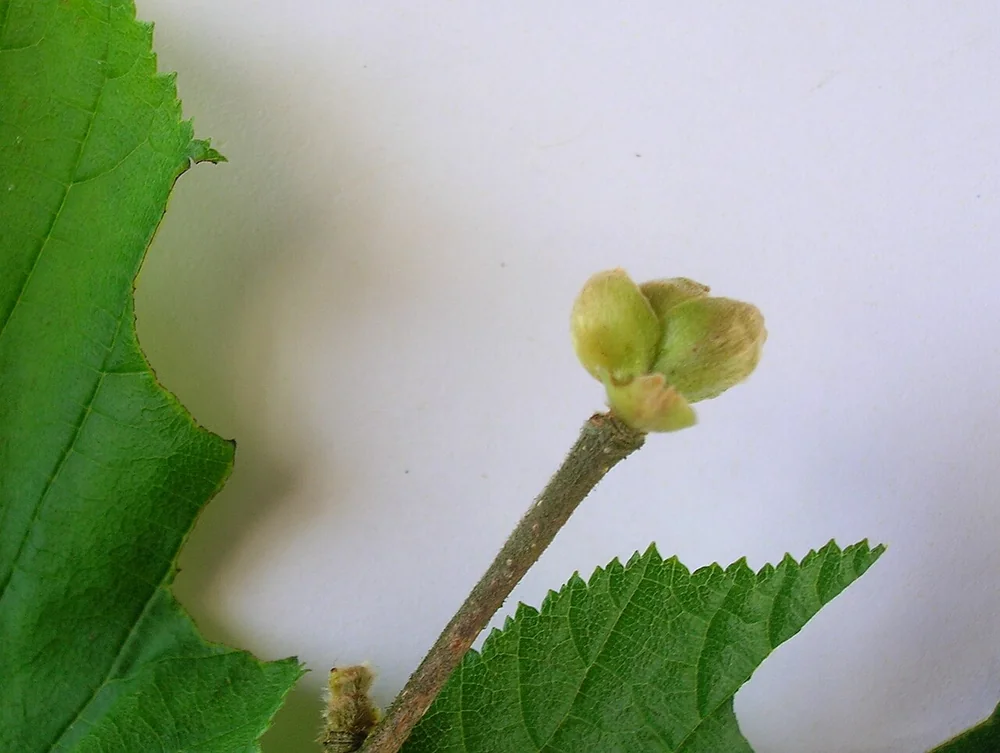
The mite enters a hazelnut bud, feeds and reproduces inside it. The bud responds by swelling abnormally; its scales open and, instead of a normal bud, a gall resembling a small cone forms. That is where the Turkish name comes from: kozalak akarı, “cone mite”.
Yield Loss Can Reach 70%
According to Ministry data, the big bud mite causes losses of up to 70% in susceptible cultivars. The most susceptible are Tombul, Mincane and Uzunmusa — that is, the most widespread and most valuable cultivars of the Black Sea region. A grower with a Tombul orchard cannot afford to ignore this pest.
Damage Symptoms
The symptom of this mite is among the easiest to diagnose in hazelnut — a swollen bud is visible from a distance on a leafless winter branch.
- Swollen, rounded buds: a normal bud is slim and pointed; an infested one swells to the size of a pea and its scales open out, taking on the look of a small cone
- Galls left on the branch in winter: once the leaves have dropped, these galls stand exposed on the branch — the best period for diagnosis and counting
- Catkin and flower drop: the mite destroys both male and female flower buds; infested bushes show increased drop of catkins and female flowers
- Leaf bud damage: shoot growth weakens and the bush thins out
- Crop loss: because the damage is not to the nut but to the bud that would have produced it, the loss shows up in the following season’s harvest
Winter Is the Best Time to Diagnose
After leaf fall, look along the branch: among buds that should be slim and pointed, any that are pea-sized, rounded and with raised scales are galls. This period is ideal both for diagnosis and for threshold counting — and it is also exactly the right moment for mechanical control.
Life Cycle and Migration
To understand control of this pest you only need to know one thing: the mite spends most of the year inside the bud, out of reach of any spray. It is exposed only during a short migration window.
| Stage | Month | What happens |
|---|---|---|
| Overwintering | November – February | The mites overwinter inside the galls, fully sheltered |
| Galls opening | March – early April | The galls burst open at the top |
| Migration | Late April – early May | Nymphs move out onto newly flushed shoots 3-3.5 cm long — the only vulnerable period |
| Establishment | May – June | They enter the buds in the new leaf axils that will grow the following year |
| Gall formation | Summer – Autumn | The bud swells and takes on the cone shape |
Economic Threshold
The count is simple and is made in winter, on leafless branches:
If an average branch carries 5 galls, chemical control is warranted.
Below that number, mechanical control (collecting the galls) is usually sufficient.
Control Methods
1. Mechanical Control (Collecting the Galls)
Mechanical control genuinely works against this mite, because the entire population sits inside targets you can see, count and collect — the galls.
- What to do: pick the swollen galls by hand, remove them from the orchard and burn them
- When: in winter, during the leafless period. With no leaves on the branch the galls are clearly visible and none are missed
- Why it works: every gall is the shelter of hundreds of mites that will migrate in spring. Every gall removed from the orchard prevents that much migration
- Its limit: under heavy infestation it is not sufficient on its own and must be backed by chemical control
Do Not Leave Collected Galls in the Orchard
Collecting the galls and dropping them at the base of the bush or at the edge of the orchard achieves nothing — the mites inside will still migrate in spring. Collected galls must be taken out of the orchard and burned.
2. Chemical Control
Timing matters more here than with any other hazelnut pest, because the target window is roughly one week.
- Best timing: the one-week period at the end of April into early May — when the mites leave the galls and migrate onto the new shoots
- Why exactly then: while the mite is inside the bud no spray can reach it. It is vulnerable only during migration, out on the shoot surface
- Application: for a successful result the leaves and shoots must be covered completely; incomplete coverage simply lets the mite through
- Precondition: always count before spraying — if the threshold is not exceeded, the application is pointless
Always Consult Before Choosing a Product or Dose
No trade name or dosage is given on this page, deliberately. Products used against mites differ from insecticides, and their registration status varies by region and year. Do not apply any pesticide without consulting your provincial/district directorate of agriculture and forestry or an agricultural engineer. Always notify local beekeepers before spraying.
3. Cultivar Awareness
Tombul, Mincane and Uzunmusa are susceptible cultivars. Growers working with them should never skip the count, and would do well to make winter gall collection a routine even when the threshold is not exceeded.
Where It Sits in the Spraying Calendar
The big bud mite falls in the April-May window alongside other orchard work, but it cannot be handled with the same product — acaricides and insecticides are different things:
| Pest | Spray window | Product type |
|---|---|---|
| Big bud mite (Phytoptus avellanae) | Late April – early May, 1 week | Acaricide |
| Green stink bug (Palomena prasina) | Mid-April (if threshold exceeded) | Insecticide |
| Longhorn beetle (Oberea linearis) | Mid-May | Insecticide |
| Hazelnut weevil (Curculio nucum) | Late May – early June | Insecticide |
For the full season see our hazelnut spraying calendar.
Frequently Asked Questions
When should the spray be applied? In the one-week period at the end of April into early May, while the mites are leaving the galls and migrating onto the new shoots. This window is narrow, and if it is missed the mite enters the bud and the spray is useless for that season. Ask your provincial directorate of agriculture for the date specific to your region.
There are swollen buds on the branch — is this the big bud mite? Most probably yes. A normal bud is slim and pointed; an infested one swells to the size of a pea and its scales open out into a cone shape. You cannot see the mite with the naked eye — the diagnosis is made from the swollen bud.
Is collecting the galls enough? If the infestation is light (fewer than 5 galls on an average branch) it usually is, and it is the cheapest method. Once the threshold is exceeded, mechanical control alone will not suffice and must be backed by the end-of-April spray.
Why does my crop drop the following year rather than this one? Because the damage is not to the nut but to the bud that would have produced it. A bud destroyed by the mite this year cannot deliver the flower it was due to open next year. This is why the big bud mite so often shows up as a yield decline “with no apparent cause”.
Can I spray it together with the hazelnut weevil? No. Mites are not insects, and acaricides differ from insecticides; the windows do not coincide either — the big bud mite is late April, the weevil late May. Always evaluate any combination with an agricultural engineer.
This guide is based on data from the Hazelnut Research Institute of the Turkish Ministry of Agriculture and Forestry and on research into big bud mite control carried out at Ondokuz Mayıs University. Always make spraying decisions in consultation with an agricultural engineer.
📚Sources
- Turkish Ministry of Agriculture and Forestry - Hazelnut Research Institute, Hazelnut Pests
- Ondokuz Mayıs University - A Study on the Chemical Control of Hazelnut Big Bud Mites
- Turkish Ministry of Agriculture and Forestry - TAGEM Standard Pesticide Trial Methods for Hazelnut Pests
- Image: Phytoptus avellanae — Rosser1954, CC BY-SA 3.0 (resized, converted to WebP)
Related Guides
View all Pest Control guides
Hazelnut Spraying Calendar: Annual Program for All Pests
Hazelnut orchard spraying calendar: spray timings, dosages and rules against all pests and diseases from February to October.
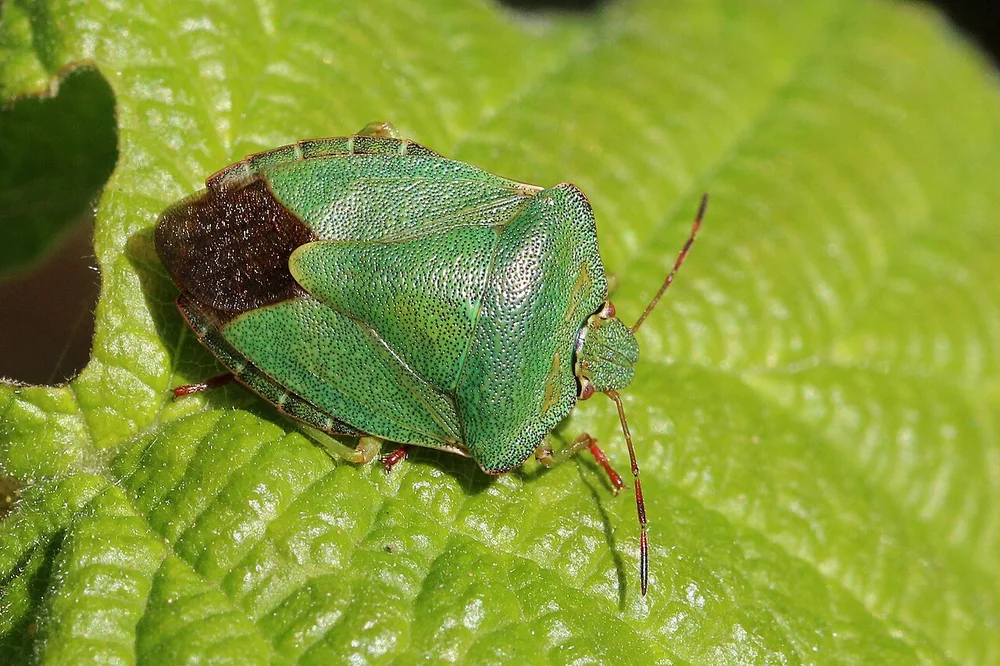
Green Stink Bug on Hazelnut (Palomena prasina): Symptoms, Spray Timing and Threshold
Green stink bug (Palomena prasina) and brown marmorated stink bug on hazelnut: blank, blackened and spotted kernels. Spraying starts mid-April; threshold is 1 overwintered adult per 10 bushes.
Hazelnut Pruning Guide: Prune Correctly, Harvest More
When to prune hazelnuts, the three pruning types — formative, maintenance and rejuvenation — plus cutting technique, tools, disinfection and the mistakes that cost yield.
Hazelnut Growing Guide: From Planting to Harvest, Step by Step
A complete guide to growing hazelnuts. Pruning, fertilization, pest control, harvest and market knowledge — everything a hazelnut grower needs on a single page.
More Pest Control Guides
Fall Webworm on Hazelnut (Hyphantria cunea): Web Nests and Control
Fall webworm: silken web nests under the leaves, foliage eaten down to the midrib. Two to three generations a year; spray while the webs are new. Cutting and burning the nests is the most effective method.
Hazelnut Shoot Moth (Gypsonoma dealbana): Symptoms and Spray Timing
Hazelnut shoot moth: triangular brown patches on the leaf and dying shoots. Spraying is done after harvest, finishing by the end of September. Threshold: 15 feeding marks per 100 leaves.
Hazelnut Gall Midge (Mikomyia coryli): Symptoms and Spray Timing
Hazelnut gall midge: galls along the leaf veins, on the husk cluster and at shoot tips. Spray when shoots carry two leaflets, late March to early April, repeated 20 days later. Threshold 50% infestation.
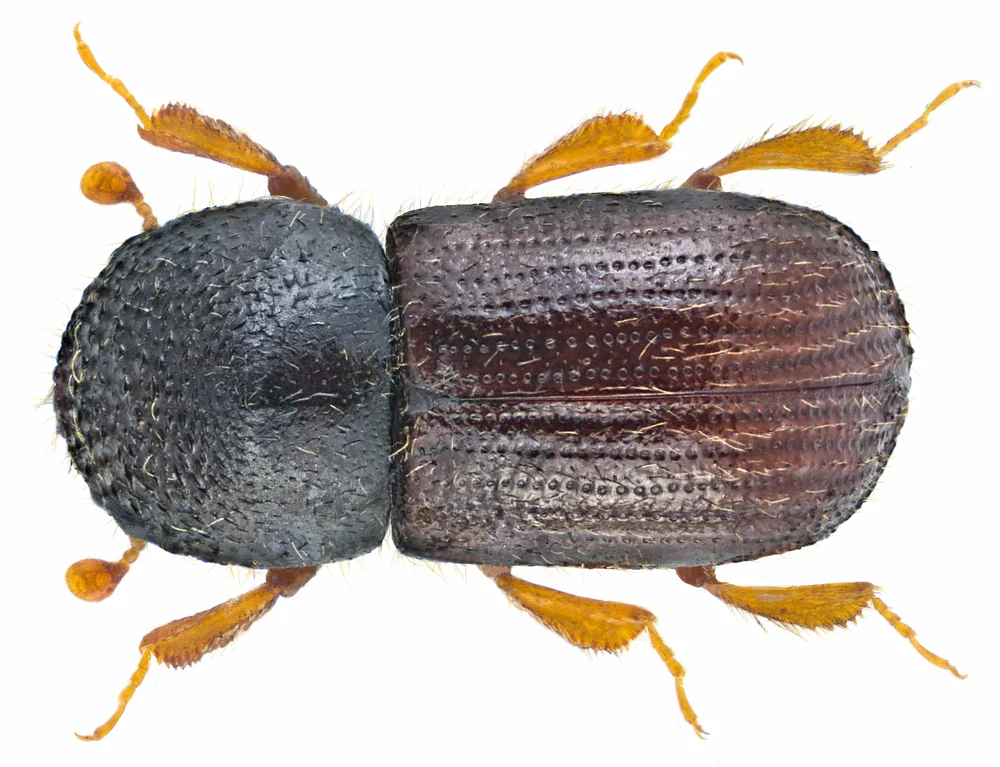
Hazelnut Shot-Hole Borer (Xyleborus dispar): Symptoms, Traps and Spray Timing
Hazelnut shot-hole borer / dalkıran (Xyleborus dispar): 2 mm holes in the branch and seeping sap. When to hang red sticky traps, why the spray goes on in early July, and why whole bushes die.