What Is Calcium Ammonium Nitrate (CAN)?
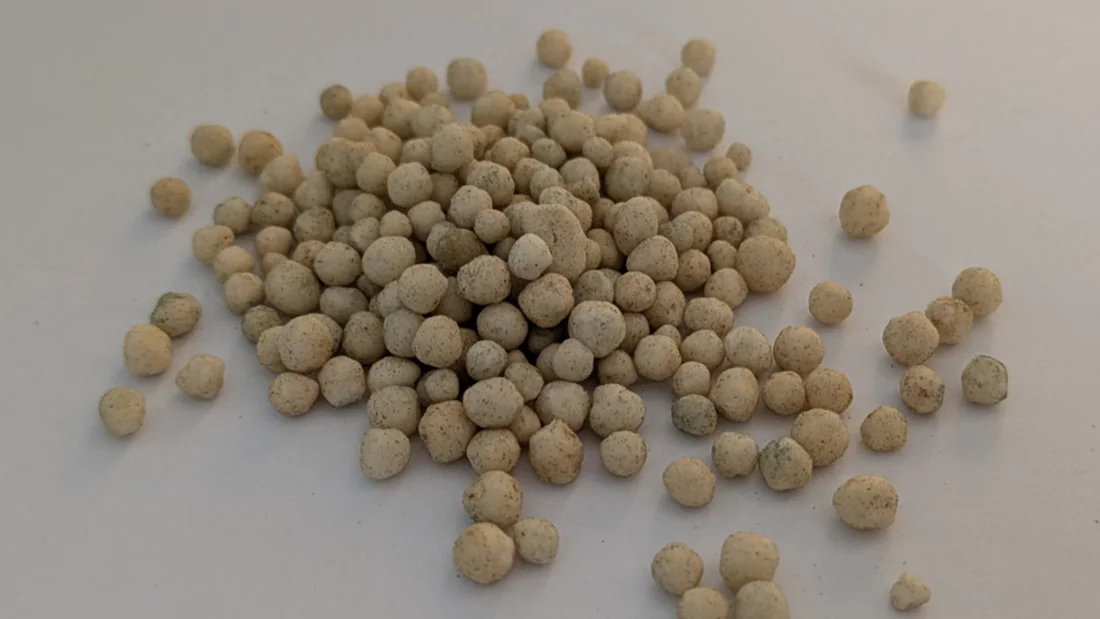
Calcium Ammonium Nitrate — CAN for short — is a granular or prilled topdressing fertilizer containing 26% nitrogen (N). In fertilizer notation it appears as 26-0-0: it carries no phosphorus and no potassium, so it is a pure nitrogen source.
Two features set CAN apart from other nitrogen fertilizers:
- Half of its nitrogen is in ammonium (NH₄⁺) form and half in nitrate (NO₃⁻) form — roughly 13% ammonium nitrogen plus 13% nitrate nitrogen.
- It contains lime (CaCO₃) or dolomitic lime (CaCO₃ + MgCO₃). This filler is added during manufacture to reduce the explosive character of ammonium nitrate; as a side benefit it supplies the soil with calcium.
| Property | Value |
|---|---|
| Formulation | 26-0-0 |
| Total nitrogen (N) | 26% |
| Ammonium nitrogen (NH₄-N) | ~13% |
| Nitrate nitrogen (NO₃-N) | ~13% |
| Filler material | Lime (CaCO₃) / dolomitic lime |
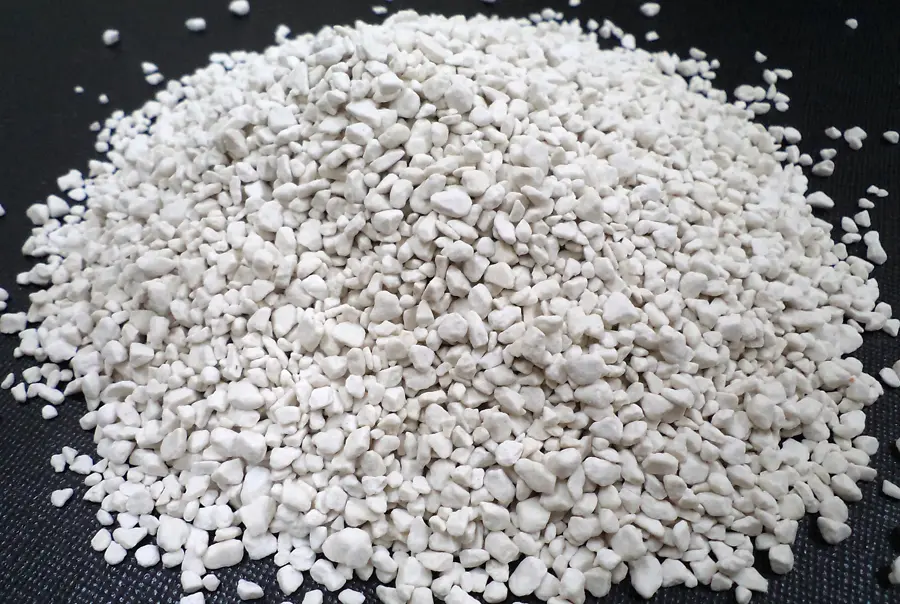
| Physical form | Yellow-cream prills or granules |
| Soil reaction | Neutral — does not lower pH |
| Method of use | Topdressing (soil applied) |
CAN or Ammonium Nitrate?
33% Ammonium Nitrate (AN) and 26% CAN are often confused. Both contain ammonium and nitrate nitrogen; the difference is the lime filler in CAN. That filler lowers the nitrogen concentration from 33% to 26%, but it makes the product safer to handle and far better suited to acid soils. The form recommended for hazelnuts by Turkish ministry sources is CAN.
Why Is It the Right Nitrogen Source for Hazelnuts?
This is the crux of the article. In hazelnut orchards the choice of nitrogen fertilizer is inseparable from the chemistry of Black Sea soils.
Black Sea Soils Are Acidic in Character
Hazelnut performs best at a soil pH of 5.5–6.5. However, the region’s high rainfall leaches calcium and magnesium out of the profile over the years, and most of the region’s soils drift into the acid range.
The Hazelnut Research Institute’s growing-technique publication spells out the consequences: acidic soil blocks the uptake of nitrogen, phosphorus and potassium, while simultaneously increasing the solubility of elements such as iron and aluminium to the point of toxicity.
CAN Does Not Acidify the Soil Further
The same source warns that when an acid-forming fertilizer is applied to an already acidic soil, the soil becomes even more acidic. This is precisely the risk that ammonium sulfate (21-0-0) creates in hazelnut orchards — however useful its sulfur content may be, its strong acidifying effect pushes an already low pH further down.
CAN, by contrast, is a neutral-reaction fertilizer. When it dissolves in soil water it releases one positively charged ammonium cation and one negatively charged nitrate anion; because the charges are balanced, soil pH does not shift.
What Does the Ministry Say?
The wording in the Hazelnut Research Institute’s Hazelnut Growing Technique publication is unambiguous: given that the great majority of Black Sea region soils are acidic in character, Calcium Ammonium Nitrate can be used safely on hazelnuts. The Giresun Provincial Directorate of Agriculture and Forestry likewise names 26% CAN as the preferred nitrogen source precisely because of the acidic character of the region’s orchards.
The Separate Benefit of Calcium
Calcium is not only a pH question. It is a building block of the cell wall and directly affects shell and kernel firmness, root development and the physical structure of the soil. Exchangeable calcium is typically low in acid soils — a CAN application closes part of that gap.
What Does the Ammonium + Nitrate Balance Achieve?
The roughly 50/50 split between two nitrogen forms is a design choice, not an accident:
- Nitrate nitrogen (NO₃⁻) — fast action. It is taken up directly and rapidly by the roots, delivering an immediate response during rapid growth and kernel filling. According to Toros Tarım’s technical note, roughly 75% of the total nitrogen taken up by crops over a growing season is in nitrate form.
- Ammonium nitrogen (NH₄⁺) — lasting action. Being positively charged, it is held by the clay minerals and organic colloids of the soil and is not easily leached by irrigation water. Soil nitrifying bacteria gradually convert it to nitrate, spreading the nitrogen supply over time.
The result is both an immediate response and a reservoir effect from a single application. In hazelnuts this means vigorous shoot growth at spring bud break and uninterrupted nitrogen supply in the weeks that follow.
When Is It Applied to Hazelnuts?
Nitrogen is a highly mobile element in soil. Applied too far ahead of the tree’s demand, it is leached or lost as gas. That is why every ministry source converges on split application.
First Application — Late February / March
Half of the recommended amount is applied just before the trees break dormancy. The Hazelnut Research Institute describes this window as “the end of February to the beginning of March”. The Giresun Provincial Directorate, working from local practice, specifies after 15 March — depending on altitude and the season’s weather, this can shift by two or three weeks from orchard to orchard.
Second Application — Late May / Early June
The remaining half is applied during flower bud formation. This period determines next year’s crop; nitrogen shortfalls here show up directly in the following season’s yield. The Giresun Provincial Directorate places this application after 20 May.
Leaching Risk in a High-Rainfall Region
The nitrate ion carries a negative charge, so clay minerals cannot hold it fully. In high-rainfall regions such as the Black Sea coast — and especially on sandy, light-textured soils — part of the nitrate nitrogen can be leached below the root zone. The remedy is exactly the split application: dividing the dose in two instead of dumping a heavy rate at once reduces losses and feeds the tree at both of its critical windows. Do not spread fertilizer on a day when heavy rain is forecast.
Do not apply nitrogen after July. Late nitrogen prolongs shoot growth, the tree fails to complete lignification and enters winter defenceless against frost. For the full annual calendar see our fertilization programme guide.
How Is It Applied?
Application method matters as much as the rate itself. The method described by ministry sources is:
Spread the fertilizer in a 30–40 cm wide band beneath the tips of the hazelnut branches and incorporate it to a soil depth of 5–10 cm.
✓ CAN Application Steps
- ✓ Identify the branch-tip line (canopy drip line) — the fine feeder roots are concentrated there
- ✓ Picture a 30-40 cm wide band running along that line
- ✓ Spread the calculated amount evenly within that band
- ✓ Incorporate to 5-10 cm depth with a rake or hoe
- ✓ Never apply fertilizer against the trunk base — it causes root burn
- ✓ Apply when the soil is in good tilth (slightly moist)
Is incorporation essential? Not as critical as with urea — according to Toros Tarım’s technical note, when CAN is incorporated into the soil or applied ahead of rainfall or irrigation, the ammonia (NH₃) nitrogen loss typical of urea does not occur. Incorporation still prevents the granules from sitting on the surface and washing away with runoff, which makes a visible difference on sloping hazelnut orchards.
How Is the Dose Calculated?
Step 1: Determine the pure nitrogen requirement from a soil test
In TAGEM’s Fertilizer Recommendations, the nitrogen to be applied to hazelnuts in the Black Sea region is set according to the soil organic matter content:
| Soil organic matter | Pure nitrogen requirement (kg N/decare) |
|---|---|
| 0 – 1.0% | 20 |
| 1.1 – 2.0% | 18 |
| 2.1 – 3.0% | 16 |
| 3% and above | 14 |
Source: TAGEM Fertilizer Recommendations, Black Sea region nitrogen table. One decare = 1,000 m².
Step 2: Convert pure nitrogen into fertilizer weight
The same publication provides the official conversion factors:
| Fertilizer | Nitrogen content | Conversion factor |
|---|---|---|
| Calcium Ammonium Nitrate (CAN) | 26% | × 4.0 |
| Ammonium Sulfate (AS) | 21% | × 5.0 |
| Ammonium Nitrate (AN) | 33% | × 3.0 |
| Urea | 46% | × 2.2 |
Worked example: the soil test returns 2.5% organic matter → recommendation is 16 kg pure N per decare → 16 × 4.0 = 64 kg CAN per decare. Half of that (32 kg) goes on in March, the other half (32 kg) in late May or early June.
Dose per stool
For growers who think in per-stool terms rather than per decare, these are the figures published by the Giresun Provincial Directorate for hazelnuts in full bearing:
| Application | 26% CAN | Urea (46%) |
|---|---|---|
| 1st application (March) | 650 g/stool | 375 g/stool |
| 2nd application (late May) | 650 g/stool | 375 g/stool |
| Total | 1,300 g/stool | 750 g/stool |
For young plants: the Hazelnut Research Institute recommends 40 g of 26% CAN per sapling — half at the beginning of March, half in late May or early June. As the plant grows the rate is raised gradually towards full-bearing levels.
These Figures Are a Starting Point
The rates above are general recommendations taken from official publications. Your exact dose depends on your soil test result, your orchard’s organic matter and pH, tree age, planting density and yield target. Always have a soil analysis done before applying, and have the result interpreted by your provincial or district agriculture directorate or an agricultural engineer.
CAN, Ammonium Sulfate and Urea Compared
| Criterion | CAN (26-0-0) | Ammonium Sulfate (21-0-0) | Urea (46-0-0) |
|---|---|---|---|
| Nitrogen content | 26% | 21% | 46% |
| Nitrogen form | 13% ammonium + 13% nitrate | All ammonium | Amide (urea) nitrogen |
| Additional nutrient | Calcium (lime/dolomite) | 24% sulfur (S) | None |
| Effect on soil pH | Neutral — non-acidifying | Strongly acidifying | Mildly acidifying |
| Ammonia (NH₃) loss | Practically none | Low | High if left on the surface |
| Nitrate leaching | Nitrate fraction can leach | Low | Moderate (after conversion) |
| Speed of action | Fast + lasting | Slow, lasting | Moderate (needs hydrolysis) |
| Fertilizer per kg pure N | ~4.0 kg | ~5.0 kg | ~2.2 kg |
| When to choose in hazelnuts | Acidic Black Sea soils — the ministry recommendation | Where sulfur deficiency is documented and pH is adequate | Cost-driven, where incorporation is possible |
How to read this table. Urea is the cheapest option per unit of nitrogen, but if it is left on the surface a large share of the nitrogen escapes as ammonia; it must be incorporated. Ammonium sulfate looks attractive with its 24% sulfur, yet on acid soil it drives pH lower still — using it every year on the Black Sea coast is a risky choice unless sulfur deficiency has actually been documented. CAN sits in the middle on nitrogen cost but is the best match for the soils hazelnut is grown on.
Does CAN Replace Liming?
No. This is one of the most common misconceptions.
The lime filler in CAN makes the fertilizer neutral — it prevents acidification. It does not raise soil pH. The arithmetic in Toros Tarım’s technical note makes this clear: one decare of soil to a depth of 20 cm weighs roughly 250 tonnes, whereas 20–40 kg of CAN per decare per year adds only about 5–10 kg of extra lime. Lime also dissolves very slowly in water.
If your soil pH is below 5.5 you must lime separately. The Hazelnut Research Institute recommends repeating liming every 4–5 years on the basis of a soil test, if needed. In Özyazıcı’s (2014) trial on acid soil, meeting the lime requirement produced a 29% yield increase over the control — the yield effect of liming in hazelnuts is measurable.
Never Apply Lime and Nitrogen Together
Leave at least one month between liming and nitrogen fertilization. Lime accelerates gaseous nitrogen losses. Liming in November–December and applying nitrogen in March avoids the clash naturally.
Storage and Safety
- Keep it dry. CAN is hygroscopic; it draws moisture and cakes. Do not stockpile it for long — buy for the season.
- Keep bags closed. Reseal opened sacks tightly and stack them on wooden pallets rather than directly on the floor.
- Store in a cool, dry, well-ventilated place, away from direct sunlight and heat sources.
- Store away from combustibles. The lime content greatly reduces the risk compared with straight ammonium nitrate, but still keep it away from fuel, oil, straw and other organic material.
- A white residue on the soil surface is normal. The undissolved lime/dolomite filler can appear as white specks when the product is surface-applied — it does not mean the fertilizer is faulty.
Common Mistakes
- Setting a rate without a soil test. Nitrogen cannot be estimated without knowing organic matter. Fertilizer applied blind is either wasted or harmful.
- Applying the whole dose at once. Under wet Black Sea conditions the nitrate leaches. Always split the dose between March and late May.
- Applying against the trunk. Feeder roots sit under the canopy drip line. Fertilizer at the trunk base is both ineffective and a cause of root burn.
- Leaving it on the surface. On sloping orchards it washes away with runoff. Incorporate to 5–10 cm.
- Counting CAN as liming. If pH is below 5.5, agricultural lime must be applied separately.
- Applying nitrogen after July. It prolongs shoot growth, disrupts winter hardening and increases frost damage risk.
- Applying lime and CAN in the same period. This increases nitrogen loss; leave at least a month between them.
- Overdosing. Excess nitrogen softens leaf tissue, increases susceptibility to powdery mildew and lowers kernel quality.
Summary: CAN Checklist
- Why CAN? Black Sea soils are acidic; CAN is neutral in reaction and does not acidify them further. Ministry sources recommend it for hazelnuts.
- Content: 26% nitrogen — half fast-acting nitrate, half lasting ammonium, plus a lime filler that supplies calcium.
- Timing: half in late February–March, half in late May–early June. Never after July.
- Application: spread in a 30–40 cm band under the branch tips and incorporate to 5–10 cm.
- Rate: multiply the pure nitrogen recommendation from your soil test by 4.0. Reference figure per stool: 1,300 g/year in full bearing, 40 g/year for young saplings.
- Liming is separate: if pH is below 5.5, apply agricultural lime every 4–5 years according to soil test results.
- Phosphorus and potassium separately: CAN supplies nitrogen only. Use urea phosphate or TSP for phosphorus and potassium sulfate for potassium.
For the full annual fertilizer calendar see our Hazelnut Fertilization Programme; for correct sampling and result interpretation see our Soil Analysis Guide.
📚 Hazelnut Research Institute - Hazelnut Growing Technique 📚 Giresun Provincial Directorate of Agriculture and Forestry 📚 TAGEM - Fertilizer Recommendations 📚 Toros Tarım - CAN Technical Note 📚 Özyazıcı, G. (2014) - Turkish Journal of Agricultural Research📚Sources
- Republic of Türkiye Ministry of Agriculture and Forestry - Hazelnut Research Institute, Hazelnut Growing Technique
- Giresun Provincial Directorate of Agriculture and Forestry - Points to Consider in Nitrogen Fertilization of Hazelnuts
- TAGEM - Fertilizer Recommendations (Soil-Water Fertilizer Advisory Data)
- Toros Tarım - CAN (Calcium Ammonium Nitrate) Technical Note
- Özyazıcı, G. (2014) - Lime and Sludge Application in Hazelnut Grown on Acid Soil, Turkish Journal of Agricultural Research
- Image: Kalsiyum amonyum nitrat granülü — Dawid3030, CC0 (cropped, converted to WebP)
Related Guides
View all Fertilization guides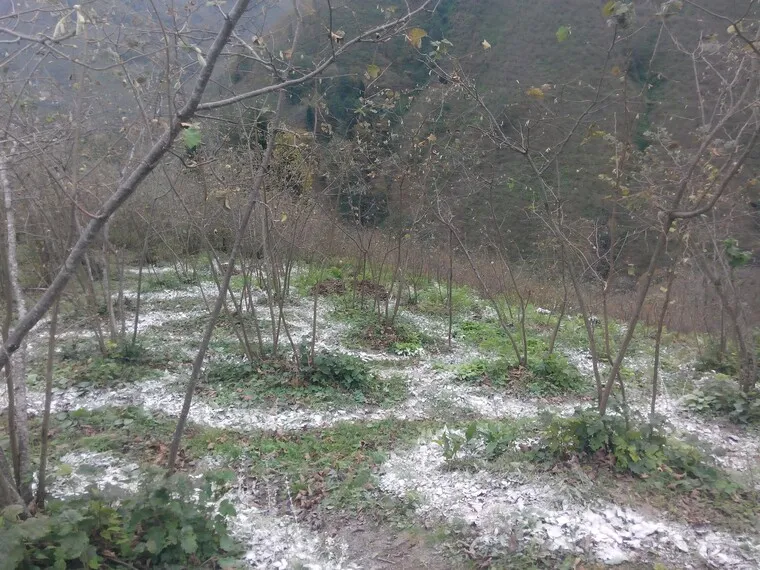
Hazelnut Fertilization Program: Annual Schedule and Application Rates
When to fertilize hazelnuts, which fertilizer types to use, and how much per decare. A practical guide to nitrogen, phosphorus, potassium and organic fertilizer applications.
Soil and Leaf Analysis Guide for Hazelnut Orchards
When to have a soil analysis done in a hazelnut orchard, how to take the sample, and how to read the results. Leaf analysis timing and method explained.
Urea Phosphate 18-44-0 Fertilizer: Usage and Benefits in Hazelnut
What is urea phosphate 18-44-0 fertilizer and how is it used in hazelnut orchards? Application timing, dosage calculation, differences from DAP, and key considerations.
Potassium Sulfate (0-0-51) Fertilizer: Use and Dosage in Hazelnuts
What is potassium sulfate fertilizer, and when and how should it be used in hazelnuts? Learn about 51% K2O and 18% sulfur content, dosage, application timing, and important considerations.
More Fertilization Guides
Ammonium Nitrate (33-0-0): Use, Dosage and Leaching Risk in Hazelnuts
What is ammonium nitrate fertilizer and how is it used in hazelnuts? The 16.5% ammonium + 16.5% nitrate balance, how it differs from CAN, behaviour on acid soils, nitrate leaching and dose calculation.
Ammonium Sulfate (21-0-0) Fertilizer: Use in Hazelnuts and the Acidity Risk
What is ammonium sulfate fertilizer, and when and how should it be used in hazelnut orchards? 21% nitrogen + 24% sulfur, dosage logic, soil acidification risk and a comparison with CAN.
Boron Fertilization in Hazelnuts: Blank Nuts, Dosage and Toxicity Risk
What does boron do in hazelnuts, and does a deficiency cause blank nuts? Critical boron values in soil and leaf analysis, soil and foliar application rates, and the risk of boron toxicity.
Farmyard Manure and Organic Matter in Hazelnut Orchards: Building the Foundation
What does farmyard (barn) manure do in a hazelnut orchard, what is well-rotted manure, when and how is it applied? The role of organic matter in holding water and nutrients, husk compost and common mistakes.