What Is Oystershell Scale?
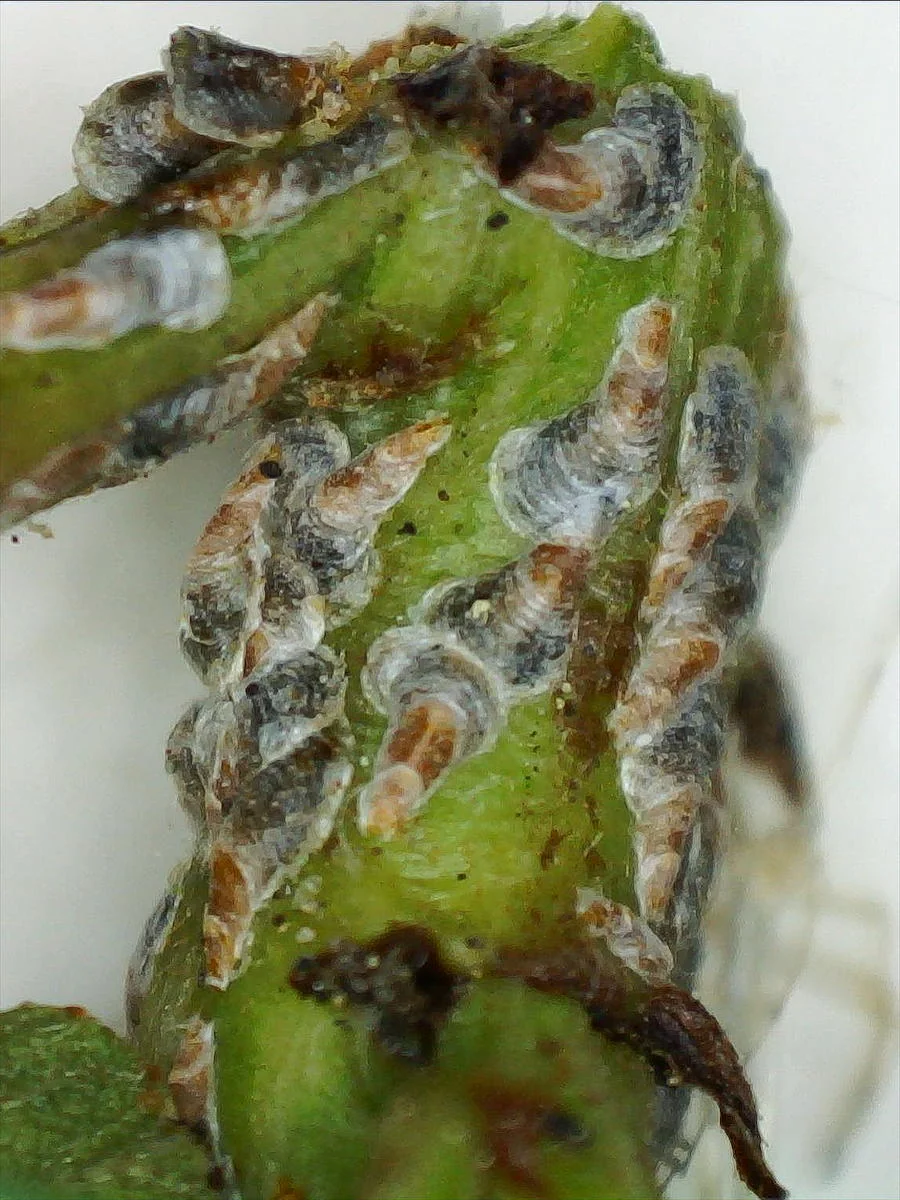
Oystershell scale (Lepidosaphes ulmi) takes its Turkish name from the shape of its shell: the adult female’s shell is comma- or mussel-shaped, dark brown, and 2.3-3.0 mm long.
These small dark commas lined up along a branch are usually mistaken for part of the bark. In fact each one is a female with her eggs beneath it.
How It Differs From Brown Scale
Hazelnut has two armoured pests and they get confused:
- Oystershell scale (this page): the shell is comma/mussel-shaped, narrow and elongated, dark brown. It overwinters as eggs
- Brown scale: the shell is hemispherical, domed. It overwinters as larvae and secretes honeydew, leading to sooty mould
In an orchard where the leaves are blackened as if with soot, the pest you are looking for is brown scale; sooty mould is not typical of oystershell scale.
Damage Symptoms
- Dark commas lined up on the branch: the clearest sign. The shells are stuck fast to the branch surface
- Loss of vigour: the plant weakens because its sap is being drawn off
- Dieback under heavy infestation: as the population rises, branches begin to die
- Vein breakage and distorted growth: the tissue is damaged where the eggs are placed along the veins
- Tearing of the leaf: mines formed by the larvae weaken the leaf tissue
Life Cycle
In the Black Sea region it has one generation per year.
| Stage | Month | What happens |
|---|---|---|
| Overwintering | November – April | Overwinters as eggs, beneath the shell of the adult female |
| Egg hatch | Early May | The eggs hatch and mobile crawlers spread over branches and leaves |
| Larval stages | May – June | It passes through two larval stages |
| Adults | July | Adult females appear and form their shells |
The Logic of Control: The Shell Is Armour
Here too, as with brown scale, the shell is armour. No spray reaches either the adult female or the eggs beneath her shell. Control is therefore aimed at one of two points: either while the eggs overwinter under the shell (smothering with dormant oil), or when the crawlers come out into the open (May).
Economic Threshold
If a 10 cm section of branch carries an average of 5 individuals holding live eggs, spraying is warranted.
When counting, lift the shell and check whether there are live eggs underneath; empty shells do not count.
Control Methods
1. Mechanical Control
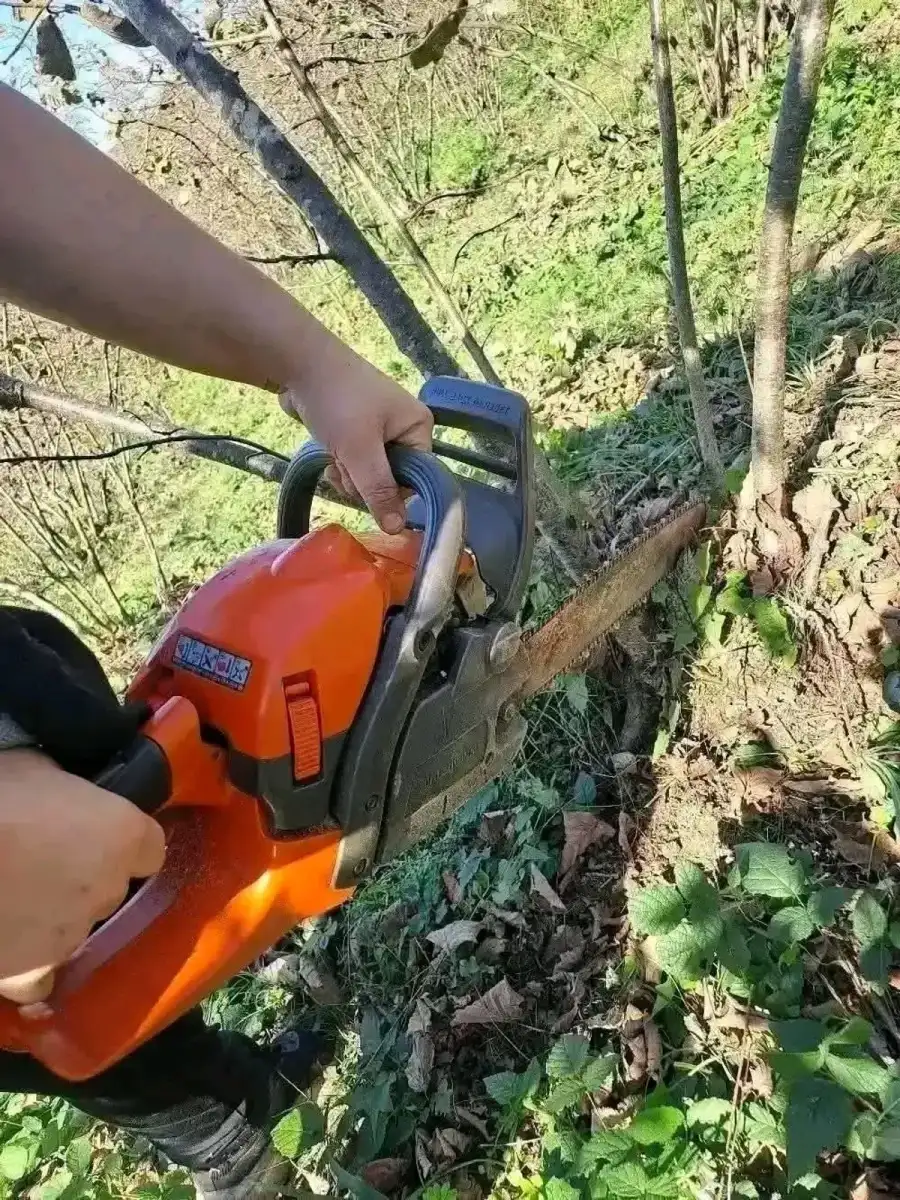
Infested branches should be cut out. Pruning away heavily encrusted branches directly reduces the population and often removes the need to spray altogether. Since pruning is work you do anyway, this measure adds no extra cost. See our pruning guide.
2. Chemical Control: Two Options
Oystershell scale has two separate spray windows, and choosing one of them is enough.
| Option | Timing | Method |
|---|---|---|
| A — Winter application | February – March, before bud burst | With dormant oils |
| B — Summer application | May, when 70-80% of the crawlers have emerged | Summer spray |
Why the Dormant Oil Option Is Valuable
Dormant oils work by smothering the eggs beneath the shell; they act differently from insecticides that target the nervous system. Because they are applied before bud burst, bee activity has not yet begun and the pressure on natural enemies is low. If you already have other February-March work in the orchard, it is practical to line this application up with it.
Always Consult Before Choosing a Product or Dose
No trade name or dosage is given on this page, deliberately. The application temperature and timing of dormant oils are critical; oil applied in the wrong period can damage buds. Do not apply anything without consulting your provincial/district directorate of agriculture and forestry or an agricultural engineer.
Frequently Asked Questions
When should the spray be applied? There are two options: with dormant oil in February-March, before bud burst, or with a summer spray in May, once 70-80% of the crawlers have emerged. Doing one of the two is enough.
What are the dark commas on my branches? Comma- or mussel-shaped shells stuck to the branch surface, 2-3 mm long and dark brown, are oystershell scale. If the shell is hemispherical/domed, the pest you are after is brown scale.
My leaves have turned black — is this the cause? Probably not. Leaves blackening as if with soot (sooty mould) occurs with pests that secrete honeydew, and in hazelnut the typical culprit is brown scale. That picture is not expected with oystershell scale.
Is pruning enough on its own? Often yes. Cutting out infested branches is given by the Ministry as the first control method. If the threshold — 5 egg-bearing individuals per 10 cm of branch — is not exceeded, spraying may not be needed at all.
Dormant oil or summer spray — which is better? Both are accepted. Dormant oil puts less pressure on bees and natural enemies and falls in the same period as pruning. The summer spray is a second chance for anyone who missed the winter application. Make the choice with an agricultural engineer, based on your orchard programme.
This guide is based on data from the Hazelnut Research Institute of the Turkish Ministry of Agriculture and Forestry. Always make spraying decisions in consultation with an agricultural engineer.
📚Sources
Related Guides
View all Pest Control guides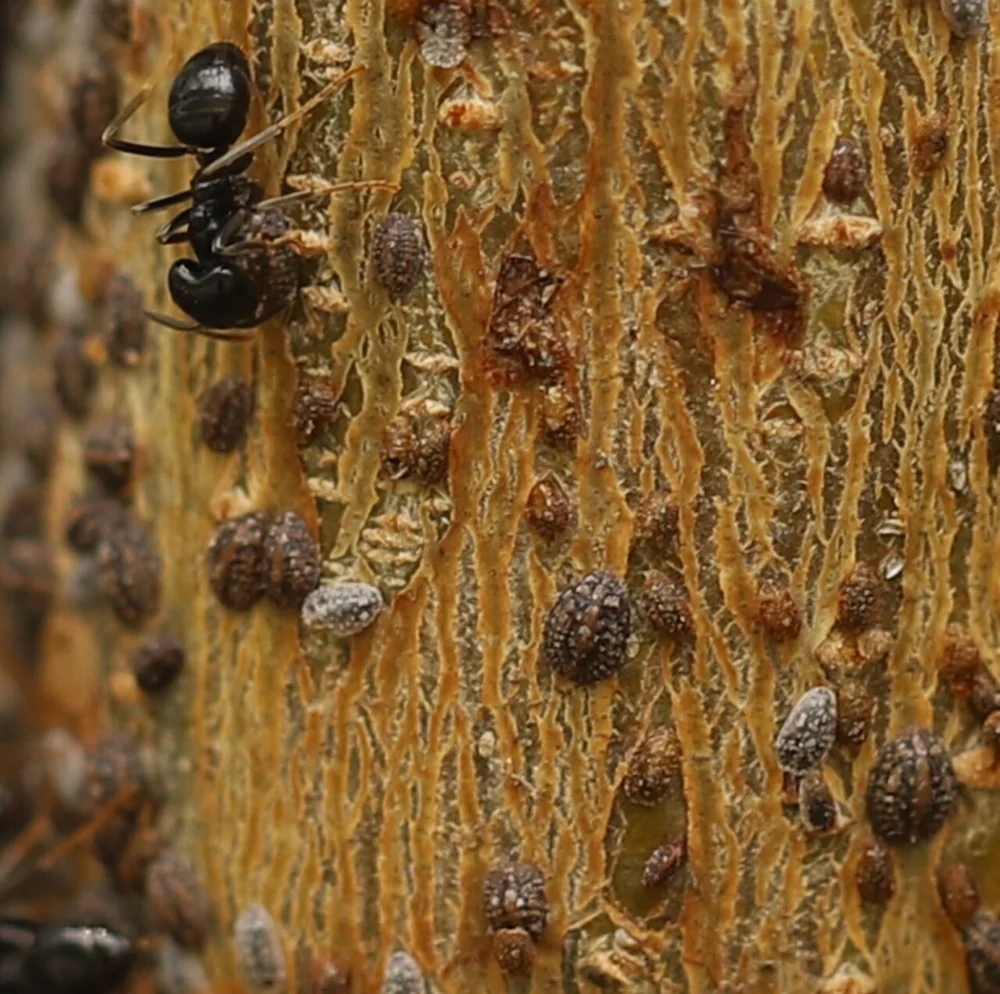
Brown Scale on Hazelnut (Parthenolecanium corni): Symptoms, Sooty Mould and Control
Hazelnut brown scale: brown hemispherical shells on branches and shoots, sticky honeydew and sooty mould blackening. Spray at the end of June; threshold is 5 live scales on each of 30 shoots.
Hazelnut Spraying Calendar: Annual Program for All Pests
Hazelnut orchard spraying calendar: spray timings, dosages and rules against all pests and diseases from February to October.
Hazelnut Pruning Guide: Prune Correctly, Harvest More
When to prune hazelnuts, the three pruning types — formative, maintenance and rejuvenation — plus cutting technique, tools, disinfection and the mistakes that cost yield.
Hazelnut Growing Guide: From Planting to Harvest, Step by Step
A complete guide to growing hazelnuts. Pruning, fertilization, pest control, harvest and market knowledge — everything a hazelnut grower needs on a single page.
More Pest Control Guides
Fall Webworm on Hazelnut (Hyphantria cunea): Web Nests and Control
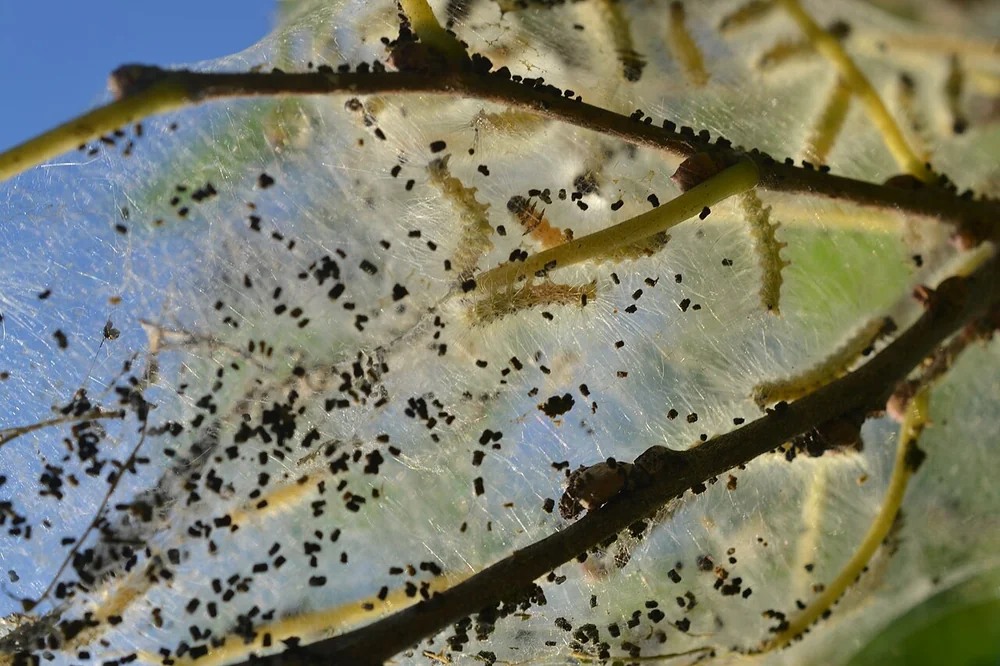
Fall webworm: silken web nests under the leaves, foliage eaten down to the midrib. Two to three generations a year; spray while the webs are new. Cutting and burning the nests is the most effective method.
Hazelnut Shoot Moth (Gypsonoma dealbana): Symptoms and Spray Timing
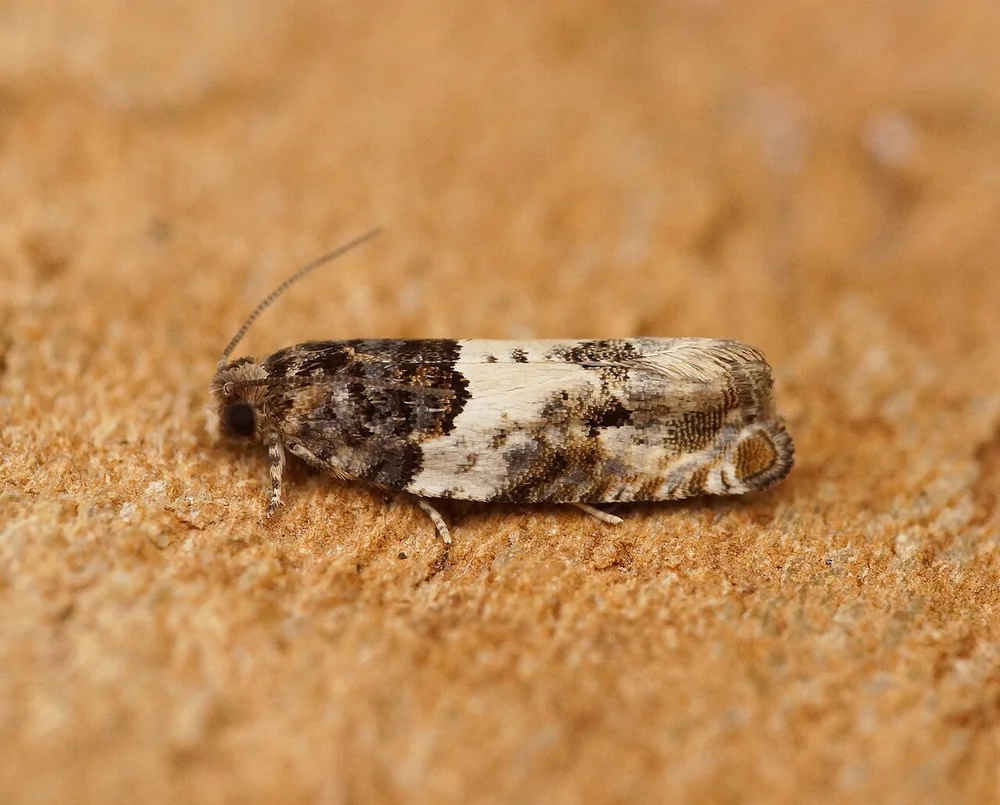
Hazelnut shoot moth: triangular brown patches on the leaf and dying shoots. Spraying is done after harvest, finishing by the end of September. Threshold: 15 feeding marks per 100 leaves.
Hazelnut Gall Midge (Mikomyia coryli): Symptoms and Spray Timing
Hazelnut gall midge: galls along the leaf veins, on the husk cluster and at shoot tips. Spray when shoots carry two leaflets, late March to early April, repeated 20 days later. Threshold 50% infestation.
Hazelnut Shot-Hole Borer (Xyleborus dispar): Symptoms, Traps and Spray Timing
Hazelnut shot-hole borer / dalkıran (Xyleborus dispar): 2 mm holes in the branch and seeping sap. When to hang red sticky traps, why the spray goes on in early July, and why whole bushes die.