
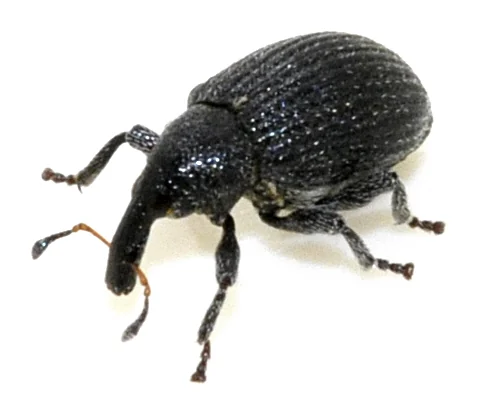
What Is the Hazelnut Leaf Weevil?
The hazelnut leaf weevil (Anoplus roboris) is a very small snout beetle, 2 mm long, greyish black, with a short, blunt rostrum. Its larvae are pale yellow.
Because of its size the beetle itself is easily overlooked in the orchard. What actually gets noticed is almost always the holes in the leaves.
Do Not Confuse It With the Hazelnut Weevil
Both are snout beetles, but they are different pests. The leaf weevil is 2 mm, greyish black, with a short blunt rostrum, and its damage is on the leaf. The hazelnut weevil is 6-9 mm, brown, with a long slender rostrum, and its damage is inside the nut. Their control timings differ too: leaf weevil at the end of March, hazelnut weevil at the end of May.
Damage Symptoms
The damage comes in two stages: first the adult from the outside, then the larva from within.
1. Adult Damage: Small Holes
In spring the adults feed on the leaves and open numerous small holes. The leaf takes on a sieve-like appearance, as if pricked with a needle. This is one of the first damages noticed in the season, because the leaves have only just flushed.
2. Larval Damage: Mines and Tearing
The hatching larvae form mines inside the leaf tissue. Where a mine runs the tissue weakens and the leaf tears. Once tears are added to the perforated appearance, the loss of leaf area becomes substantial.
Holes or Tears?
If the leaf shows only clean small holes, adult feeding is still under way — the spray window may still be open. If irregular tears have joined the holes, the larvae are already inside the tissue and spraying will have limited effect that season.
Life Cycle
It has one generation per year.
| Stage | Month | What happens |
|---|---|---|
| Overwintering | November – February | The adults overwinter in the soil and in sheltered places |
| Emergence and feeding | March | The adults emerge and feed on the newly flushed leaves, opening holes |
| Control window | End of March | The adults are out in the open on the leaves — the only effective period |
| Eggs and larvae | Spring | The larvae mine inside the leaf tissue and tears appear |
Economic Threshold
If an inspection of the orchard finds an average of 5 adults per bush, spraying should be carried out in spring, at the end of March.
Check the bushes early in the day for the count; a beetle this size requires careful looking.
Control
Chemical Control
- Timing: end of March — while the adults are feeding on the leaves, before they lay eggs
- Why you must not be late: once the larva is inside the leaf tissue no spray can reach it. The target is always the adult
- Precondition: application is not advised without a threshold count
This Is the Season's First Spray
In the hazelnut calendar, the end of March is early for most pests other than the leaf weevil. As a result the leaf weevil spray is usually applied on its own and cannot be combined with another pest. If the threshold is not exceeded, skipping this application saves a whole pass through the orchard — so do not neglect the count.
Always Consult Before Choosing a Product or Dose
No trade name or dosage is given on this page, deliberately. Registered preparations and their dosages vary by region, pest and year. Do not apply any pesticide without consulting your provincial/district directorate of agriculture and forestry or an agricultural engineer. Always notify local beekeepers before spraying.
Frequently Asked Questions
When should the spray be applied? At the end of March, while the adults are feeding on the newly flushed leaves. Threshold: an average of 5 adults per bush. Once the larvae are inside the leaf tissue, spraying has no effect.
There are small holes in my leaves — what causes them? If newly flushed leaves show numerous clean small holes in early spring, the leaf weevil is the most likely cause. If there is silken webbing alongside the holes, consider the fall webworm; if there are brown patches inside the triangle formed by the leaf veins, consider the shoot moth.
Can I combine it with the hazelnut weevil spray? No — there are roughly two months between them. The leaf weevil is at the end of March, the hazelnut weevil at the end of May to early June. For the full season see our spraying calendar.
How serious is the damage? The loss of leaf area affects the vigour of the bush and therefore both this year’s kernel fill and next year’s bud formation. Even so, the leaf weevil is not as destructive as the hazelnut weevil or the stink bug, which attack the nut directly. That is precisely why the threshold count matters here: if the threshold is not exceeded, the cost of spraying may exceed the benefit.
This guide is based on data from the Hazelnut Research Institute of the Turkish Ministry of Agriculture and Forestry. Always make spraying decisions in consultation with an agricultural engineer.
📚Sources
Related Guides
View all Pest Control guides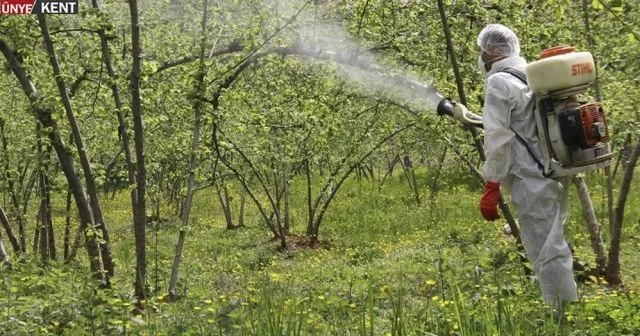
Hazelnut Spraying Calendar: Annual Program for All Pests
Hazelnut orchard spraying calendar: spray timings, dosages and rules against all pests and diseases from February to October.
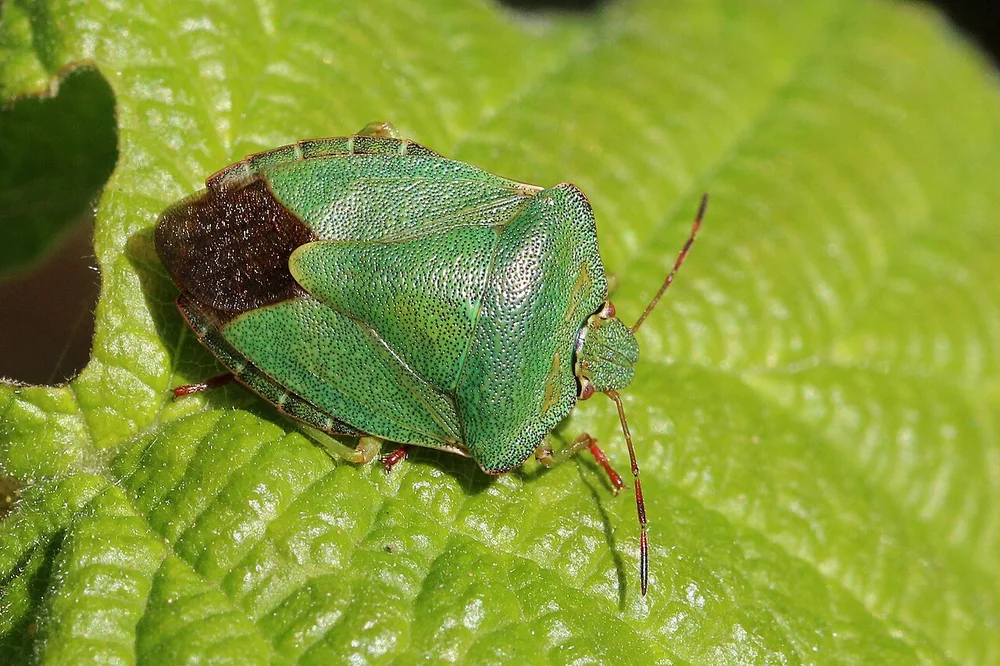
Green Stink Bug on Hazelnut (Palomena prasina): Symptoms, Spray Timing and Threshold
Green stink bug (Palomena prasina) and brown marmorated stink bug on hazelnut: blank, blackened and spotted kernels. Spraying starts mid-April; threshold is 1 overwintered adult per 10 bushes.
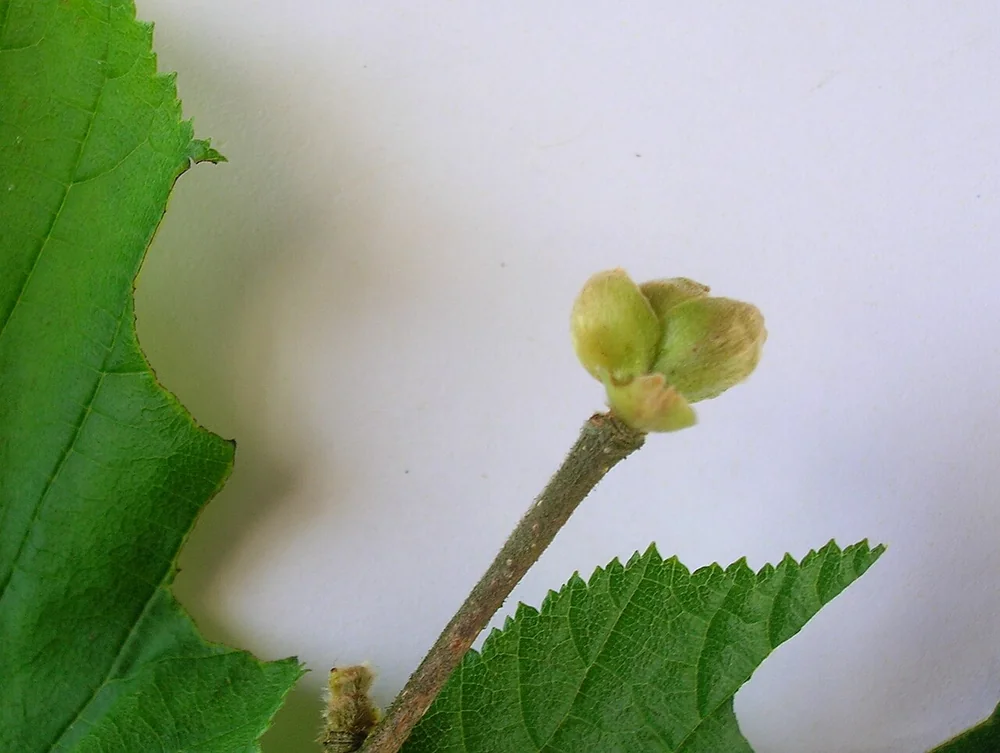
Hazelnut Big Bud Mite (Phytoptus avellanae): Symptoms and Spray Timing
Hazelnut big bud mite: buds swelling into galls, catkin drop and up to 70% yield loss. Spray in the one-week window at the end of April; threshold is 5 big buds per branch. Tombul is most susceptible.
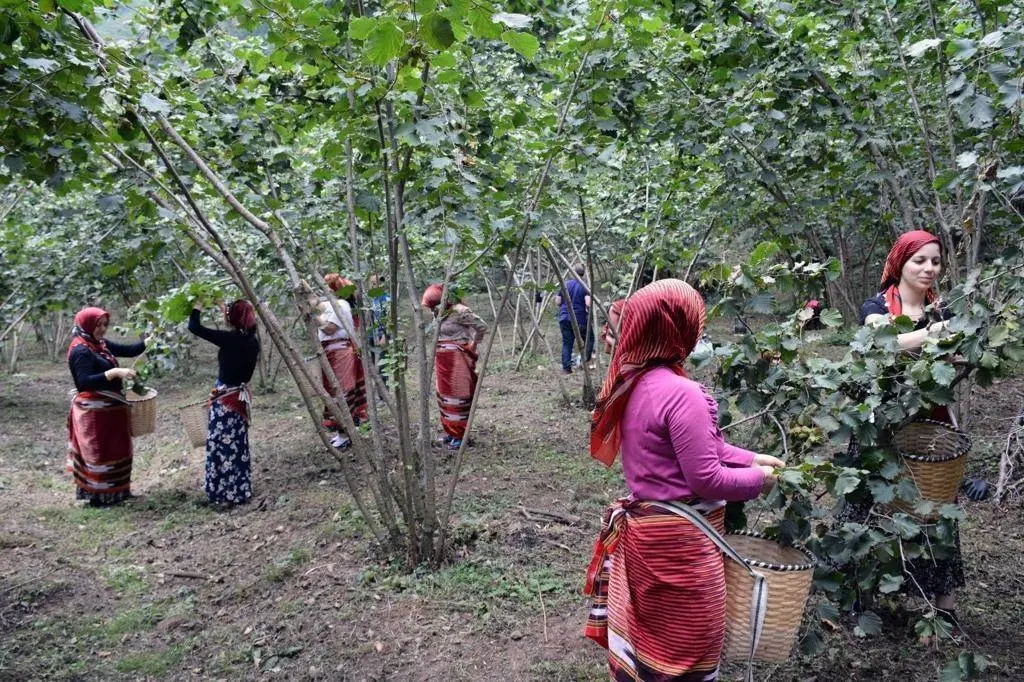
Hazelnut Growing Guide: From Planting to Harvest, Step by Step
A complete guide to growing hazelnuts. Pruning, fertilization, pest control, harvest and market knowledge — everything a hazelnut grower needs on a single page.
More Pest Control Guides
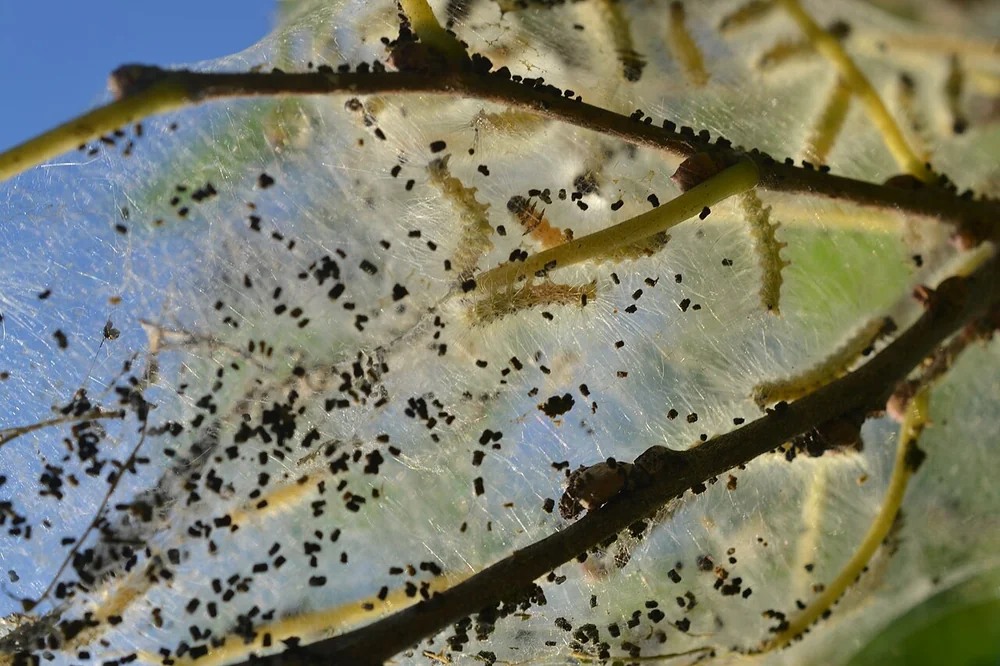
Fall Webworm on Hazelnut (Hyphantria cunea): Web Nests and Control
Fall webworm: silken web nests under the leaves, foliage eaten down to the midrib. Two to three generations a year; spray while the webs are new. Cutting and burning the nests is the most effective method.
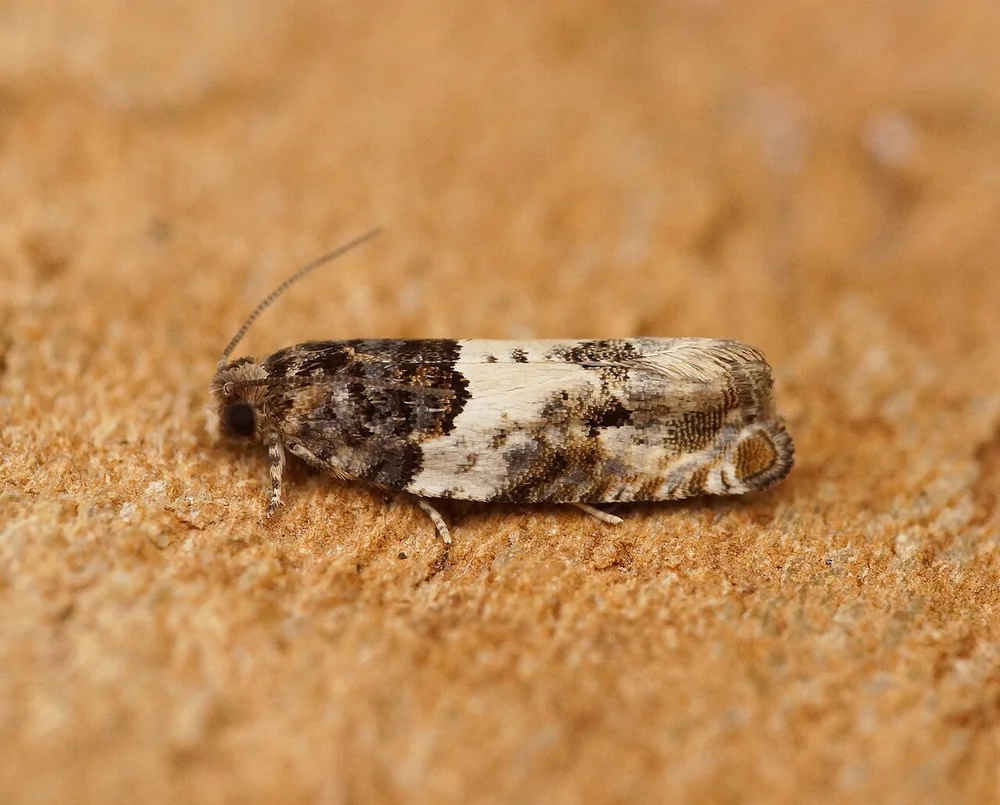
Hazelnut Shoot Moth (Gypsonoma dealbana): Symptoms and Spray Timing
Hazelnut shoot moth: triangular brown patches on the leaf and dying shoots. Spraying is done after harvest, finishing by the end of September. Threshold: 15 feeding marks per 100 leaves.
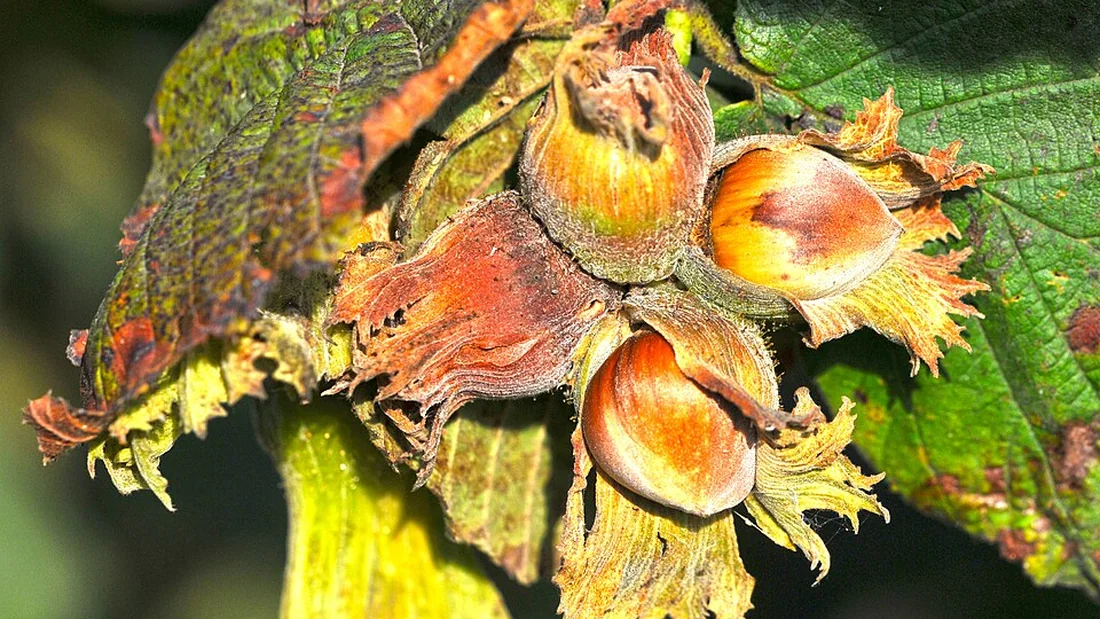
Hazelnut Gall Midge (Mikomyia coryli): Symptoms and Spray Timing
Hazelnut gall midge: galls along the leaf veins, on the husk cluster and at shoot tips. Spray when shoots carry two leaflets, late March to early April, repeated 20 days later. Threshold 50% infestation.
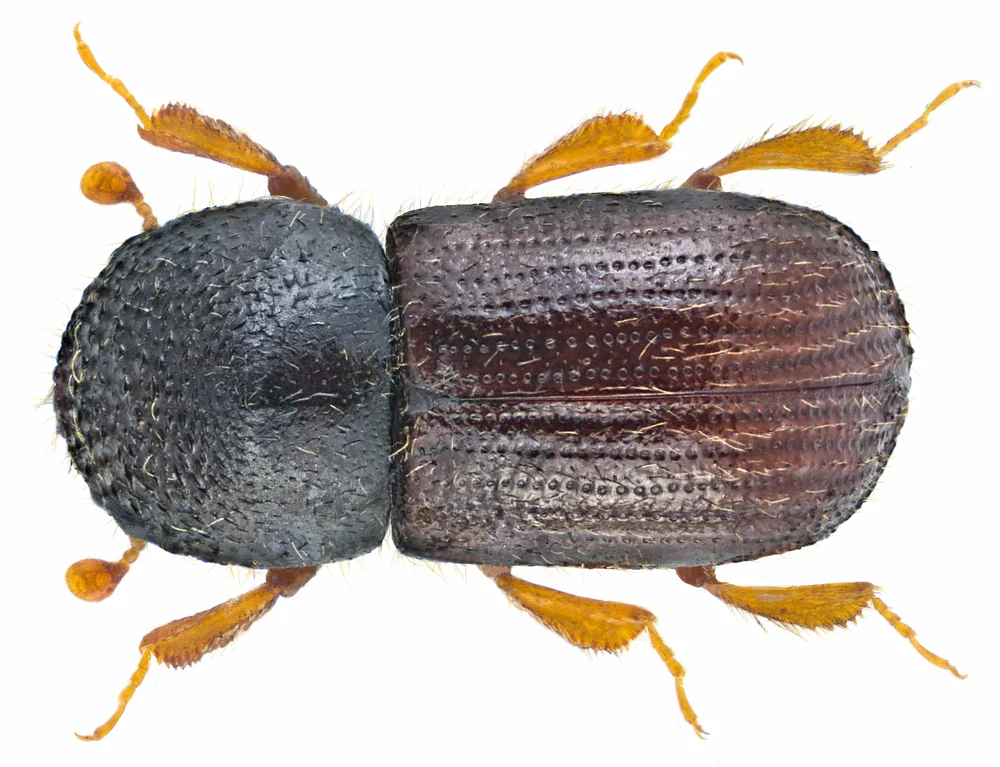
Hazelnut Shot-Hole Borer (Xyleborus dispar): Symptoms, Traps and Spray Timing
Hazelnut shot-hole borer / dalkıran (Xyleborus dispar): 2 mm holes in the branch and seeping sap. When to hang red sticky traps, why the spray goes on in early July, and why whole bushes die.