
What Is Urea (46-0-0)?
Urea is a white, odourless nitrogen fertilizer with the chemical formula CO(NH₂)₂, sold as granules or prills. Its fertilizer grade is 46-0-0: it contains 46% nitrogen (N) and no phosphorus or potassium.
At 46% N it is the most concentrated solid nitrogen fertilizer on the market. That single fact explains its popularity in hazelnut orchards: delivering a given amount of pure nitrogen requires far fewer bags to carry, store and spread than any alternative.
| Property | Value |
|---|---|
| Formula | CO(NH₂)₂ (46-0-0) |
| Nitrogen (N) | 46% |
| Nitrogen form | Amide nitrogen (NH₂-N) |
| Phosphorus / Potassium | None |
| Solubility | Very high (dissolves quickly even in cold water) |
| Physical form | White granule / prill |
| Effect on soil pH | Acidifying after hydrolysis |
| Main weakness | Ammonia volatilization if left on the surface |
Urea and Urea Phosphate Are Not the Same Product
This article is about straight urea (46-0-0). The market also carries urea phosphate (18-44-0) — a fully water-soluble compound fertilizer with 18% nitrogen and 44% phosphorus, used primarily as a phosphorus source. The similar names cause constant confusion. For that product see our Urea Phosphate 18-44-0 guide.
Why Is It So Widely Used?
- Lowest cost per unit of nitrogen. Fertilizers should be compared by the pure nitrogen they carry, not by the price of the bag. A bag of urea carries more than twice the nitrogen of the same weight of ammonium sulfate, so on a “cost per kilogram of actual N” basis urea is usually the cheapest option.
- Transport and storage advantage. Supplying 20 kg of pure nitrogen takes about 43 kg of urea, versus 95 kg of ammonium sulfate. In steep orchards far from a road, that difference is measured in sacks carried on your back.
- High solubility. It dissolves rapidly even in cold water, which makes it suitable for both soil and foliar application.
What Happens to Urea in the Soil? Urease and the Conversion Chain
The nitrogen in urea is not in a form the plant can use directly. Roots take up nitrogen mainly as ammonium (NH₄⁺) and nitrate (NO₃⁻). Urea reaches those forms in three steps:
- Amide → ammonium (hydrolysis). The urease enzyme, abundant in soil and in plant residue, breaks urea down into ammonium, carbon dioxide and ammonia (NH₃). In warm, moist soil this step is often complete within 1–3 days.
- Ammonium is held. Ammonium carries a positive charge, so it binds to soil colloids (clay and organic matter) and resists leaching reasonably well.
- Ammonium → nitrate (nitrification). Soil bacteria convert ammonium into nitrate. Nitrate is the fastest-absorbed form but carries a negative charge and does not bind to soil — under the wet Black Sea climate it can leach below the root zone.
The Critical Detail of Hydrolysis
As urea hydrolyses, the pH of the soil immediately surrounding the granule rises temporarily and can exceed 8. So “my soil is acidic, I won’t lose nitrogen” is misleading: what drives volatilization is that micro-environment a few millimetres around the granule. The acidic soils of the Black Sea region reduce the risk but do not eliminate it.
The Heart of the Matter: Nitrogen Lost to Ammonia Volatilization
Urea’s low price loses its meaning when the fertilizer is applied badly. Part of the nitrogen released during hydrolysis turns into ammonia gas (NH₃). If the granule is sitting exposed on the soil surface, that gas escapes straight into the atmosphere — nitrogen you paid for never reaches the tree.
Research compiled by Manitoba Agriculture on surface-applied urea shows the scale of the problem:
| Condition | Ammonia loss over 5–7 days |
|---|---|
| 15 °C, urea spread on the surface | Under 7% |
| 25 °C, urea spread on the surface | 38–46% |
| 30 °C, residue-covered surface (zero tillage) | Up to 88% |
| 30 °C, urea treated with a urease inhibitor (NBPT) | 12% |
The same review notes that for urea left on the surface for four days, losses doubled from 10% to 20% as soil pH rose from 6.5 to 7.5.
Conditions That Increase the Loss
- High temperature — losses at 25–30 °C are several times those at 15 °C. This risk is real for the late-May/June application.
- High soil pH — limed plots, or plots recently limed, lose noticeably more.
- A dry or rapidly drying surface — the worst case is a surface wetted by dew or light rain and then dried by sun: urea dissolves, hydrolysis starts, but there is no water to carry it into the soil.
- Plant residue and leaf litter — the leaf-and-weed layer under hazelnut stools is very rich in urease and keeps the granule from touching soil. Urea spread on that layer carries the highest risk of all.
- Wind — it continuously carries ammonia away from the surface, so volatilization never slows down.
- Applying at the same time as lime — lime raises surface pH and increases the loss.
How to Reduce the Loss
✓ Keeping Urea Nitrogen Out of the Air
- ✓ Work the fertilizer into the soil to a depth of 5–10 cm — on its own, this is the single most effective measure
- ✓ Rake back the leaf and weed layer under the stool before spreading so the granules touch soil
- ✓ Apply ahead of expected rain; even a few millimetres will move urea into the soil
- ✓ If you can irrigate, do so immediately after application
- ✓ Do not spread during hot, dry, windy midday hours — choose a cool morning or late afternoon
- ✓ Leave at least one month between liming and nitrogen fertilization
- ✓ On very steep plots where incorporation is impossible, consider urease-inhibitor products
What is a urease inhibitor? It is a coating additive (most commonly NBPT) that temporarily suppresses soil urease activity. It delays hydrolysis by a few days; if rain arrives in that window, the urea moves into the soil and no nitrogen is lost. As the table above shows, at 30 °C it cut losses from 88% to 12%. On steep plots where you cannot incorporate, the extra cost can be justified; where you can incorporate, it is unnecessary.
When Should It Be Applied to Hazelnuts?
The growing-technique recommendation of the Hazelnut Research Institute is that nitrogen fertilizer be applied in two split doses rather than all at once:
| Application | Timing | Share | Phenological stage |
|---|---|---|---|
| 1st application | End of February – early March | Half of the recommended amount | Bud swell, before shoot growth |
| 2nd application | End of May – early June | The remaining half | Nut development, before kernel fill |
With split applications the nitrogen is available at the moment the plant needs it rather than leaching away first, and the salt and volatilization risk of a single heavy dose is spread out. The Giresun Provincial Directorate of Agriculture and Forestry likewise stresses that splitting nitrogen fertilizer in two matters for plant development and nut quality.
No Nitrogen After July
Late nitrogen prolongs shoot growth; the tree enters winter without hardening off and is left defenceless against frost damage. Soft leaf tissue also invites diseases such as powdery mildew. For the full annual programme see our Hazelnut Fertilization Programme guide, and for frost risk see our Agricultural Frost Protection page.
How Should It Be Applied?
The Hazelnut Research Institute describes the application as follows:
- Spread the fertilizer evenly in a ring-shaped band 30–40 cm wide under the drip line of the stool’s branches. Do not tip it against the trunk — the absorbing fine roots are concentrated under the canopy edge.
- Work the fertilizer into the soil to a depth of 5–10 cm with a hoe. This step is not optional; it is what saves the economics of urea.
- On sloping ground, hazelnut roots are not evenly distributed. The Institute’s recommendation is to place the most fertilizer at the sides of the stool, some on the downhill side and the least on the uphill side. Fertilizer piled above the stool washes downhill with the first heavy rain.
Foliar Urea Application
Urea is one of the few nitrogen sources that can also be absorbed through leaves. A study on the Çakıldak cultivar carried out at Ordu University in 2018–2019 and published in the Ordu University Journal of Science and Technology applied increasing foliar urea rates (0%, 0.125%, 0.25%, 0.50%). The results:
- The 0.25% urea treatment raised total leaf nitrogen concentration from 1.58% to 2.01% (about a 27% increase).
- Leaf potassium concentration rose from 0.40% to 0.80%.
- With three applications of 0.25% urea, yield rose from 157 kg/ha in the control to 205 kg/ha (a 30.6% increase).
The authors recommend three foliar applications of a 0.25% urea solution to improve both nitrogen nutrition and yield.
Foliar Urea: Overdosing Burns the Leaf
The 0.50% rate tested in the same study gave no additional benefit over 0.25%. High concentrations can scorch leaves, and biuret — a by-product that can form during urea manufacture — is toxic to leaf tissue. If you intend to spray, choose a low-biuret product explicitly labelled as suitable for foliar use. Spray during cool hours (early morning or late afternoon), never in heat and full sun. See our Foliar Fertilization guide for details.
Foliar application should be seen as a complement to, not a replacement for, soil fertilization. A tree’s full annual nitrogen requirement cannot be met through leaves.
Dose Logic: From Pure Nitrogen to Fertilizer Quantity
A soil analysis report tells you how much pure nutrient is needed, not how much fertilizer. The conversion is simple:
Urea quantity = required pure nitrogen ÷ 0.46 (i.e. pure N × 2.17)
| Pure nitrogen required | Urea needed |
|---|---|
| 5 kg N | ≈ 10.9 kg |
| 10 kg N | ≈ 21.7 kg |
| 15 kg N | ≈ 32.6 kg |
| 20 kg N | ≈ 43.5 kg |
In its advisory on nitrogen fertilization of hazelnuts, the Giresun Provincial Directorate of Agriculture and Forestry states that where the pure nitrogen recommended for the growing season is supplied as urea, 375 g in the first application and 375 g in the second — 750 g of urea per stool in total will be sufficient. The same advisory gives the calcium ammonium nitrate (CAN) equivalent as 650 + 650 g in two applications.
Dose Warning
The figures above are general recommendations published by official bodies. Your orchard’s actual requirement varies with soil organic matter, pH, stool density, tree age and yield level. The exact dose must be set by your own soil analysis; consult your provincial or district directorate of agriculture and forestry, or an agricultural engineer, before applying. For sampling methods see our Soil Analysis Guide.
Urea vs. Ammonium Sulfate vs. CAN
| Criterion | Urea (46-0-0) | Ammonium Sulfate (21-0-0) | Calcium Ammonium Nitrate (26-0-0) |
|---|---|---|---|
| Nitrogen content | 46% | 21% (+ ~24% S) | 26% |
| Nitrogen form | Amide (NH₂) | Ammonium (NH₄⁺) | Half ammonium, half nitrate |
| Speed of action | Slow (hydrolysis required) | Moderate | Fast (nitrate portion acts at once) |
| Effect on soil pH | Acidifying | Strongly acidifying | Neutral / slightly raising (contains lime) |
| Volatilization (NH₃) loss | High if left on the surface | Low | Very low |
| Leaching loss | Moderate (rises as nitrate forms) | Low | High (nitrate portion) |
| Cost per unit N | Lowest | High | Moderate |
| Transport burden | Lowest | Highest | Moderate |
| When to choose it | Wherever you can incorporate it or apply before rain | Where sulfur is deficient and soil pH is high | On acidic soils and where fast action is needed |
Because most Black Sea hazelnut soils are acidic, official publications often put CAN first. Urea, on the other hand, dominates in practice thanks to its cost per unit of nitrogen and ease of transport. The right answer is neither product by default but the pH figure on your soil analysis: in an orchard whose pH has already fallen below 5.5, relying permanently on urea and ammonium sulfate deepens the acidity. For a detailed comparison see our Ammonium Sulfate 21-0-0 and Calcium Ammonium Nitrate 26-0-0 guides.
Common Mistakes
- Leaving the fertilizer on the surface. The most expensive mistake there is. Most of the nitrogen in urea spread over leaf litter on a hot day goes into the air.
- Spreading without clearing the leaf and weed layer. That layer is both a source of urease and a barrier to soil contact.
- Applying the whole year’s nitrogen at once. Splitting reduces both losses and salt risk.
- Applying nitrogen after July. Shoots fail to harden off, and frost and mildew risk climb.
- Applying at the same time as lime. It raises surface pH and increases ammonia loss — leave at least a month between them.
- Piling fertilizer against the trunk. The absorbing roots are under the canopy edge; concentrated fertilizer at the trunk causes root burn.
- Assuming more nitrogen means more yield. Excess nitrogen means excess shoots, shading, soft tissue, disease susceptibility and poor kernel quality.
- Forgetting phosphorus and potassium. Urea supplies nitrogen only. For phosphorus see Urea Phosphate 18-44-0 or DAP 18-46-0; for potassium see Potassium Sulfate 0-0-51.
Storage
Urea is highly hygroscopic — it draws moisture from the air and cakes. Never leave a bag open; store it in a dry, cool, shaded place, off the ground on a pallet, and avoid stacking the bags too high.
Summary
- With 46% N, urea is the most concentrated nitrogen fertilizer and the cheapest per unit of nitrogen.
- Its nitrogen is in amide form; soil urease converts it first to ammonium, then to nitrate.
- Its biggest risk is ammonia volatilization: on a hot, dry, windy, residue-covered surface, losses can be very large.
- The fix is simple and free: incorporate it 5–10 cm deep, or apply before rain or irrigation.
- Split the application in two — end of February/early March and end of May/early June.
- Spread it in the 30–40 cm band under the drip line; on slopes, weight the application to the sides of the stool.
- The research rate for foliar spraying is 0.25% — higher rates risk leaf burn.
- Always set the dose from your soil analysis and consult your provincial or district agriculture directorate.
For the full annual calendar see our Hazelnut Fertilization Programme; for sampling steps see the Soil Analysis Guide.
📚 Ministry of Agriculture and Forestry, Giresun Provincial Directorate 📚 Hazelnut Research Institute - Hazelnut Growing Technique 📚 Özkutlu et al. - Foliar Urea Application in Hazelnut (DergiPark) 📚 Manitoba Agriculture - Volatilization Losses From Surface Applied Nitrogen 📚 Tarfin - Urea Fertilizer📚Sources
- Republic of Türkiye Ministry of Agriculture and Forestry, Giresun Provincial Directorate - Points to Consider in Nitrogen Fertilization of Hazelnuts
- Republic of Türkiye Ministry of Agriculture and Forestry, Hazelnut Research Institute - Hazelnut Growing Technique
- Özkutlu F., Kebapcı T., Aydemir Ö.E. - Effect of Foliar Urea Application on Mineral Nutrient Elements and Yield in Hazelnut (Ordu Univ. Journal of Science and Technology, 2020)
- Manitoba Agriculture - Volatilization Losses From Surface Applied Nitrogen
- Tarfin - Everything About Urea Fertilizer
Related Guides
View all Fertilization guides
Hazelnut Fertilization Program: Annual Schedule and Application Rates
When to fertilize hazelnuts, which fertilizer types to use, and how much per decare. A practical guide to nitrogen, phosphorus, potassium and organic fertilizer applications.
Soil and Leaf Analysis Guide for Hazelnut Orchards
When to have a soil analysis done in a hazelnut orchard, how to take the sample, and how to read the results. Leaf analysis timing and method explained.
Urea Phosphate 18-44-0 Fertilizer: Usage and Benefits in Hazelnut
What is urea phosphate 18-44-0 fertilizer and how is it used in hazelnut orchards? Application timing, dosage calculation, differences from DAP, and key considerations.
Potassium Sulfate (0-0-51) Fertilizer: Use and Dosage in Hazelnuts
What is potassium sulfate fertilizer, and when and how should it be used in hazelnuts? Learn about 51% K2O and 18% sulfur content, dosage, application timing, and important considerations.
More Fertilization Guides
Ammonium Nitrate (33-0-0): Use, Dosage and Leaching Risk in Hazelnuts
What is ammonium nitrate fertilizer and how is it used in hazelnuts? The 16.5% ammonium + 16.5% nitrate balance, how it differs from CAN, behaviour on acid soils, nitrate leaching and dose calculation.
Ammonium Sulfate (21-0-0) Fertilizer: Use in Hazelnuts and the Acidity Risk
What is ammonium sulfate fertilizer, and when and how should it be used in hazelnut orchards? 21% nitrogen + 24% sulfur, dosage logic, soil acidification risk and a comparison with CAN.
Boron Fertilization in Hazelnuts: Blank Nuts, Dosage and Toxicity Risk
What does boron do in hazelnuts, and does a deficiency cause blank nuts? Critical boron values in soil and leaf analysis, soil and foliar application rates, and the risk of boron toxicity.
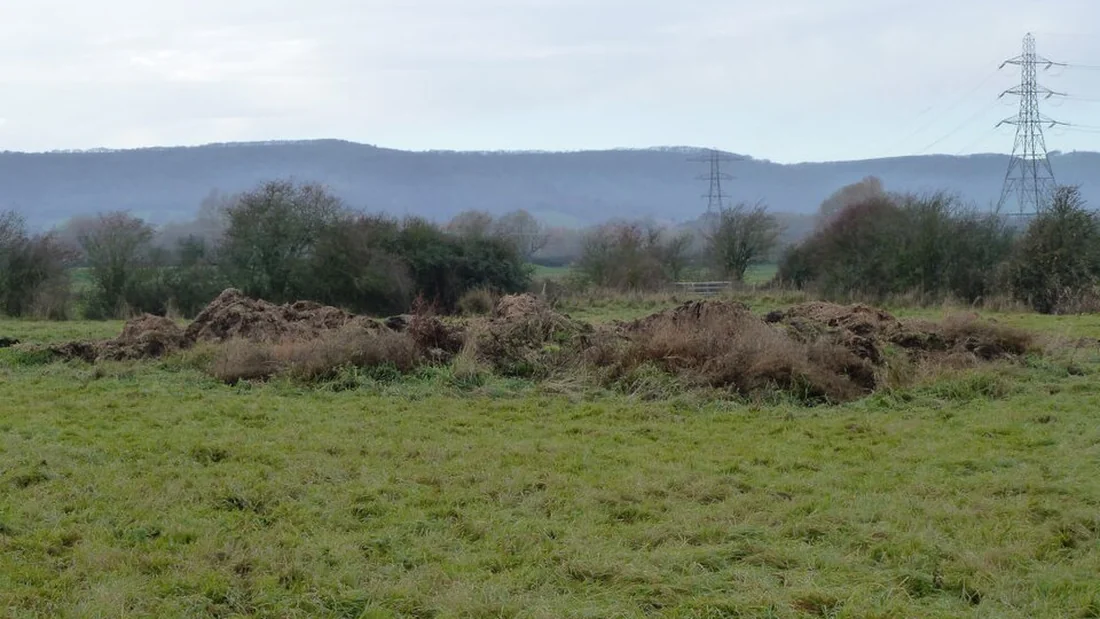
Farmyard Manure and Organic Matter in Hazelnut Orchards: Building the Foundation
What does farmyard (barn) manure do in a hazelnut orchard, what is well-rotted manure, when and how is it applied? The role of organic matter in holding water and nutrients, husk compost and common mistakes.