What Is a Compound Fertilizer?
A compound fertilizer carries more than one plant nutrient inside a single granule. The three numbers printed on the bag always follow the same order:
- First number → % nitrogen (N)
- Second number → % phosphorus pentoxide (P₂O₅)
- Third number → % potassium oxide (K₂O)
So 15-15-15 means that 100 kg of the product contains 15 kg of pure nitrogen, 15 kg of P₂O₅ and 15 kg of K₂O. The remaining 55 kg is not nutrient: it is filler, carrier salts and the compounds that hold the granule together.
The only difference in 20-20-0 is the third number: this product contains no potassium. Turkish soils are generally regarded as poor in nitrogen and phosphorus but comparatively rich in potassium, which is the main reason potassium-free NP formulations became widespread (Tarfin).
| Formulation | N | P₂O₅ | K₂O | Short comment |
|---|---|---|---|---|
| 15-15-15 | 15% | 15% | 15% | Delivers all three nutrients in equal shares |
| 20-20-0 | 20% | 20% | — | No potassium, denser N and P |
| 20-12-15 (+trace elements) | 20% | 12% | 15% | Nitrogen-weighted, micronutrient-enriched |
| 18-46-0 (DAP) | 18% | 46% | — | Phosphorus-weighted base fertilizer |
| 18-44-0 (urea phosphate) | 18% | 44% | — | Fully water-soluble, fits drip irrigation |
In its notice on nitrogen fertilizer use in hazelnuts, the Giresun Provincial Directorate of Agriculture and Forestry lists “15-15-15, 20-20-0, 20-12-15 + trace elements” as examples of compound fertilizers.
Convenience or Accuracy?
The appeal of a compound fertilizer is undeniable: one bag, one pass, one calculation. Instead of buying, weighing and blending three nutrients separately, you buy a single sack. That is a genuine convenience and should not be dismissed.
But convenience has a price: a compound fertilizer sells you a fixed ratio, while your soil’s requirement is not fixed.
Take an example. Your soil analysis comes back: phosphorus “sufficient”, potassium “medium”, nitrogen low. What happens if you spread 15-15-15 on that orchard?
- Nitrogen starts to meet your need — that was the point.
- Potassium was already medium; a little extra does no great harm.
- Phosphorus is added again although it was already sufficient. That carries three separate costs: you pay for a nutrient that does nothing, phosphorus accumulates in the soil, and accumulated phosphorus blocks zinc uptake.
That last point is not a theoretical risk in the Black Sea region. A survey of 130 soil samples in Ordu found zinc deficiency in 89% of hazelnut areas (Özkutlu et al., 2019). Phosphorus–zinc antagonism is one of the known drivers behind that figure. For details see our zinc sulfate and DAP (18-46-0) guides.
The reverse is equally true. If your soil really is short of phosphorus — roughly 49% of orchard soils in Ordu fall into the “low” and “very low” classes for plant-available phosphorus (Tarakçıoğlu et al., 2017) — the 15% phosphorus in 15-15-15 will often be too little to close the gap.
A compound fertilizer is not a bad product. It simply does not decide anything; the decision was made for you by the manufacturer, assuming an average soil.
The Arithmetic: How Much Pure Nutrient Do You Actually Apply?
A soil analysis report never tells you “how many kg of fertilizer”. It tells you “how many kg of pure nutrient”. The only way to judge a compound fertilizer is to run that conversion:
Pure nutrient (kg) = fertilizer quantity (kg) × percentage ÷ 100
15-15-15 conversion table
| 15-15-15 applied per decare | Pure N | Pure P₂O₅ | Pure K₂O |
|---|---|---|---|
| 20 kg | 3.0 kg | 3.0 kg | 3.0 kg |
| 30 kg | 4.5 kg | 4.5 kg | 4.5 kg |
| 40 kg | 6.0 kg | 6.0 kg | 6.0 kg |
| 50 kg | 7.5 kg | 7.5 kg | 7.5 kg |
| 70 kg | 10.5 kg | 10.5 kg | 10.5 kg |
20-20-0 conversion table
| 20-20-0 applied per decare | Pure N | Pure P₂O₅ | Pure K₂O |
|---|---|---|---|
| 20 kg | 4.0 kg | 4.0 kg | 0 |
| 30 kg | 6.0 kg | 6.0 kg | 0 |
| 40 kg | 8.0 kg | 8.0 kg | 0 |
| 50 kg | 10.0 kg | 10.0 kg | 0 |
These tables are not dose recommendations
Both tables above are pure arithmetic conversions, not an application recommendation for your orchard. Which row applies to you is determined solely by your soil analysis report and the fertilizer advice issued for your specific plot.
What the arithmetic really says
The Giresun Provincial Directorate reports that hazelnut orchards in the region need 20-24 kg of pure nitrogen per decare over one vegetation period. The same source states that if a compound fertilizer is applied before 15 March, the first nitrogen application becomes unnecessary, and half of the total nitrogen is then given after 15 May as the second application.
Now run the conversion: half the nitrogen is roughly 10-12 kg of pure N. To obtain that from 15-15-15 you would need 67-80 kg per decare. The same bag would simultaneously leave 10-12 kg of P₂O₅ and 10-12 kg of K₂O in the soil — every single year.
Yet the Hazelnut Research Institute recommends applying phosphorus and potassium fertilizers once every three years. The arithmetic alone explains why a compound fertilizer makes sense only when the analysis shows all three nutrients to be short.
Soil analysis decides both the product and the rate
No figure on this page is a dose recommendation for your orchard. Which compound formulation to use and at what rate must always be decided on the basis of a soil analysis. Consult your provincial or district directorate of agriculture and forestry, or an agricultural engineer; the directorates provide farmers with soil analysis and fertilizer advisory services. For sampling methods, see our soil analysis guide.
When Does a Compound Fertilizer Make Sense?
The honest answer: in some situations it genuinely does.
- When the analysis shows all three nutrients short. If nitrogen, phosphorus and potassium are all low, one balanced compound gets all three moving in a single pass.
- In young orchards and at the sapling stage. The root system needs all three macronutrients while it is being built, and because the quantities are small, the cost of a ratio error is small too.
- On small areas. On a few decares, buying, hauling and weighing three separate products is impractical.
- When labour and time are tight. A single pass is a real advantage on sloping, scattered parcels.
When Is a Straight Fertilizer the Better Choice?
- When the analysis shows only one nutrient short. If only nitrogen is low, apply a nitrogen fertilizer; the phosphorus and potassium riding along in a compound are pure waste.
- When phosphorus is sufficient but potassium is low. Potassium sulfate (0-0-51) is the right tool here; potassium chloride is avoided because hazelnut is chloride-sensitive.
- When the nutrients have different timings. Phosphorus and potassium go on in winter, nitrogen in two spring splits. A compound squeezes all three timings into one date.
Building your own blend is the most accurate route in most orchards: calculate the recommended pure N, P₂O₅ and K₂O separately, then meet each with straight or two-nutrient products such as DAP, potassium sulfate and ammonium sulfate. Each nutrient then arrives at its own rate and its own time. According to the Sakarya Directorate leaflet, potassium fertilizer may go into the same holes when it is applied together with phosphorus.
When Is Compound Fertilizer Applied in Hazelnuts?
Because a compound fertilizer contains nitrogen, its calendar differs from that of a pure phosphorus–potassium application.
| Period | Operation | Source / note |
|---|---|---|
| November – February | Phosphorus and potassium into 16-32 holes under the canopy drip line | Hazelnut Research Institute; once every 3 years |
| Up to 15 March | Compound fertilizer (15-15-15, 20-20-0, 20-12-15 + trace elements) | Giresun Directorate; replaces the first nitrogen application |
| After 15 May | Second half of the nitrogen | Giresun Directorate |
| November – December | Liming (if required) | Never at the same time as phosphorus fertilizer |
Why is nitrogen given separately rather than through the compound? Because nitrogen is mobile in soil and leaches; part of a single large dose leaves the root zone. The official recommendation is to split nitrogen into two: half in March as the buds swell, half in the second half of May to early June. The Hazelnut Research Institute leaflet stresses one more point about the second application: “The fertilizer given in this period affects the following year’s yield.” A compound fertilizer cannot perform that split on its own; the second nitrogen instalment must always be completed with a nitrogen product such as urea, ammonium sulfate or calcium ammonium nitrate.
How Is It Applied?
The Hazelnut Research Institute states one rule: “When fertilizing hazelnuts, the fertilizer must be applied at the canopy drip line (in a band).”
Because a compound fertilizer contains nitrogen, it is applied like a nitrogen fertilizer: following the Giresun Directorate’s description, the product is spread in a 30-40 cm wide band under the branch tips and worked into the soil to a depth of 5-10 cm.
✓ Compound Fertilizer Application Steps
- ✓ Write the recommended pure N, P₂O₅ and K₂O figures from your soil report side by side
- ✓ If all three are short choose a compound; if only one is short choose a straight fertilizer
- ✓ Run the conversion for the formulation you picked: how many kg of product, how many kg of pure nutrient
- ✓ Locate the canopy drip line — where the branches end, not the trunk base
- ✓ Form a 30-40 cm wide circular band along that line
- ✓ Spread the fertilizer evenly across the band; never pile it in one spot
- ✓ Work it in to 5-10 cm with a hoe or machine; do not leave it on the surface
- ✓ On slopes roots extend further downhill; distribute the fertilizer accordingly
- ✓ If liming is needed, carry it out in a separate period
Fertilizer left on the surface is lost in two ways: nitrogen volatilises or runs off with rain, while phosphorus stays in the top few centimetres and never reaches the roots. The Hazelnut Research Institute leaflet is therefore explicit: “After lime, farmyard manure and nitrogen fertilizer have been applied, they must always be hoed into the soil.”
What a Compound Fertilizer Leaves Out
Three numbers are not the plant’s full shopping list. A classic NPK compound either lacks the following or contains them only by chance:
- Sulfur (S): Some 20-20-0 formulations carry sulfur derived from ammonium sulfate (Tarfin), but sulfur is not guaranteed in 15-15-15. If you need a sulfur source, ammonium sulfate (24% S) or potassium sulfate (18% S) is more reliable.
- Calcium and magnesium (Ca, Mg): A study of hazelnut orchard soils in Ordu and Giresun found, on the basis of exchangeable cation ratios, a risk of calcium and potassium deficiency across much of the area, and stressed that a sustainable fertilization programme must not be limited to NPK (Ay and Kızılkaya, 2022).
- Zinc and boron: Absent from any compound not labelled “+trace elements”. In Ordu, 89% of orchards were found deficient in zinc and 85% in boron (Özkutlu et al., 2019). Those gaps are closed with zinc sulfate, boron fertilization and foliar feeding.
- Organic matter: No compound fertilizer improves soil physical structure. That is the job of farmyard manure.
Common Mistakes
- Buying 15-15-15 because “everyone does”. Your neighbour’s soil is not your soil; the ratio decision belongs to the analysis.
- Treating a compound as a complete fertilizer. NPK does not cover sulfur or micronutrients.
- Applying the same compound every year. Phosphorus goes on once every 2-3 years; annual phosphorus accumulates and disrupts zinc uptake.
- Expecting all the nitrogen from the compound. Nitrogen must be split; the second instalment needs a separate nitrogen product.
- Spreading and walking away. Unincorporated fertilizer loses its nitrogen to the air and its phosphorus never reaches the roots.
- Dumping it at the trunk base. The fine feeder roots sit at the drip line; fertilizer at the trunk is useless and risks root burn.
- Applying it together with lime. The official leaflet requires lime and phosphorus fertilizer to be kept apart.
- Choosing a potassium-free formulation by habit. 20-20-0 contains no potassium and will not close a potassium gap.
Summary
- The three numbers stand for %N, %P₂O₅, %K₂O; 20-20-0 contains no potassium
- A compound fertilizer is convenient, but its fixed ratio may not match your soil’s variable need
- All three short → compound makes sense; one nutrient short → a straight fertilizer is more accurate
- The conversion is simple: quantity × percentage ÷ 100 = pure nutrient
- In hazelnuts a compound is applied as a base dressing up to 15 March and replaces the first nitrogen application (Giresun Directorate)
- The second nitrogen instalment after 15 May must come from a separate nitrogen fertilizer
- Application is made in a 30-40 cm band at the drip line, worked in to 5-10 cm
- Sulfur, magnesium and micronutrients are usually absent and must be planned separately
For the full annual calendar see our hazelnut fertilization programme, and for sampling and reading results our soil analysis guide.
📚 Giresun Provincial Directorate - Nitrogen (Summer) Fertilizer Applications in Hazelnuts 📚 Hazelnut Research Institute - Fertilization in Hazelnuts (Farmer Training Series No: 4) 📚 Hazelnut Research Institute - Hazelnut Growing Technique 📚 Sakarya Provincial Directorate - Fertilization in Hazelnuts 📚 Tarakçıoğlu et al. (2017), Ordu Univ. J. Sci. Tech. 📚 Ay and Kızılkaya (2022), Journal of Soil Science and Plant Nutrition 📚 Özkutlu et al. (2019), Academic Journal of Agriculture 📚 Tarfin - What Is 20-20-0 Fertilizer?📚Sources
- Giresun Provincial Directorate of Agriculture and Forestry - Points to Consider in Nitrogen (Summer) Fertilizer Applications in Hazelnuts
- Turkish Ministry of Agriculture and Forestry - Hazelnut Research Institute, Fertilization in Hazelnuts (Farmer Training Series No: 4)
- Hazelnut Research Institute - Hazelnut Growing Technique
- Sakarya Provincial Directorate of Agriculture and Forestry - Fertilization in Hazelnuts
- Tarakçıoğlu C., Yılmaz İ., Kulaç S. (2017) - Plant-Available Phosphorus in Hazelnut Orchard Soils, Ordu Univ. J. Sci. Tech. 7(2)
- Ay A., Kızılkaya R. (2022) - Plant Nutrient Contents of Hazelnut Orchard Soils in Ordu and Giresun, Journal of Soil Science and Plant Nutrition
- Özkutlu F., Ete Aydemir Ö., Akgün M., Özcan B. (2019) - Zinc Nutrition Status of Hazelnut-Growing Soils in Ordu Province, Academic Journal of Agriculture
- Tarfin - What Is 20-20-0 Fertilizer and What Does It Do?
Related Guides
View all Fertilization guides
Soil and Leaf Analysis Guide for Hazelnut Orchards
When to have a soil analysis done in a hazelnut orchard, how to take the sample, and how to read the results. Leaf analysis timing and method explained.
Hazelnut Fertilization Program: Annual Schedule and Application Rates
When to fertilize hazelnuts, which fertilizer types to use, and how much per decare. A practical guide to nitrogen, phosphorus, potassium and organic fertilizer applications.
DAP Fertilizer (18-46-0): Use, Timing and Dosage in Hazelnut
What is DAP (diammonium phosphate, 18-46-0) and how is it applied in hazelnut orchards? Phosphorus fixation in acid soils, band placement, planting-hole use and how it differs from urea phosphate.
Potassium Sulfate (0-0-51) Fertilizer: Use and Dosage in Hazelnuts
What is potassium sulfate fertilizer, and when and how should it be used in hazelnuts? Learn about 51% K2O and 18% sulfur content, dosage, application timing, and important considerations.
More Fertilization Guides
Ammonium Nitrate (33-0-0): Use, Dosage and Leaching Risk in Hazelnuts
What is ammonium nitrate fertilizer and how is it used in hazelnuts? The 16.5% ammonium + 16.5% nitrate balance, how it differs from CAN, behaviour on acid soils, nitrate leaching and dose calculation.
Ammonium Sulfate (21-0-0) Fertilizer: Use in Hazelnuts and the Acidity Risk
What is ammonium sulfate fertilizer, and when and how should it be used in hazelnut orchards? 21% nitrogen + 24% sulfur, dosage logic, soil acidification risk and a comparison with CAN.
Boron Fertilization in Hazelnuts: Blank Nuts, Dosage and Toxicity Risk
What does boron do in hazelnuts, and does a deficiency cause blank nuts? Critical boron values in soil and leaf analysis, soil and foliar application rates, and the risk of boron toxicity.
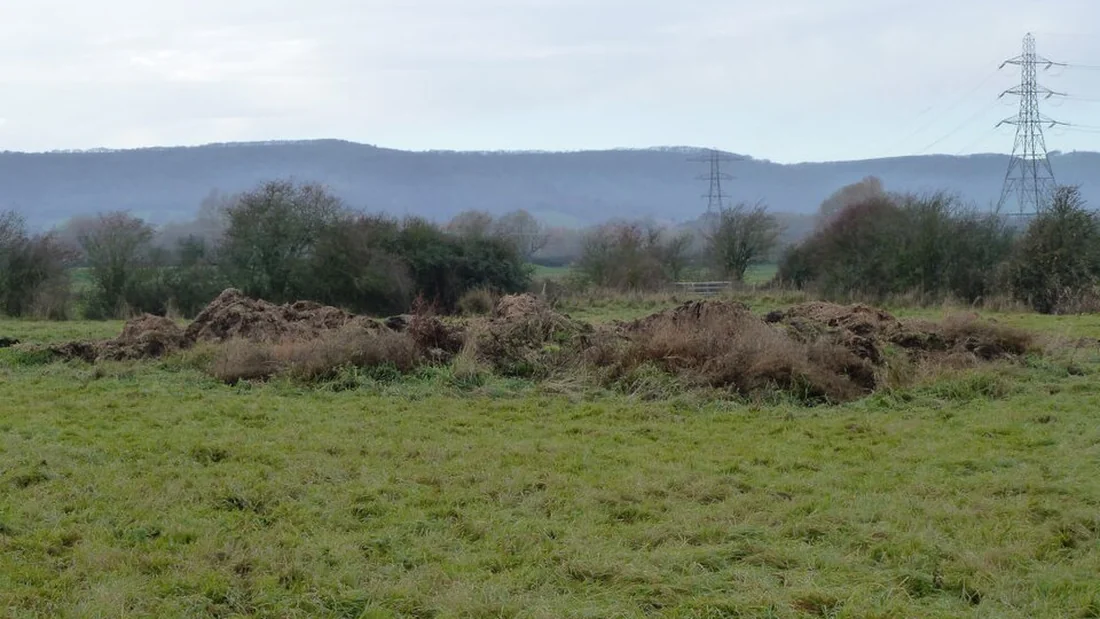
Farmyard Manure and Organic Matter in Hazelnut Orchards: Building the Foundation
What does farmyard (barn) manure do in a hazelnut orchard, what is well-rotted manure, when and how is it applied? The role of organic matter in holding water and nutrients, husk compost and common mistakes.